

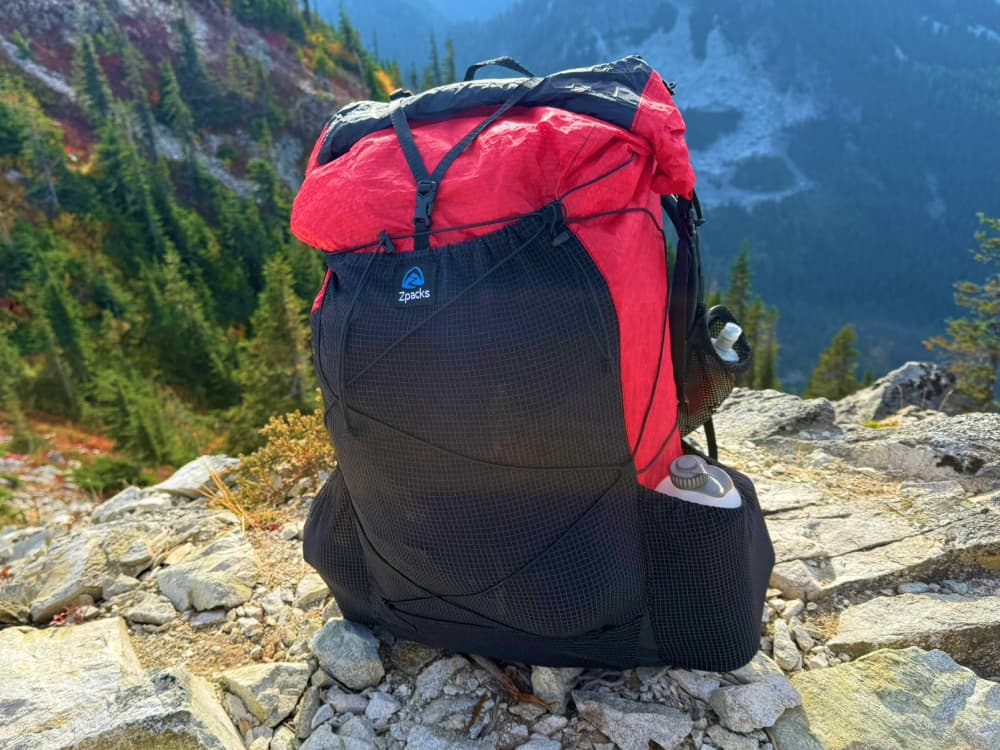
Zpacks Arc Pro is a contender for the #1 best ultralight pack
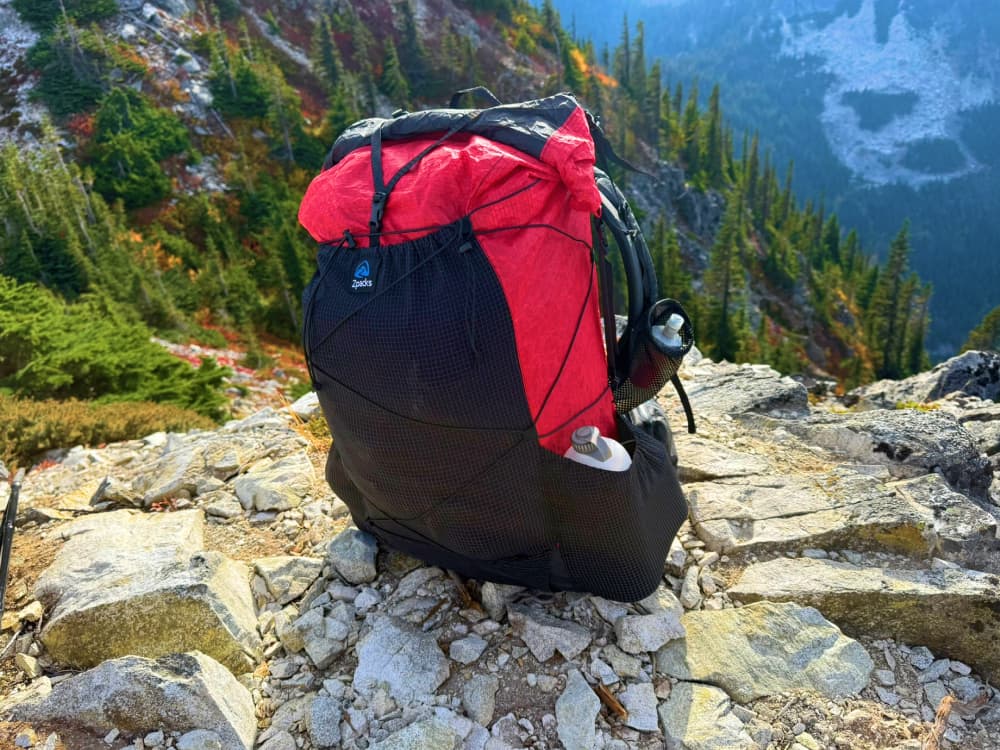
Zpacks Arc Pro is an immediate contender for the best ultralight backpack in existence, upgrading an already-elite original with Venom stretch mesh exterior pockets and a sleeved sit pad back panel. It delivers exquisite load transfer, extreme water resistance, and a ~1.5 lb weight that comes in well-below the gold standard of two pounds for a full-size full-frame ultralight pack. So what’s the catch? After adding in the optional-but-actually-necessary hip belt pockets, it comes to just over $500, making it one of the most expensive options you could choose.
Zpacks Arc Pro 60 Key Specs
- Weight: 25.5 oz (with hip belt pockets & sit pad)
- Price: $509 (with hip belt pockets)
- Materials: Challenge Ultra 100x & TenX
- Frame: External curved carbon fiber stays, spacer mesh sit pad back panel
- Load Capacity: 40 lbs claimed max
- Internal Volume: 47L
- External Volume: 13L
- All Recommended Add-ons: x2 Belt Pouch, x2 Water Bottle Pockets, Lumbar Pad, V-Top Strap, Roll-Top Closure Straps, Ice Axe Loops, Shock Cord Lashing
- Pros: Very ultralight. Exceptional load transfer takes pressure off shoulders. Very comfortable under 30 lbs. Articulated shoulder straps. Best-in-class stretch mesh pocket suite. Durable, waterproof seam-taped fabric. Modular parts can be replaced if damaged. Complimentary sit pad back panel. Made in America. Belt pouches are larger than average and replaceable.
- Cons: Expensive, with key add-ons sold separately. Carbon frame stays can break. Sub-optimal if carrying over 30 lbs. Small fiddly adjustment hardware. Torso height adjuster drift.
Testing Experience: Zpacks Arc Pro is a new release and I’ve only taken it out on one trip. That said, I have over 400 miles of experience with the 2025 Arc Haul Ultra 60L, and Alan and I both have trail experience with Nero Pro 40L. Arc Pro is essentially these two packs combined, which gives me a strong foundational understanding. I will update this review in 2027 once I have more experience with the pack.
You make Adventure Alan & Co possible. When purchasing through links on our site, we may earn an affiliate commission at no additional cost to you. Zpacks gifted me this pack to test. Here’s why you can trust us.
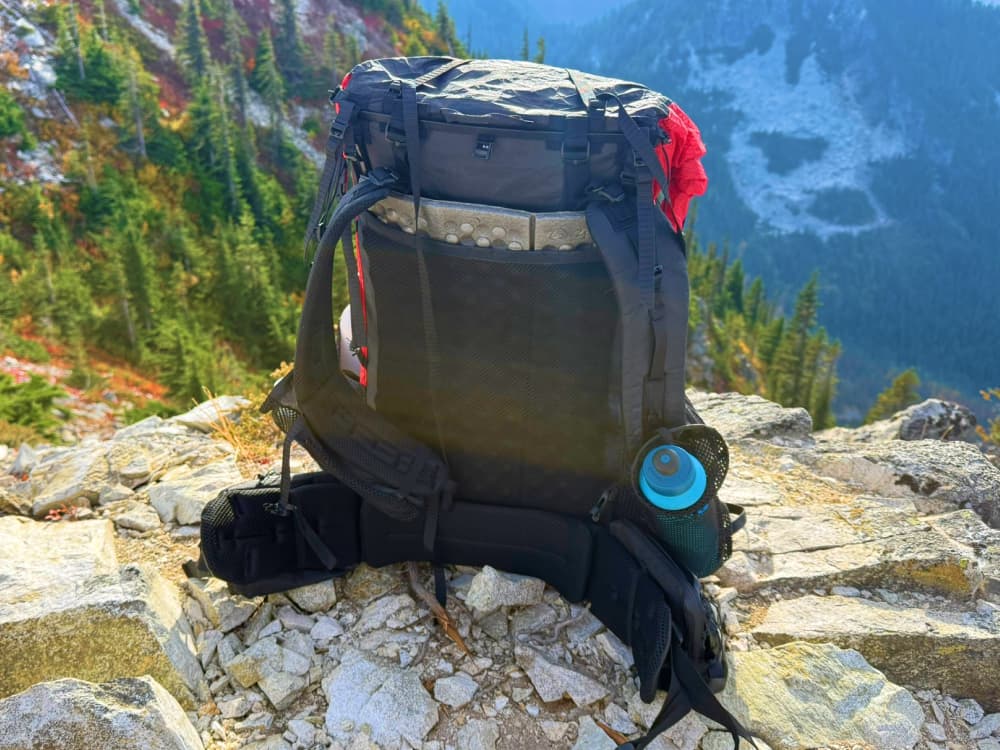
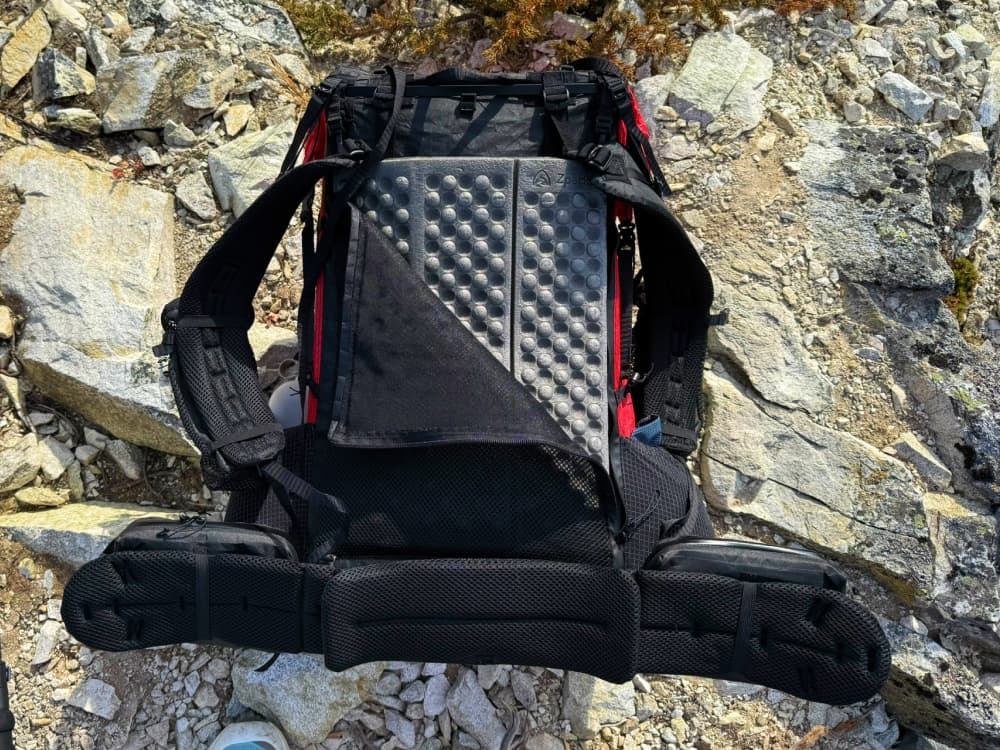
Zippered mesh sit pad sleeve. Lumbar pad is a recommended accessory
Who Should Choose Zpacks Arc Pro Backpack
Choose if:
- You want what is arguably the best performing ultralight backpack that money can buy
- You want a lighter-than-average full-size, full-frame ultralight backpack
- You prioritize weight transfer from shoulders to hips
- You liked Arc Haul and want something even better
- You’re seeking out certain uncommon benefits. like Venom stretch mesh side pockets or the zippered spacer mesh foam sit pad back panel.
Don’t choose if:
- You’re on a budget, and value is a consideration
- You want a pack designed to carry loads >30 lbs. While Arc Pro can carry even more than 30 lbs, it is not the optimal pack choice for that much weight.
- You’re shopping for a pack to use on demanding off-trail adventures, like mountaineering, canyoneering, or ski touring
- You have a history of breaking and damaging gear
- You intend to use it as a primary winter backpack. In which case choose something with larger, more glove friendly buckles and straps.
Expanded Pros of Zpacks Arc Pro Backpack
Very ultralight
The gold standard weight for a full-size, full-frame ultralight backpack averages out to around two pounds. We start to get excited at sub 30 oz, and anything below that is raising the bar for what you can do with less weight.
Exceptional load transfer takes pressure off shoulders
The fully external curved carbon fiber arc frame is superbly stiff and does an excellent job of transferring weight from shoulders to hips. Added to this are highly functional load lifters. If for any reason you dislike the sensation of weight on your shoulders, Zpacks Arc Pro is a great choice.
Articulated shoulder straps
You may not have known that you wanted articulated shoulder straps, but Arc Pro happens to have this desirable characteristic. Articulated means that the straps are not sewn directly to the pack body, rather to intermediary lines of nylon webbing. This allows for greater side-to-side mobility, and for an even more dialed in fit that better accommodates the shape of your shoulders and movement while wearing the pack. And as an aside, the straps are made of a very durable foam with daisy chain attachment points.
Best-in-class stretch mesh pocket suite
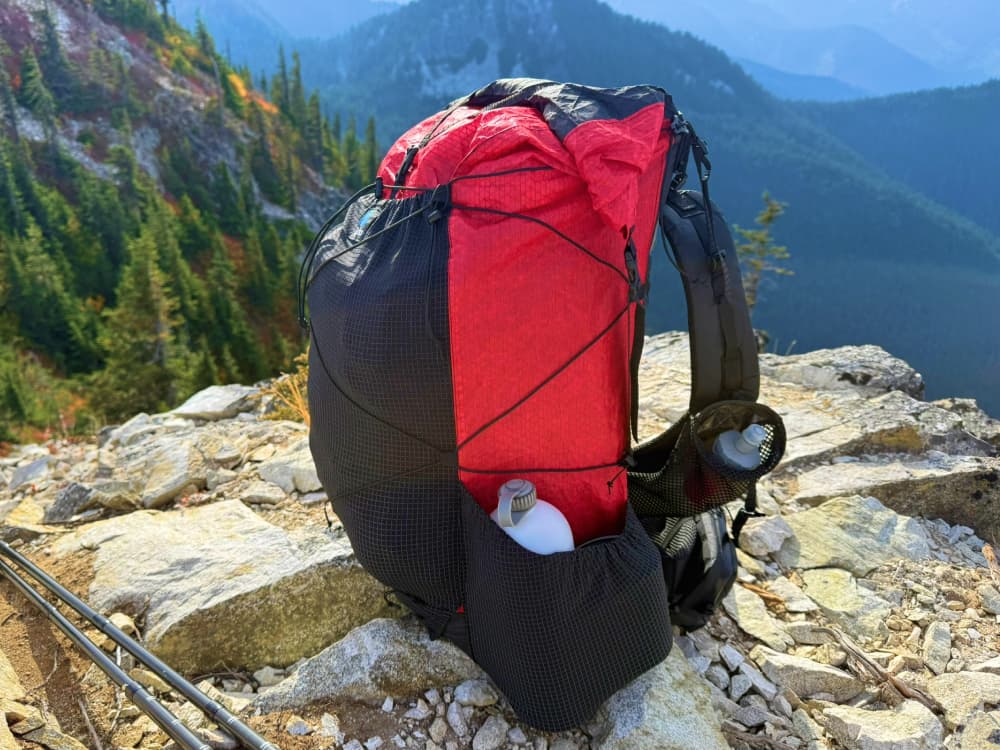
Venom brand stretch mesh has become the preferred fabric for external backpack pockets because it is stretchy and extremely durable. With most other textiles, you have to choose between stretch or durability. With Venom, you can have your cake and eat it too. The stretch expands to fit the volume you need, and holds your gear in place tightly.
Durable, waterproof seam-taped fabric
Challenge UltraX is one of the best ultralight pack fabrics, superior even to Dyneema. It’s waterproof and tough-as-nails. Ultra TenX is the latest and greatest version of it. One particularly nice thing about it is that it has a bit of structural stiffness, which keeps the roll-top neck open while loading (where as sil-ny flops closed). The entire pack is seam-taped and highly water resistant, though not submersible waterproof.
Modular parts can be replaced if damaged
Most parts of the Zpacks Arc Pro are modular and replaceable, including shoulder straps and even carbon frame stays. It’s especially nice to be able to replace hip belt pockets with damaged zippers, which are one of the first parts to fail on all packs. There are also tons of optional add-ons and others I’ve never even tested. Some personal favorites are the shoulder strap bottle pockets, hip belt pockets, lumbar pad, top V strap, roll top straps, and ice axe loops.
Complimentary sit pad back panel
This pack comes with a complimentary foam sit pad, which does double duty while enclosed in the spacer mesh back panel. Unzip the side to remove or replace your pad. Worth noting that this system is more useful and more durable than the suspended trampoline lycra panel, but less airy.
Made in America
We love that Zpacks hasn’t outsourced their pack manufacturing. Of course, “Made in America” is a feel good story, but it also has positive real world implications on the product. Keeping the factory in-house increases quality standards and allows them to bring innovative new designs to market faster. Yes, we know it makes it a bit more expensive.
Belt Pouches are larger than average and replaceable.
While it annoying that they’re sold separately (unlike virtually every other pack) the Zpacks Belt Pouches are a functional upgrade over the rest of what’s out there. For starters, they’re larger, 3D volumized, and able to hold more snacks/gear. But just as important, they’re not sewn-in. Hip belt pocket zippers are almost always one of the first parts to fail with long term use on any pack. Having them be replaceable significantly extends the lifespan of the overall pack.
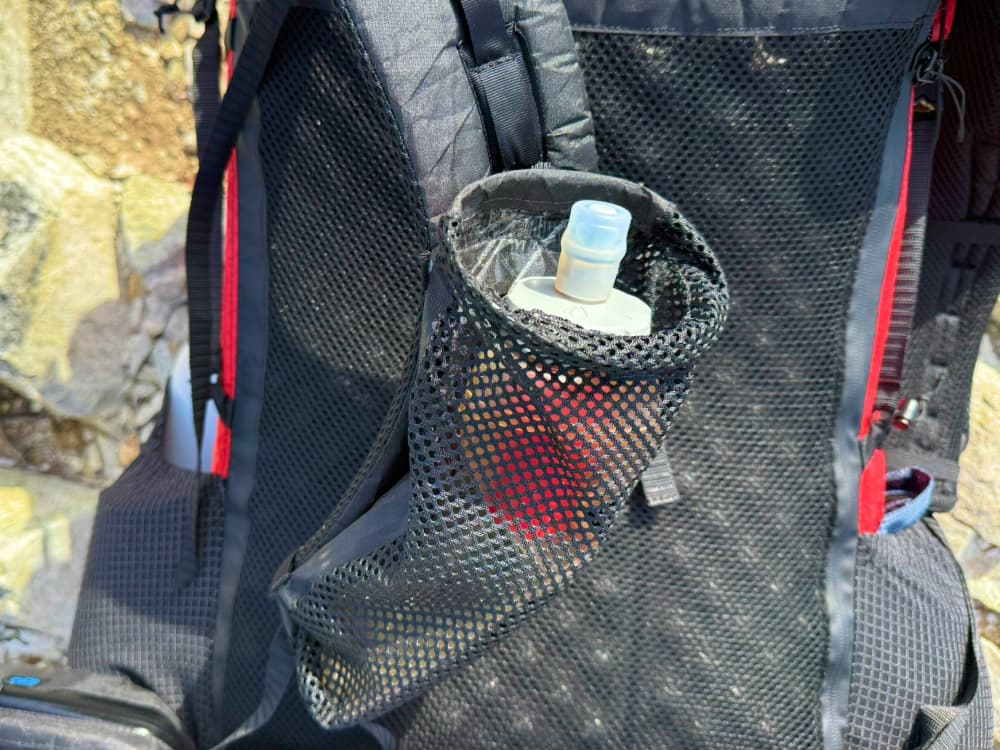
Water bottle sleeves with stiffened rim for easy in/out
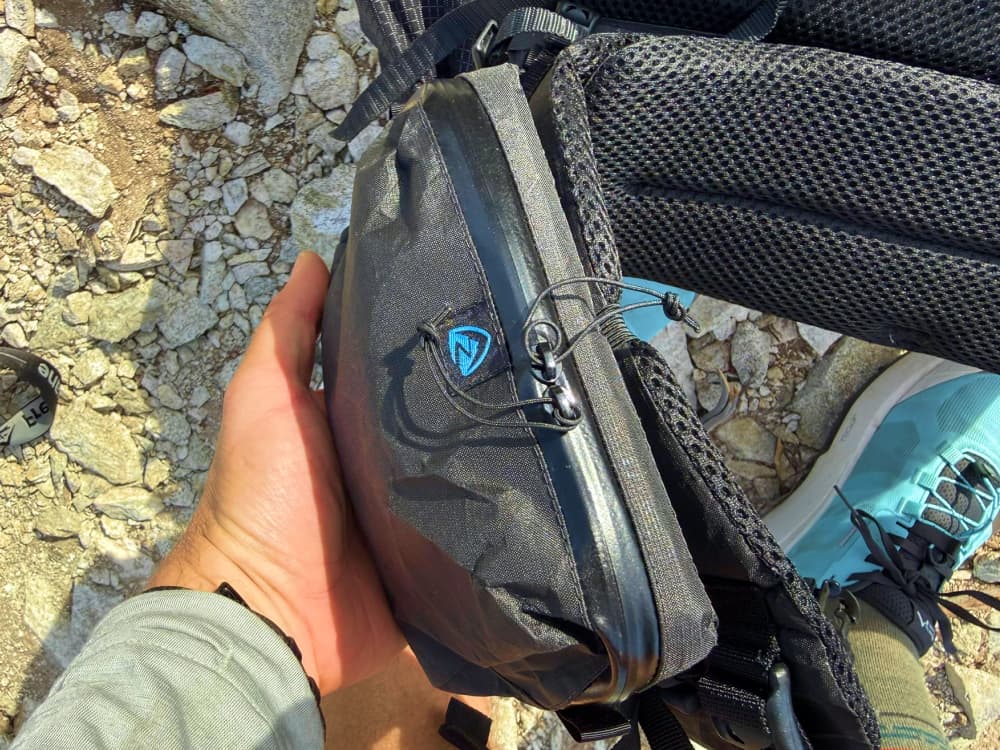
Extra large replaceable hip belt pockets
Expanded Cons of Zpacks Arc Pro Backpack
Expensive, and with key add-ons sold separately
Around $400 is the going rate for a premium ultralight backpack these days, which is already expensive. Arc Pro starts at $450 and immediately goes up to $500 once (in my opinion) mandatory hip belt pockets are added. It can easily approach $600 if fully decked out in all of the recommended add-ons.
Carbon frame stays can break
Carbon fiber is extremely light and stiff, which is what allows the Arc Frame system to transfer weight so well without increasing pack weight. However, the drawback is that carbon is brittle. Unlike aluminum, it snaps if fully overloaded. Zpacks reports that only ~0.1% of customers ever require a replacement frame stay, and the most common failure is the event that the hiker takes a big fall and force loads the pack. The good news is, all frame stays are replaceable and inexpensive.
Small fiddly plastic hardware
Compared to other UL packs, Arc Pro has smaller-than-average sized buckles, straps, and plastic adjustment hardware. This is a choice to reduce weight, but the cost is that it increases fiddliness, decreases user-friendliness, and is a bit harder to use in the cold
Sub-optimal for carrying over 30 lbs
For an ultralight backpacker shopping an ultra premium pack, you will probably keep your entire pack weight below 30 pounds most of the time. But while Arc Pro is rated to a 40lb load limit, it starts to become less comfortable and feels sub-optimal around 30-35 lbs. Luckily, you’ll probably only hit that range for extended water carries, or the first day or two of a week long trip.
Torso height adjuster drift
Minor complaint here, but I find that the torso height adjustment system at the top corners of the pack drift over time. They’re easy to reset, but it would be better if you could set it and forget it.
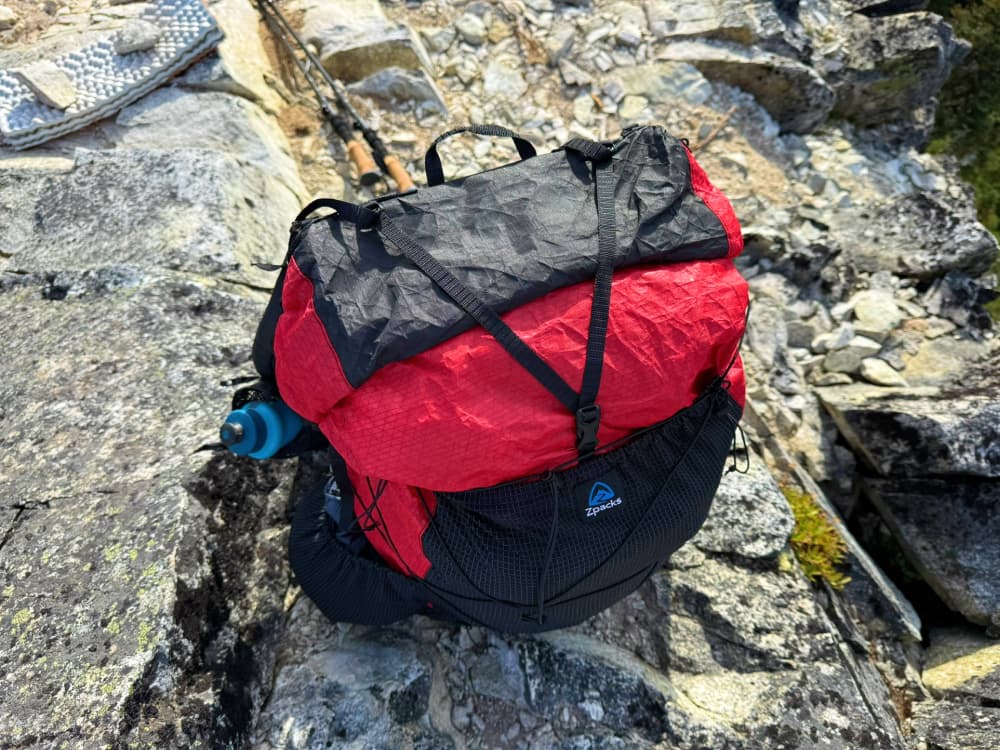
Roll Top V Strap and Side Closure Straps are nice upgrades
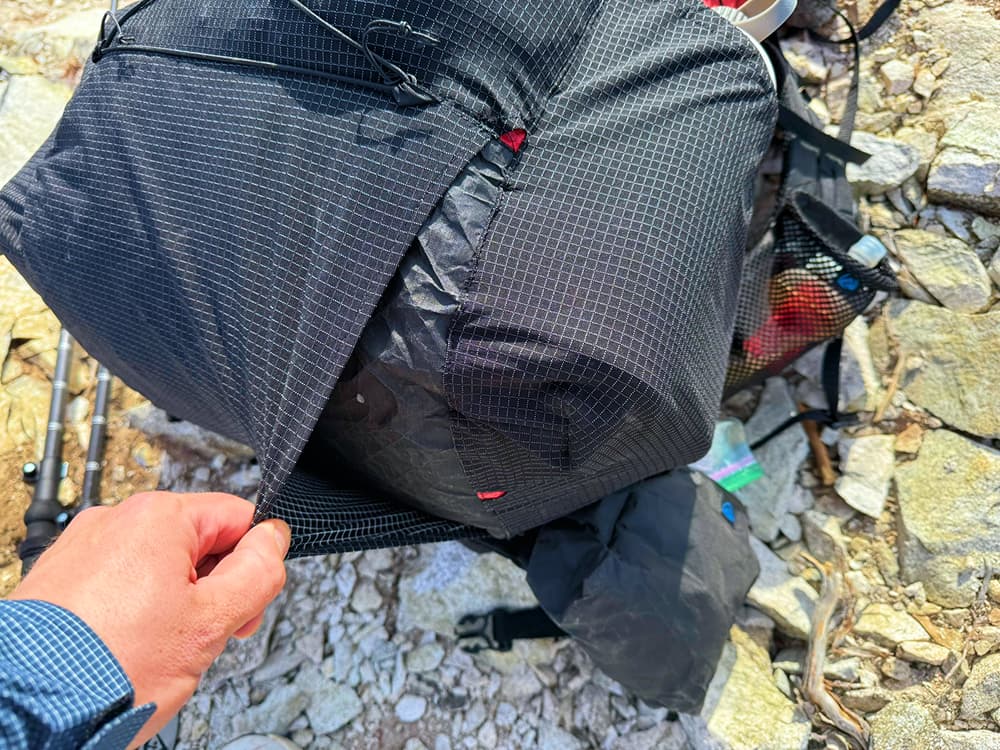

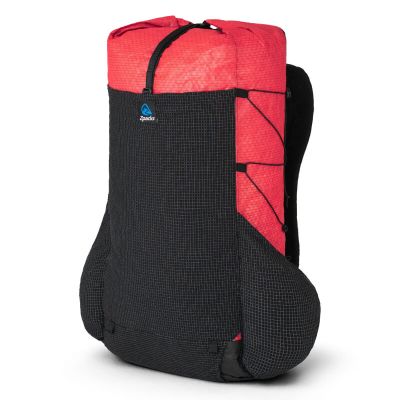
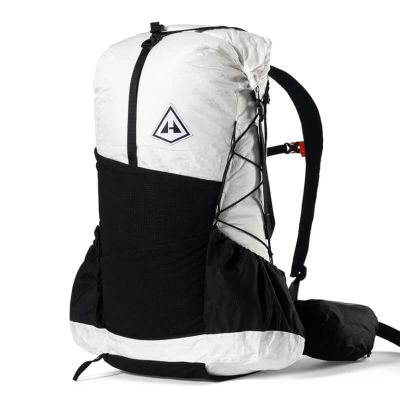
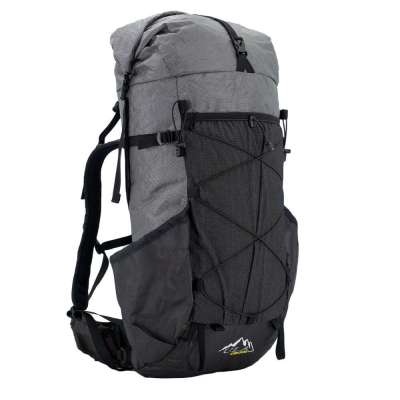
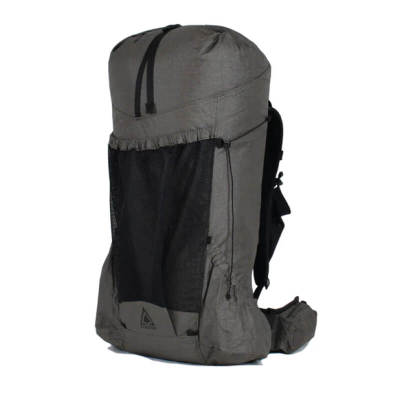
Zpacks Arc Pro Backpack Vs Competition
Broad level comparison
Compared to most of the other best full-size full-frame ultralight packs on the market, Arc Pro is lighter weight, has as-good-or-better weight transfer, superior pockets, and a better back panel. However it is the most expensive option, doesn’t handle heavy loads quite as well, and has a less durable carbon frame. It is the best overall Zpacks backpack to date.
Vs Original Arc Haul
Compared to baseline Arc Haul Ultra, Arc Pro is slightly more expensive and clearly superior, but only by a small margin. They share a similar overall design, including frame, weight, functionality, and modularity, but the stretch mesh pockets on the Pro version are a notable improvement over traditional open mesh front and static pockets. The zippered mesh sit pad back panel is also an improvement over the suspended trampoline Lycra panel in terms of utility, durability, and comfort (subjectively speaking), but it is less aerated and more sweaty. Note that the Arc Pro can also be set up with the suspended mesh Lycra panel if preferred.
Vs Nero Pro
Compared to Nero Pro, Arc Pro is essentially just a larger and slightly heavier version with a full frame. Because weight transfer improves comfort so dramatically, and the Arc frame weighs so little, I strongly recommend Arc Pro over Nero Pro to most people most of the time. Consider that the 50L Nero Pro with padded belt and foam pad included weighs 20 oz and the 50L Arc Pro with foam pad but without hip belt pockets weighs 23 oz. That is as big of a comfort-to-weight ratio increase you could possibly hope for. But there are caveats. If you are doing running-based fastpacking and will use the vest harness shoulder straps and carry a small super ultralight load, the Nero Pro is actually a better choice, conforming to your movement better, and will help to reduce bounce and sway. Lastly, we 100% recommend Nero Pro over the original.
Vs HMG Unbound, Southwest, Junction, Windrider
Compared to HMG backpacks, Zpacks Arc Pro does a much better job of taking weight off your shoulders because it has load lifters, is slightly lighter weight overall, has a better and more functional back panel, and ties Unbound for best-in-class pockets, beating out Southwest, Junction, and Windrider. HMG packs are advantaged via a lower price point, superior durability, and larger more user-friendly adjustment/buckling hardware.
Vs ULA Ultra Circuit
Compared to ULA Ultra Circuit, Zpacks Arc Pro is significantly lighter (25.5 oz vs 36.8 oz), and thus the superior ultralight choice. Both packs have a superb stretch mesh front pocket, mesh back panel, and supportive frame. Arc Pro’s frame transfers weight even better, and its back panel holsters a foam sit pad. The biggest advantage of ULA Ultra Circuit is that it’s less expensive, has larger more user-friendly adjustment/buckling hardware, and its main body and frame are both more durable.
Vs Durston Kakwa
Compared to Durston Kakwa, the Arc Pro is a few ounces lighter, has superior pockets and a better back panel with sit pad utility, and is available to purchase right now (at time of publication, and for most of the year, Kakwa is sold out). For the majority of backpackers, the Arc Pro is a better performer. That said, for only $300 and with built-in hip belt and shoulder strap pockets, Durston Kakwa is a significantly better value. Its internal frame system is simpler and more durable, while still offering great performance, weight transfer, and useability thanks to larger plastic buckles and adjustment hardware.
Zpacks Arc Pro Review Conclusion
For carrying less than 30 lbs while hiking on trail, Zpacks Arc Pro is arguably the best backpack money can buy. Compared to its peers, it has some combination of better pockets, better back panel, better weight transfer, better shoulder comfort, and lighter weight. Apart from being expensive, the biggest drawbacks are that it isn’t great for carrying heavy loads, carbon can break, and its plastic buckles and hardware are a bit fiddly. But the pros easily outweigh the cons and I recommend this backpack very highly. Happy trails!
