

Ultralight Winter Quilts Rated to Zero Degrees
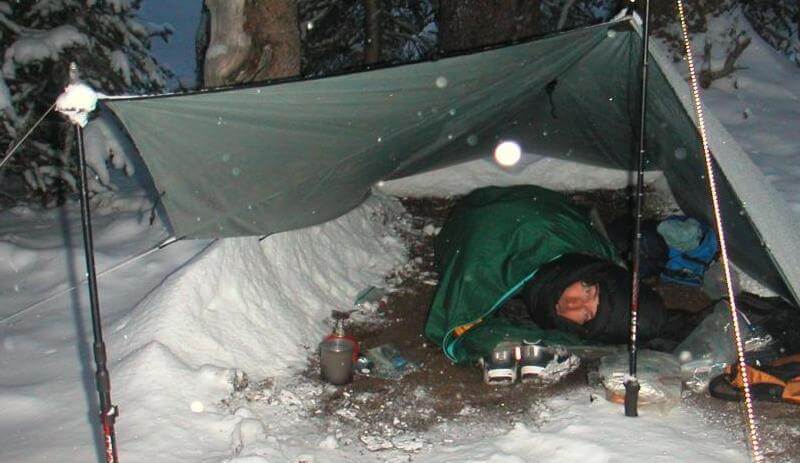
An ultralight 0 degree quilt is the best way to stay warm in sub-freezing temps without compromising on how much you have to carry. Yes, you can use a quilt in the cold, and no, it’s not drafty! Pairing a winter quilt with a high R-value sleeping pad yields an incredibly high warmth-to-weight ratio system. Even the value-tier quilts in this guide are more efficient than the literal best of the best sleeping bags, and for less than half the price!
This is a data-based gear guide. We ditch subjective analyses like perceived warmth and scattershot backcountry testing. Instead we evaluate each ultralight 0 degree quilt as neutrally as possible, primarily based on its uncompressed down volume per ounce of total weight stat. This measurement has a strong correlation to warmth-to-weight ratio, and allows us to assess which winter quilt uses its mass to insulate most effectively. As such, we are very confident in our objectively selected assortment.
Complete your system with our guides to winter sleeping pads and dry bags. Or go the traditional route with a 0 degree sleeping bag, or a lightweight 4 season tent. And don’t forget to pick up a pair of lightweight down booties and down pants.
You make Adventure Alan & Co possible. When purchasing through links on our site, we may earn an affiliate commission at no additional cost to you. Here’s why you can trust us.
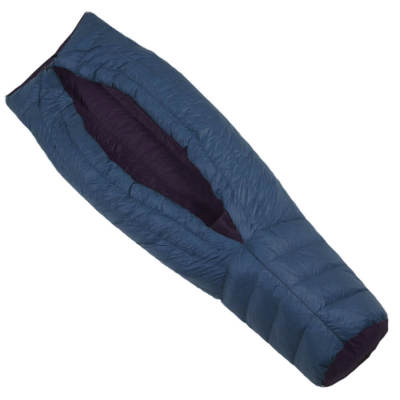
Ultralight 0 Degree Quilt Quick Picks
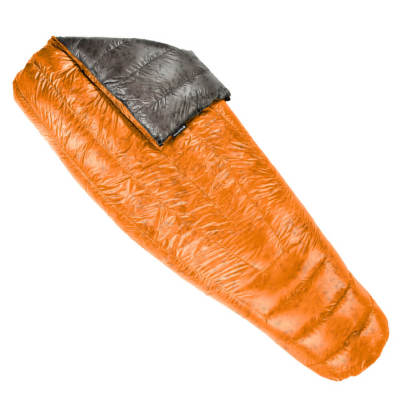
- Best Ultralight – Overall: Enlightened Equipment Enigma 0
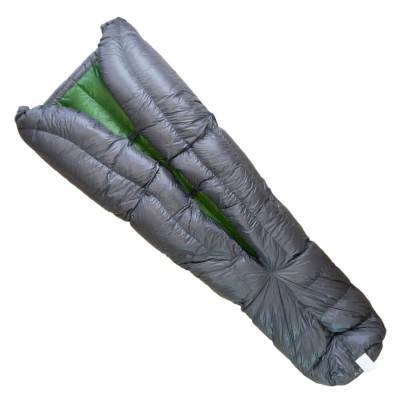
- Best Ultralight – Warmth: Hammock Gear Burrow UL 0, +4oz Overfill
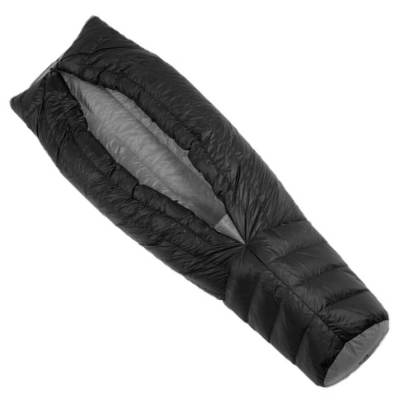
- Best Value – Ultralight: Outdoor Vitals Stormloft Down 0
- Best Value – Warmth: Hammock Gear Burrow 0, +4oz Overfill
Ultralight Winter Quilt Comparison Table
Mobile users rotate sideways for complete table view
| Model | Price ($) | Weight (oz) | Fill Weight (oz) | Fill Power (in³/oz) | Down Vol (in³) | Down Vol/Total Weight (in³/oz) |
| Enlightened Equipment Enigma | 505 | 24.2 | 19.3 | 950 | 18335 | 758 |
| Hammock Gear Burrow UL + 4oz | 540 | 30.8 | 22.9 | 950 | 21755 | 706 |
| Hammock Gear Burrow +4oz | 450 | 35.0 | 26.4 | 850 | 22440 | 641 |
| Outdoor Vitals Stormloft | 350 | 28 | 21.2 | 800 | 16960 | 606 |
How To Read This Table
- Fill Weight: Measures in ounces the total weight of all down insulation used in the quilt
- Fill Power: Measures in cubic inches the volume per ounce of uncompressed down
- Down Vol (in³): Measures the volume of all down in the quilt if were to be extracted and put into an uncompressed pile. It is derived by multiplying fill weight times fill power. It strongly correlates with the insulative ability of a quilt. If quilt A has more Down Vol (in³) than quilt B, it is extremely likely that quilt A will be warmer.
- Down Vol/Total Weight (in³/oz): Measures the uncompressed down volume in cubic inches per ounce of total quilt weight (counting the shell fabric, zipper, trim, etc). This measurement strongly correlates with relative warmth-to-weight ratio, and allows for comparison of different quilt chassis with different fill weights of different fill powers. From an ultralight backpacking perspective, this is the most important statistic, and the one we value most.
Best Ultralight 0 Degree Quilt
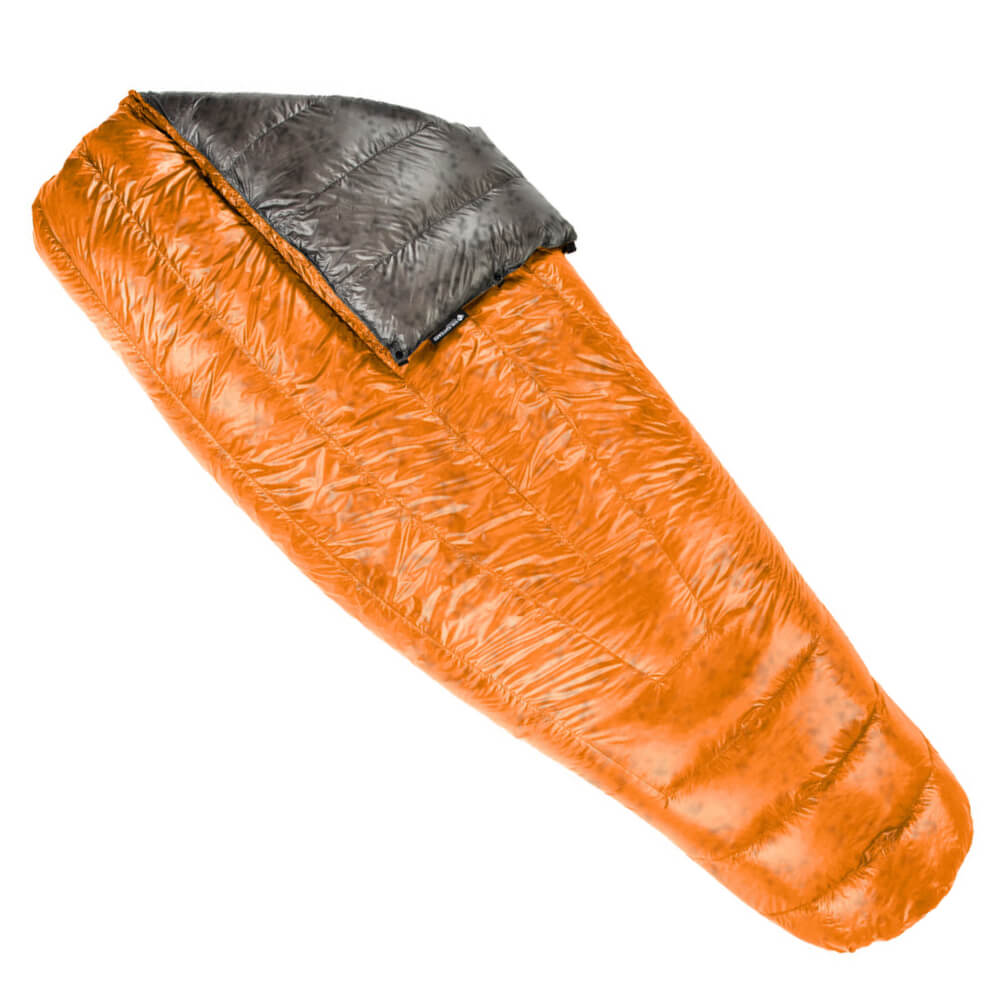
Enlightened Equipment Enigma 0
Ahh, Enlightened Equipment Enigma. If you’ve read our coverage of summer weight quilts, then you won’t be surprised that Enigma wins our top pick for winter quilts too. Its combination of 950 fill power down in a 7d shell is simply best-in-class, and offers the highest warmth-to-weight ratio. The U-shaped baffles prevent down from drifting off of the top. And thanks to the sewn footbox, which is definitely preferable to zippered models in a winter quilt, makes it EE’s most minimalist ultralight model.
Aside from decreased durability if you choose a 7d nylon shell, the only potential drawback to this quilt is that it does not use DWR-treated water-resistant down like many other quilts. That being said, Enlightened Equipment has stated that their testing found the benefits of water-resistant down are mostly overstated/marketing hype, that situations where it makes a noticeable difference are few and far between, and that untreated down lofts better (thus is warmer) when not wet. We leave it up to you, the reader, to decide.
- Price: $505
- Total Weight: 24.2 oz
- Fill Weight: 19.3 oz
- Fill Power: 950 in³/oz
- Down Volume: 18335 in³
- Down Volume/Total Weight: 758 in³/oz
- Shell Fabric: 10d
- Pros: Best warmth-to-weight ratio. Ultralight. Low bulk. U-shaped baffles. Optional draft collar. Option for 7d shell saves weight. Made in USA.
- Cons: 7d shell, if chosen, has low durability. Does not use DWR-treated down (could also be a pro).
Measured Configuration: 950FP Down, 0F Rating, Regular/Regular size, no draft collar, 7d/7d fabric.
Warmest 0 Degree Ultralight Quilt
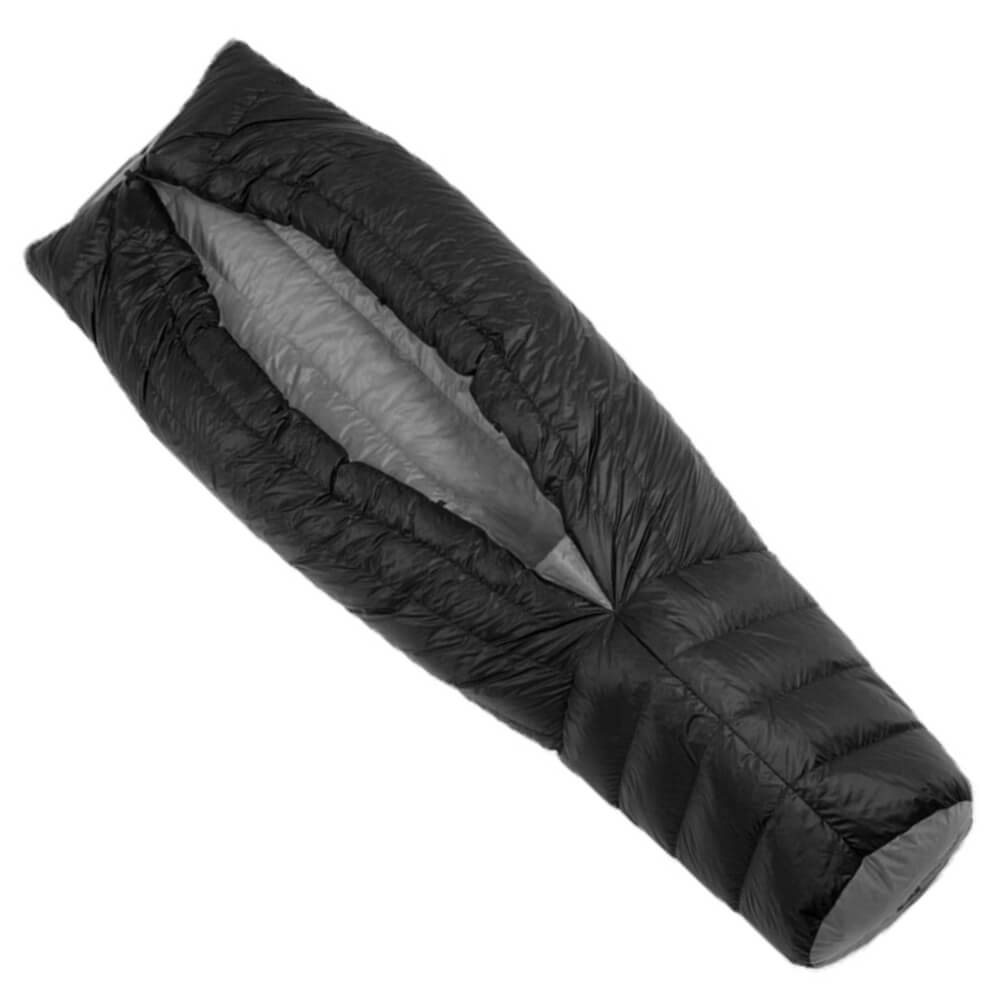
Hammock Gear Burrow UL 0, +4 oz Overfill
The Hammock Gear Burrow UL is our pick for warmest ultralight 0 degree quilt when overfilled with +4 oz of down – and no, it’s not just for hammocks. Configured this way, it has more uncompressed down volume (AKA loft, AKA insulative ability) than any other premium model. While it is a few ounces heavier than the aforementioned best ultralight pick, Enlightened Equipment Enigma, we estimate it to be ~18% warmer thanks to all of that additional down. Brands are pretty loosey goosey with the temperature rating in the name of a quilt, but we feel this configuration could qualify as a -5, rather than a zero.
The baffle configuration is just right on Premium Burrow, with a horizontal footbox and vertical baffling from the knees up. Remember, even slim campers should size up to the wide width quilt, because HG’s standard width is designed specifically for hammock campers and won’t offer enough drape to form a seal around a ground-based sleeping pad, especially if you need to wear a puffy jacket to bed.
- Price: $590
- Total Weight: 30.8 oz
- Fill Weight: 22.9 oz (w/ +4 oz overfill)
- Fill Power: 950 in³/oz
- Down Volume: 21,755 in³
- Down Volume/Total Weight: 706 in³/oz
- Shell Fabric: 10d
- Pros: Incredibly warm. High warmth-to-weight. Ultralight. High fill power. Good baffle configuration. Made in USA.
- Cons: Most expensive.
Measured Configuration: 7d/7d nylon, 0F temperature rating, Standard length, Wide width, Sewn Footbox style, 4 oz Overfill, no ground pad attachment
Best Value Ultralight Winter Quilt
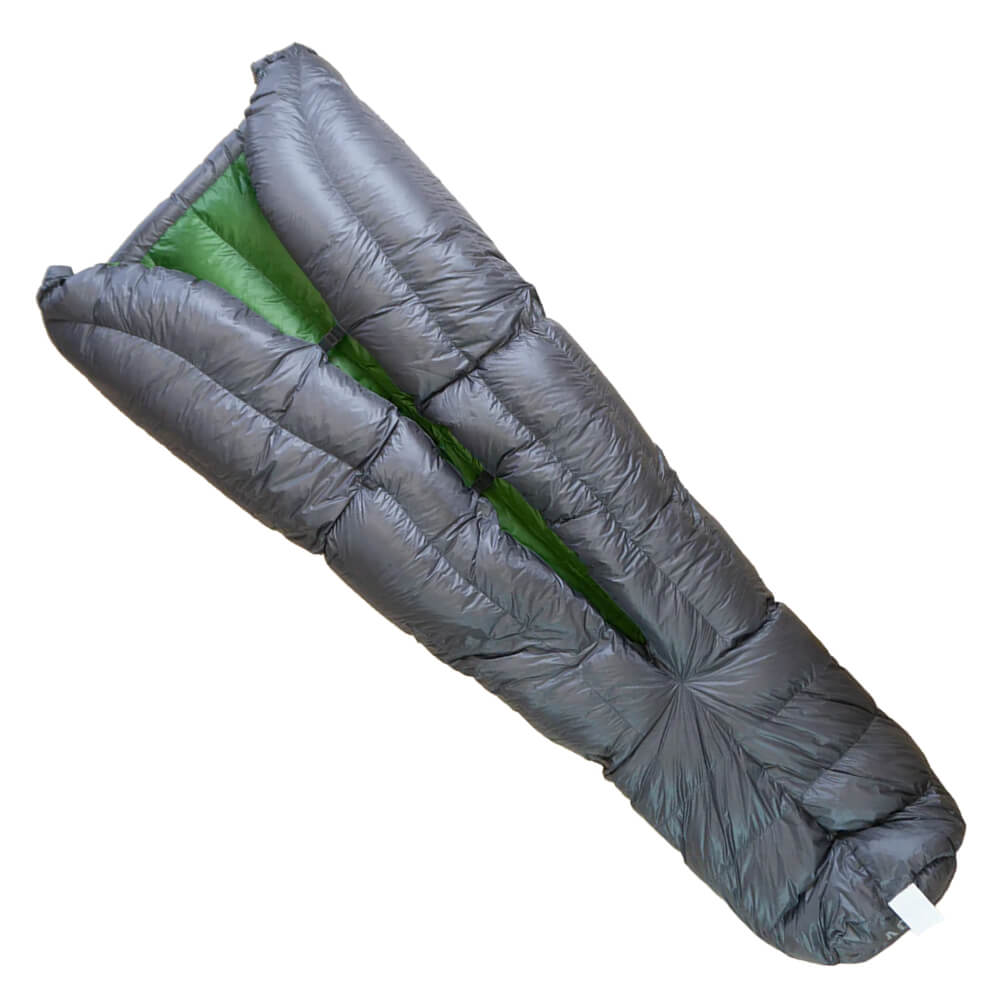
Outdoor Vitals Stormloft 0
Outdoor Vitals Stormloft is a relative new-comer to the quilt scene, but offers an incredible value proposition for ultralight enthusiasts at just $350. Despite the low price tag, you still get proper baffle alignment with a vertical channels transitioning to horizontal at the knee. The 10d nylon shell is ultralight and helps keep the total weight below 30 oz.
With everything else about this quilt ranging from good to great, there is one drawback. According to our calculations, it’s a bit less warm than is preferable. The combination of average fill weight (21.2 oz), with below average fill power (800), yields below average warmth. That being said, while it is the least warm 0 degree quilt on our list, it is still sufficiently warm for winter camping. But if you run cold or intend to push the temperature boundaries, we recommend looking elsewhere. It wouldn’t be unreasonable to think of this as if it were the Stormloft 5, rather than Stormloft 0. All said, this is probably the most cost-effective true ultralight winter quilt. And as an aside, we view the ultralight cutoff in this category to be 30 oz max.
- Price: $350
- Total Weight: 28 oz
- Fill Weight: 21.2 oz
- Fill Power: 800 in³/oz
- Down Volume: 16,960 in³
- Down Volume/Total Weight: 606 in³/oz
- Shell Fabric: 10d
- Pros: Ultralight. Great value. Comes with dry bag. Draft collar.
- Cons: Slightly underfilled, not the warmest. Sub-par down fill quality.
Best Value/Warmth Winter Quilt
Hammock Gear Burrow 0, +4 oz Overfill
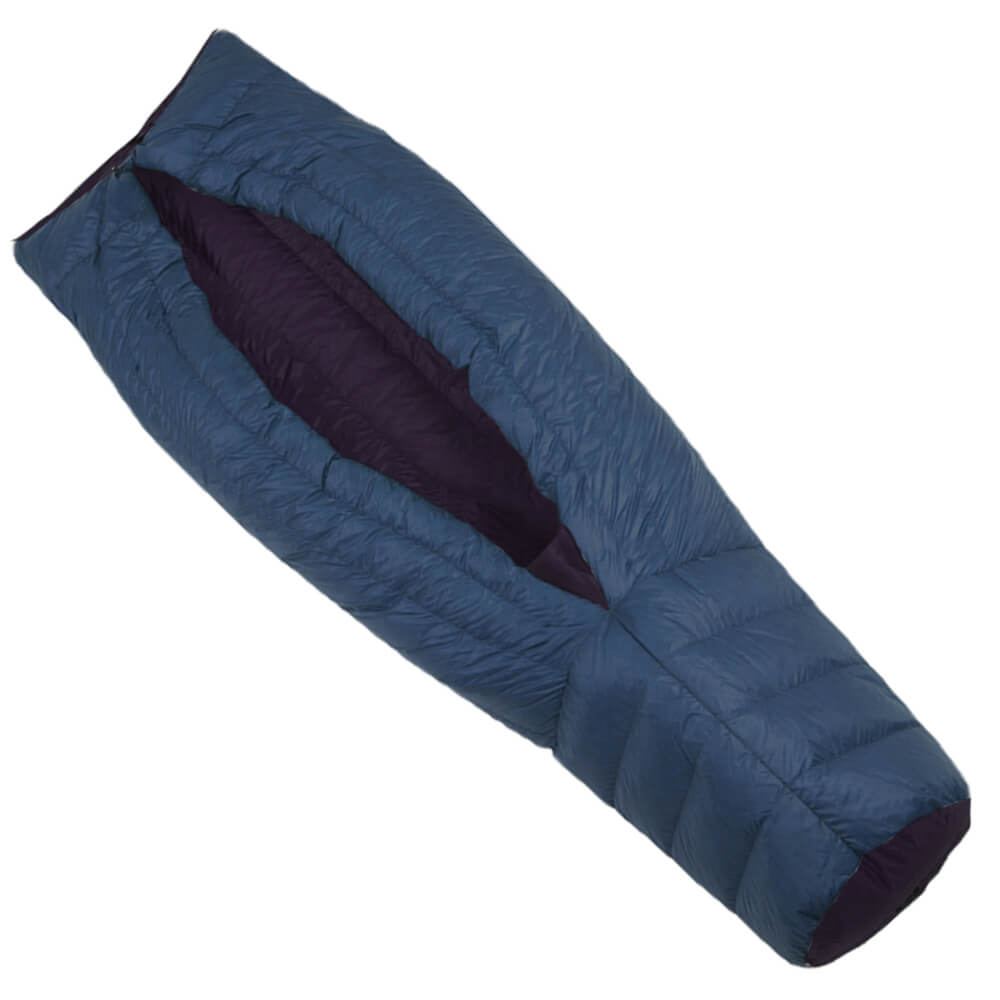
Hammock Gear Burrow is the warmest way to sleep in sub-freezing temperatures without breaking the bank. And thanks to its 850 fill power, it hardly even compromises on quality! This 0 degree quilt is the warmest in our lineup, despite also being one of the least expensive, even when overfilled with 4 oz of down. Seriously, you get a total fill weight of 26 ounces, which is simple massive. In fact, it’s actually even warmer than Hammock Gear’s Burrow UL (also with 4 oz of overfill). Check the numbers, it actually has a higher total volume of uncompressed down – AKA more total warmth.
While Hammock Gear formerly produced this quilt in a heavier and even less expensive taffeta fabric under the name “Economy”, the down is now properly encased in 10d nylon. While the price went up significantly, it’s still a killer bargain for such a warm winter quilt. Lastly, please remember that even slim campers should size up to the wide width quilt, because HG’s standard width is designed specifically for hammock campers and won’t offer enough drape to form a seal around a ground-based sleeping pad, especially if you have to wear a puffy jacket to bed.
- Price: $450
- Total Weight: 35.0 oz
- Fill Weight: 26.4 oz (w/ +4 oz overfill)
- Fill Power: 850 in³/oz
- Down Volume: 21,755 in³
- Down Volume/Total Weight: 641 in³/oz
- Shell Fabric: 10d
- Pros: Very warm. Lightweight. Made in USA.
- Cons: Not ultralight. Bulky.
Measured Configuration: 10d/10d nylon shell, 0F temperature rating, standard length, wide width, sewn footbox, 4 oz overfill, no ground pad attachment.
Supplemental Gear For Using A Quilt In Winter
Using a quilt in conditions well-below freezing requires some specialized gear that sleeping bag users and summer quilt campers might not need.
First, as quilts are inherently backless, it’s absolutely critical to use a designated cold weather sleeping pad that keeps your back warm on top of frozen ground. Even if you have a zero degree quilt on a 25 degree night, you will not be warm or comfortable with a 3 R-value sleeping pad. For intended use in overnight temps ranging from 0-30F, we recommend a sleeping pad with R-value 6+, ideally 7+. You may also combine a closed cell foam pad with an inflatable, because R-values stack. However, multiple pads are bulky, and a dedicated winter pad is the better option.
Secondly, you will need a down or insulted modular hood to keep your head warm. In summer, you can skate by with your fleece hood and/or a hat; basically what you already carry. But in truly cold temps, that’s not enough, and your head will get cold and your quilt won’t solve the issue no matter how warm. If you expect temperatures below 20-25F, you should carry a modular down hood. You can of course use your down jacket’s hood, but then your torso may become too warm or bulky. It’s better to have a dedicated sleeping hood, and they weigh only 1-2 oz.
- Preferred Sleeping pads with R-Value 6+
- Preferred Supplementary Insulated Hood
Conclusion to 0 Degree Quilt For Winter Backpacking
Thank you for reading our guide to ultralight 0 degree quilts! We’re quite confident in this assortment and know you will love whichever model you settle on. When it comes to winter backpacking, we usually bring a quilt instead of a sleeping bag, and for the ultralight crowd, we strongly recommend you do too. Please drop us a line in the comments if you have questions or feedback. Happy camping and stay cozy!


Leave a Reply
Want to join the discussion?Feel free to contribute!