



Choose a Fully-Featured, Durable, Comfy, Ultralight Backpack
Upgrading to a best-in-class ultralight backpack is one of the quickest and easiest ways to reduce carried weight and massively improve your experience on the trail. The average ultralight backpack on this list weighs two pounds, holds 55-60 liters, and can comfortably carry loads weighing 30-35 pounds. Once you go ultralight, there’s no going back!
This buyer’s guide is grounded in decades of experience wearing an ultralight backpack, and is informed by stats/feature/value comparisons, backcountry testing, meta-analysis, and the philosophy that lighter weight is better. By analyzing the best packs from all of those angles, we are able to evaluate which are the best performers. Hike confidently in your next great ultralight backpack!
Read our pro tips and buyer info about shopping for and using an ultralight backpack. And while you’re here check out more storage guides for shoulder strap pockets, water bottle holders, dry bags, daypacks, hiking fanny packs, EDC backpacks, running backpacks, expedition backpacks, and fastpacks.
You make Adventure Alan & Co possible. When purchasing through links on our site, we may earn an affiliate commission at no additional cost to you. Here’s why you can trust us.
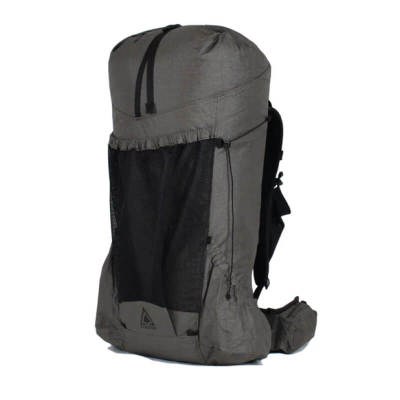
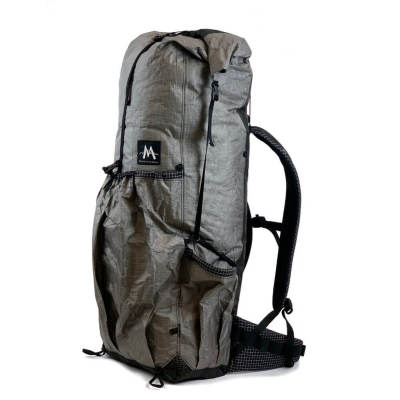
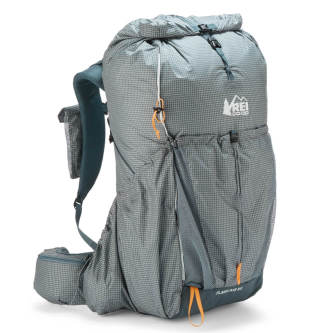
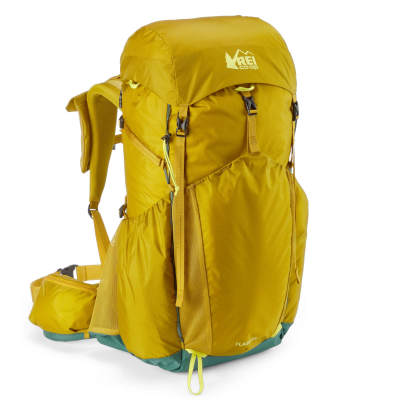
Best Ultralight Backpack Recommendations
Ultralight Backpack Comparison Table
| Backpacks | Price ($) | Weight (oz) | Volume with pockets (L) |
| MLD Exodus 55 | 325 | 18.0 | 55 |
| Zpacks Arc Haul Ultra 60 | 399 | 21.9 | 60 |
| Outdoor Vitals CS40 Ultra | 368 | 27.0 | 53 |
| REI Flash Air 50 | 299 | 31.0 | 50** |
| Durston Kakwa 55 | 280 | 31.3 | 68 |
| Hyperlite Mountain Gear Unbound 55 | 399 | 31.0 | 64 |
| Outdoor Vitals Shadowlight 60 | 250 | 31.5 | 66 |
| ULA Equipment Ultra Circuit | 380 | 33.8 | 68 |
| Gossamer Gear Mariposa 60 | 315 | 34.7 | 60 |
| REI Co-op Flash 55 | 199 | 45.0 | 55** |
*When external pocket volume is not provided by the manufacturer, we estimate it to be 10L.
**Based on side-by-side comparisons, we suspect manufacturer has underestimated volume.
Best Ultralight Backpack Reviews
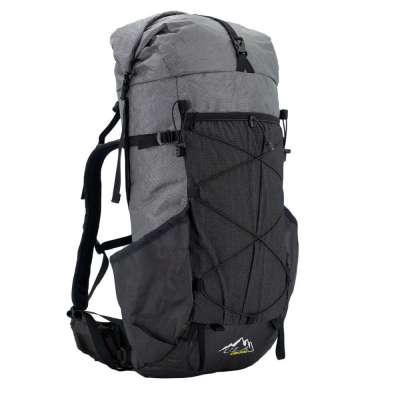
ULA Equipment ULTRA Circuit
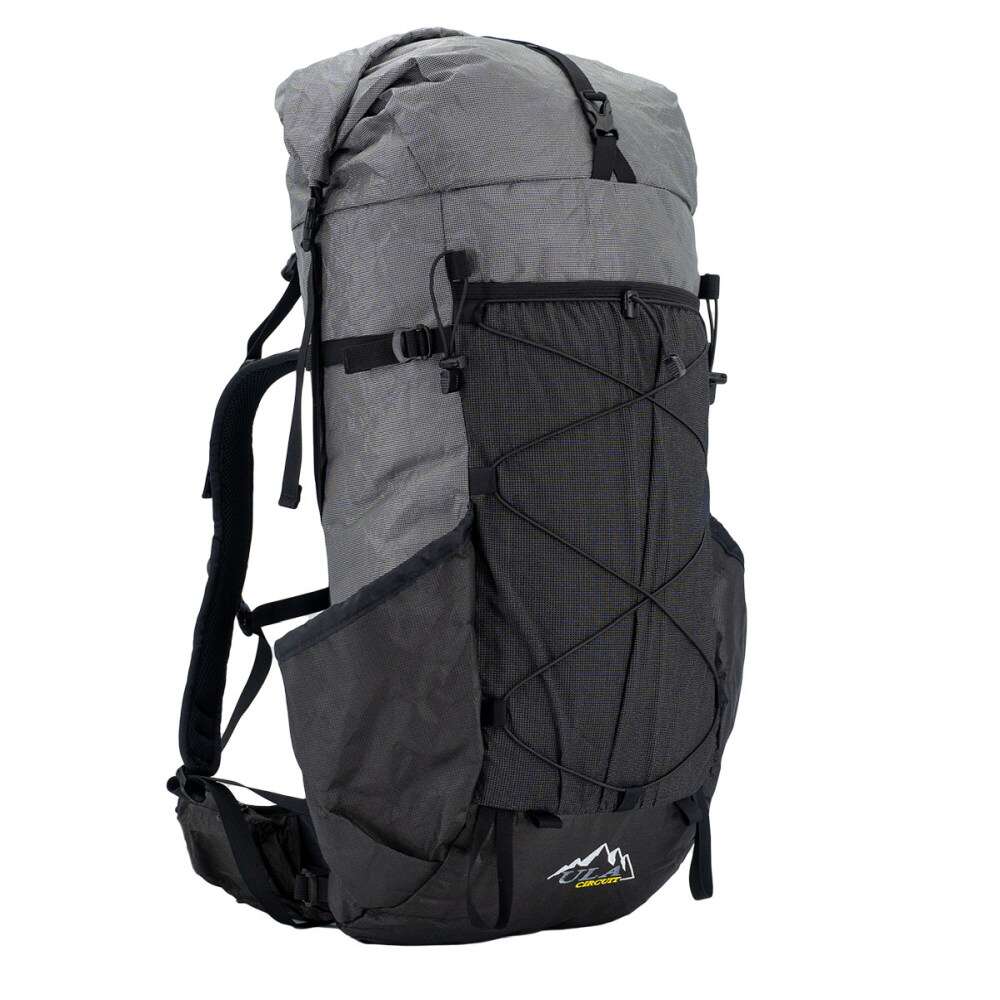
The Ultra Circuit is an absolutely top tier, comfy, indestructible, ultralight-yet-voluminous backpacking backpack. Designed for thru-hiking, but perfect for all multi-day excursions, this comfy, internal frame workhorse is built with best-in-class Challenge Ultra fabric, its namesake upgrade to the original Robic Nylon version. Read more in our full-length ULA Ultra Circuit Review.
- Weight: 33.8 oz
- Price: $380
- Materials: Challenge ULTRA-X 400/200
- Frame: Aluminum stay, carbon fiber & plastic U-shaped suspension hoop, dense foam back panel
- Load Capacity: 35 lbs
- Internal Volume: 45L
- External Volume : 23L
- Pros: Ultralight. Waterproof fabric. Incredibly durable. Voluminous. Comfy. Excellent buckles and straps.
- Cons: Expensive. Rounded bottom doesn’t sit upright while loading. Not seam taped.
Construction & Features
At its core, the Ultra Circuit is a roll top, internal frame pack, the body of which is built with waterproof and lighter-and-more-durable-than-Dyneema Challenge UltraX fabric, our preferred backpack material. The frame utilizes one aluminum stay in conjunction with a U-shaped suspension hoop and dense foam back panel covered in aerated mesh for surface breathability. It transfers weight to the hips very well, and your shoulders will be thankful of the functional load lifters.
This pack has the best rear stretch mesh pocket we’ve ever tested. Primarily, this is because it’s also the largest. But the UltraStretch fabric is both durable, and well, ultra stretchy. This allows for an exceptional exterior storage capacity, which is enhanced by the pair of large, cinchable side pockets. Each is wide enough to store a pair of 1L Smartwater bottles.
One standout design feature of this pack is the dual, reverse-pull hip belt adjusters. That is, there are two adjusters on each side of the hip belt, which improves pressure distribution and helps customize a perfect fit. What’s more, the nylon webbing adjusters are the best we’ve ever used thanks to their large lip. Two large and very burly hip belt pockets complete the package.
Verdict
Relative to its 33.8 oz weight, the ULA Ultra Circuit is arguably the most durable, comfortable, and functional, backpacking pack available. From perfect nylon strap adjusters, to the best-in-class Challenge UltraX fabrics suite, we give our strongest seal approval to the designer’s choice of features and materials across the board. Simply put this backpack is excellent. We highly recommend this pack to thru-hikers and weekend warriors alike.
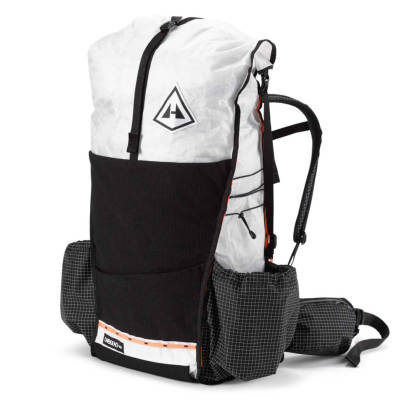
Hyperlite Mountain Gear Unbound Backpack
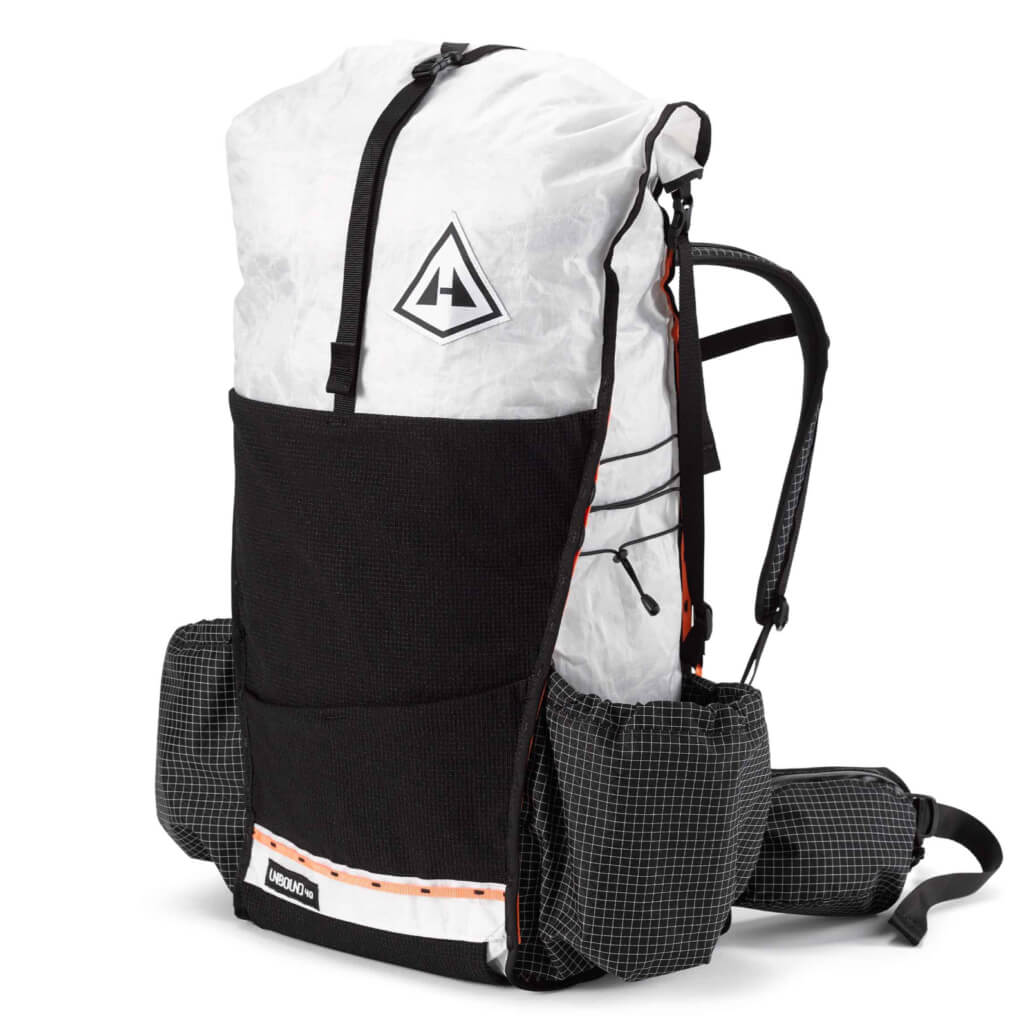
The HMG Unbound 55 (shop now) is minimalist, ultralight, waterproof, durable, and comes with a massive suite of external storage for all of your snacks, water, and day gear. This thru-hiking-inspired design is an overall upgrade to Hyperlite’s base models, the Southwest, Windrider, and Junction. Read more in our full-length Hyperlite Mountain Gear Unbound Backpack Review.
- Weight: 31.0 oz
- Price: $399
- Materials: Dyneema. DCH 50 top DCH 150 bottom
- Frame: Contoured aluminum stay, 1/4″ foam back panel
- Load Capacity: 40 lbs
- Internal Volume: 55L
- External Volume : 9L
- Pros: Waterproof. Durable. Ultralight. Good load transfer. Massive side pockets. Reverse pull hip belt.
- Cons: Expensive. External rear stretch pocket has no slack. No load lifters.
Construction & Features
HMG packs have become iconic for their instantly-recognizable, white Dyneema Fabric construction. The material is burly and indestructible, waterproof, and ultralight. And Unbound makes great use of it with a simple roll top design adorned with a massive external storage suite. A single, lightweight aluminum stay transfers weight from shoulders to hips.
Perhaps our favorite feature is the cinchable, XL side pocket design. They’re roomy enough to each store multiple water bottles. And because they’re so large, they’re also great for carrying accessories like rain gear, gloves, hats, etc. The Dyneema Stretch fabric front pocket too is quite large and voluminous with expansion capabilities.
The removable hip belt is comfortable, includes reverse-pull adjustability for ease of operation, and has two massive zippered pockets on either side, more than large enough to store a phone. Rounding out the suite of features are a top Y-strap (we recommend it for storing a fleece or camp sandals), shock cord compression on the side panels, a stretch fabric under-pack pocket, and orange daisy chain trim.
Verdict
HMG Unbound 55 is an exceptional all-purpose ultralight backpacking backpack that will haul and protect your gear for many years to come. We recommend it very highly, and even prefer Unbound over past Hyperlite favorites.
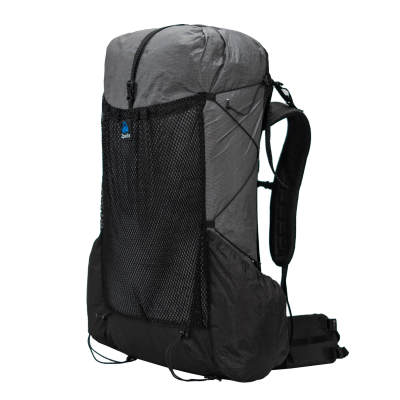
Zpacks Arc Haul Ultra 60L Backpack
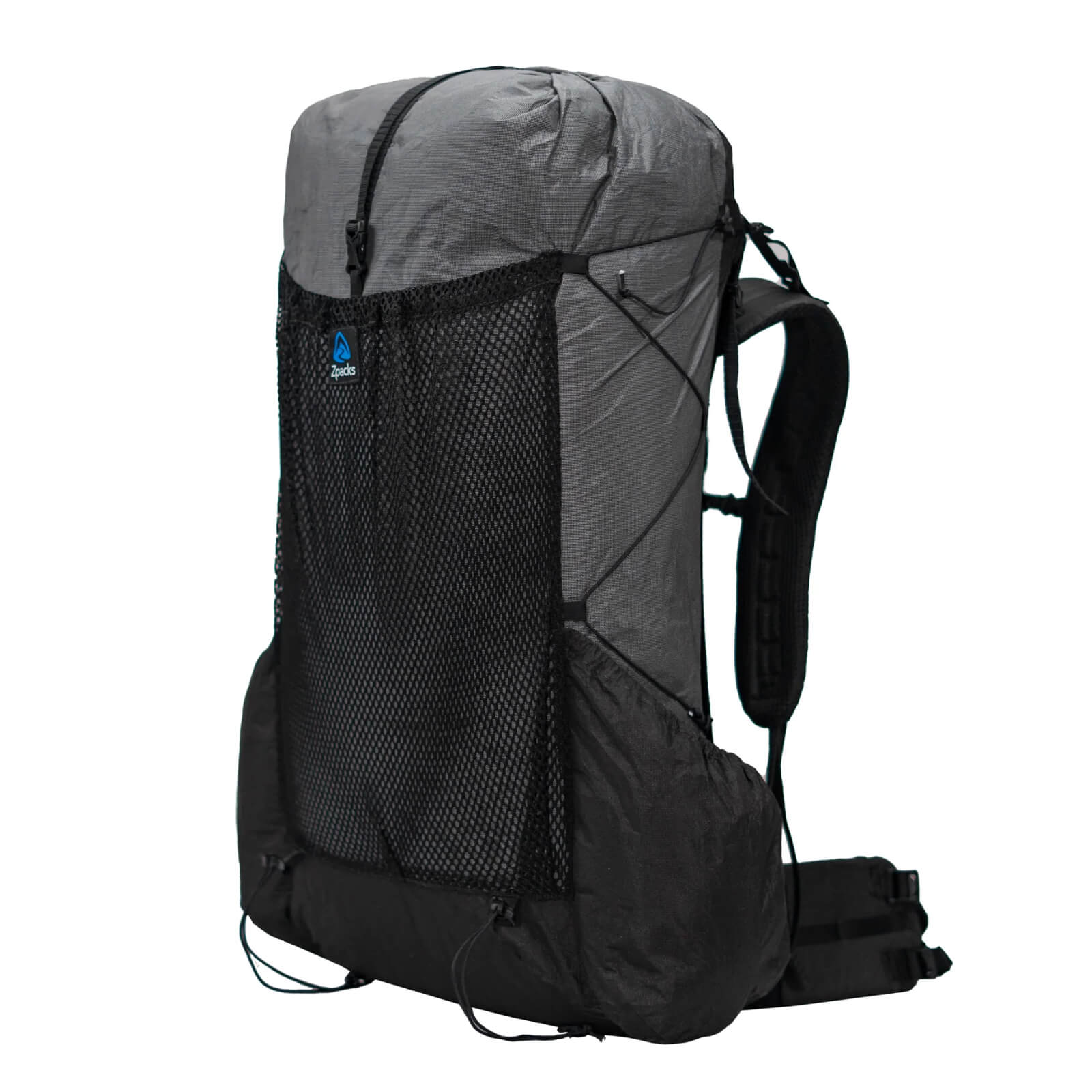
The magic of the Zpacks Arc Haul Ultra 60L (shop now) is that you get a full external frame backpacking backpack for only 22 oz. It’s designed with the new and best-in-class Challenge Ultra fabric, which is waterproof, and has a better durability-to-weight ratio than Dyneema. Arc Haul is our top choice for crushing long on-trail mileage
- Weight: 21.9 oz
- Price: $399
- Materials: Challenge Ultra 200
- Frame: External Curved Carbon Fiber Stays, suspended mesh back panel.
- Load Capacity: 40 lbs
- Internal Volume: 47L
- External Volume : 13L
- Pros: Very ultralight. Exceptional load transfer. Comfy. Waterproof. Ventilated. Good pockets. Best-in-class materials. Wide articulated shoulder straps.
- Cons: Expensive. Frame durability is modest. Hip belt pockets sold separately.
Construction & Features
We love Arc Haul’s ultralight take on the old-school full-external-frame design. This offers exceptional load transfer from shoulders to hips, and makes it one of the comfiest packs in our guide. The Arc in its namesake refers to the curved carbon fiber air stay frame configuration, which keeps the surface off your torso via a taut Lycra panel for excellent back aeration while preventing any lumps from jabbing.
While on the whole, this pack makes for a great daily driver, we don’t recommend Arc Haul for extensive off-trail hiking, canyoneering, or extra-rugged pursuits. You can’t have a 22 oz full-frame pack with making compromises, and while the frame’s durability-to-weight ratio is high, it’s total durability is modest. We would describe it as tough-not-rugged.
If the frame is headline news, Arc Haul’s next biggest story is the seriously excellent suite of external storage. A massive mesh pocket adorns the front, and two large side pockets fit water bottles, rain gear, or whatever else.
At $399, this is already one of the most expensive ultralight backpacks, yet even so, we feel it’s worthwhile to add in a pair of modular Belt Pouches for $30 a pop.
Verdict
From a technology and engineering perspective, the Zpacks Arc Haul 60L is far and away the most impressive ultralight backpack. It is comfortable, has large user-friendly pockets, and is likely the single best option to reduce your base weight.
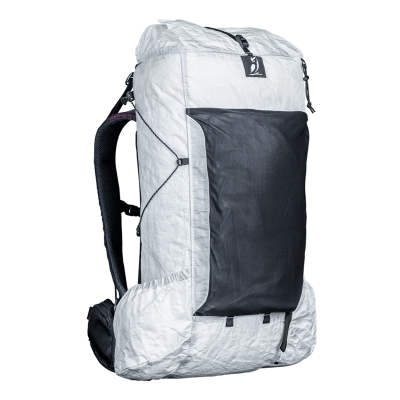
Outdoor Vitals CS40 Ultra Backpack
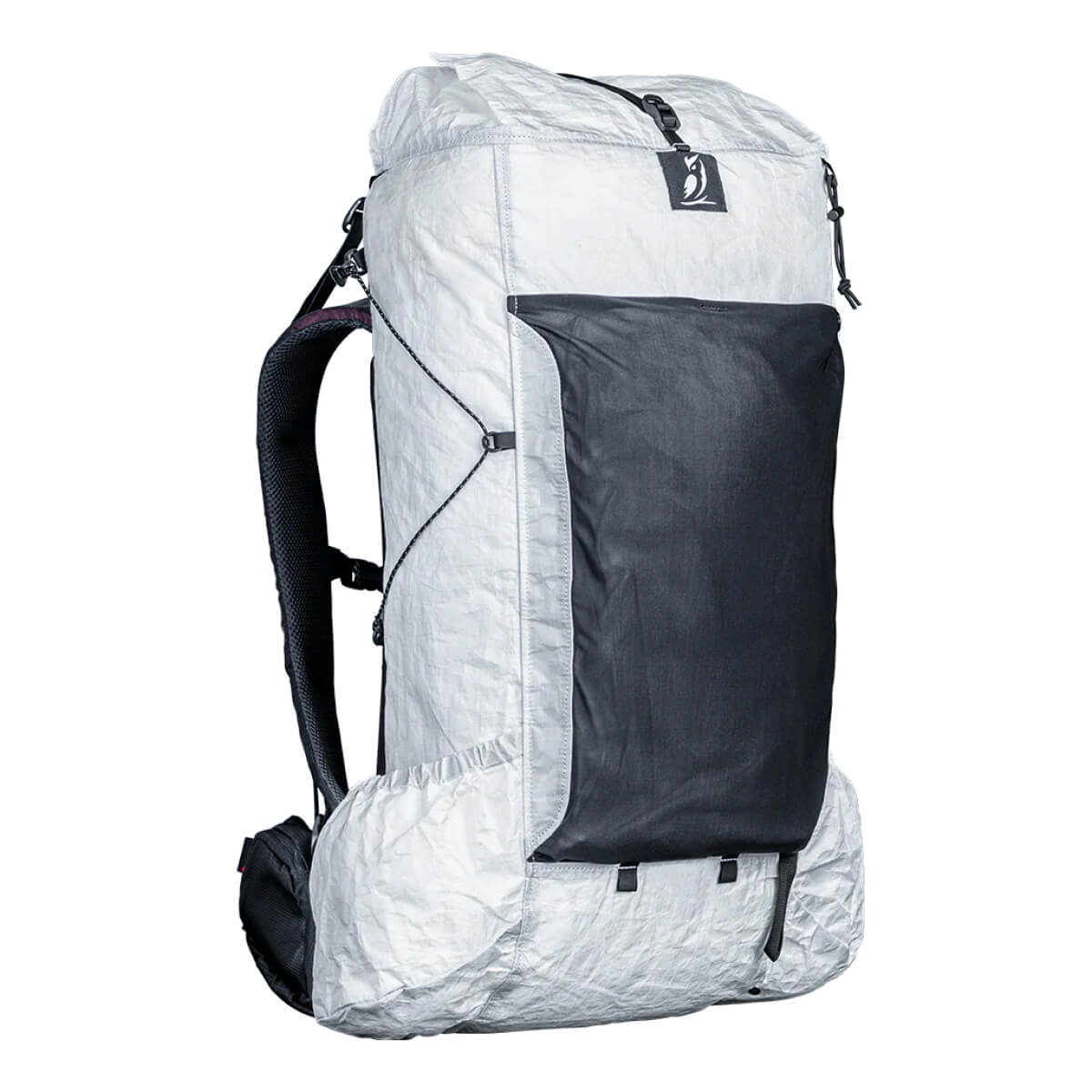
The CS40 Ultra (shop now)is a new and lighter-than-average contender in an elite group of best-in-class, internal frame ultralight backpacks made with best-in-class Challenge Ultra fabric. Read more in our full-length Outdoor Vitals CS40 Review.
- Weight: 27 oz
- Price: $368
- Materials: Challenge UltraWeave 200
- Frame: 2 Carbon Fiber Stays, Foam Back Panel
- Load Capacity: 35 lbs
- Internal Volume: 41L
- External Volume : 12L
- Pros: Very ultralight. Challenge ULTRA fabric is durable and waterproof. Comfy. Load lifters. Premium performance.
- Cons: Expensive. Rear pocket is stretch mesh. Side pockets are a bit small. 40L size is less versatile than 50L+.
Construction & Features
The most important callout here is the use of Challenge Ultra fabric. Still relatively new to market, this best-in-class wonder fabric beats Dyneema at its own game as it is lighter weight and more durable, while still offering full waterproof protection. Perhaps the only materials choice we disagree with on this pack is the use of stretch mesh for its rear pocket, which has a poor track record of being prone to snags, tears, and rips.
We also love the two ounce carbon fiber stay frame, which lends structure, transfers weight to hips, and allows for functional load lifters to further ease the shoulders. In conjunction with its aerated foam back panel, hiking with the CS40 pack proved to be very comfortable, especially compared to frameless packs in a similar weight class.
We found the hip belt foam to be comfy and the structured hip belt pockets to be adequately sized for storing a few snacks each, even if we wouldn’t have minded them to be about 25-50% larger. The reverse-pull hip belt adjuster is very nice. The use of static side-compression-cords with line locks (as opposed to shock cord) was interesting, but proved functional at holding a sit pad or hanging socks to dry.
The 41L main compartment volume is perfect for storing an ultralight load, though we generally find 50+L packs to be more versatile in their ability to fit a week’s worth of food or winter camping gear.
Verdict
If you want a top tier, fully-featured, lighter-than-average ultralight backpacking backpack, the OV CS40 Ultra is well-worth considering. It’s durable and waterproof thanks to Challenge Ultra Fabric, and has great comfort and load transfer thanks to the carbon fiber frame. Despite a few minor quibbles with their pockets, we give this pack a very strong seal of approval.
Durston Kakwa 55
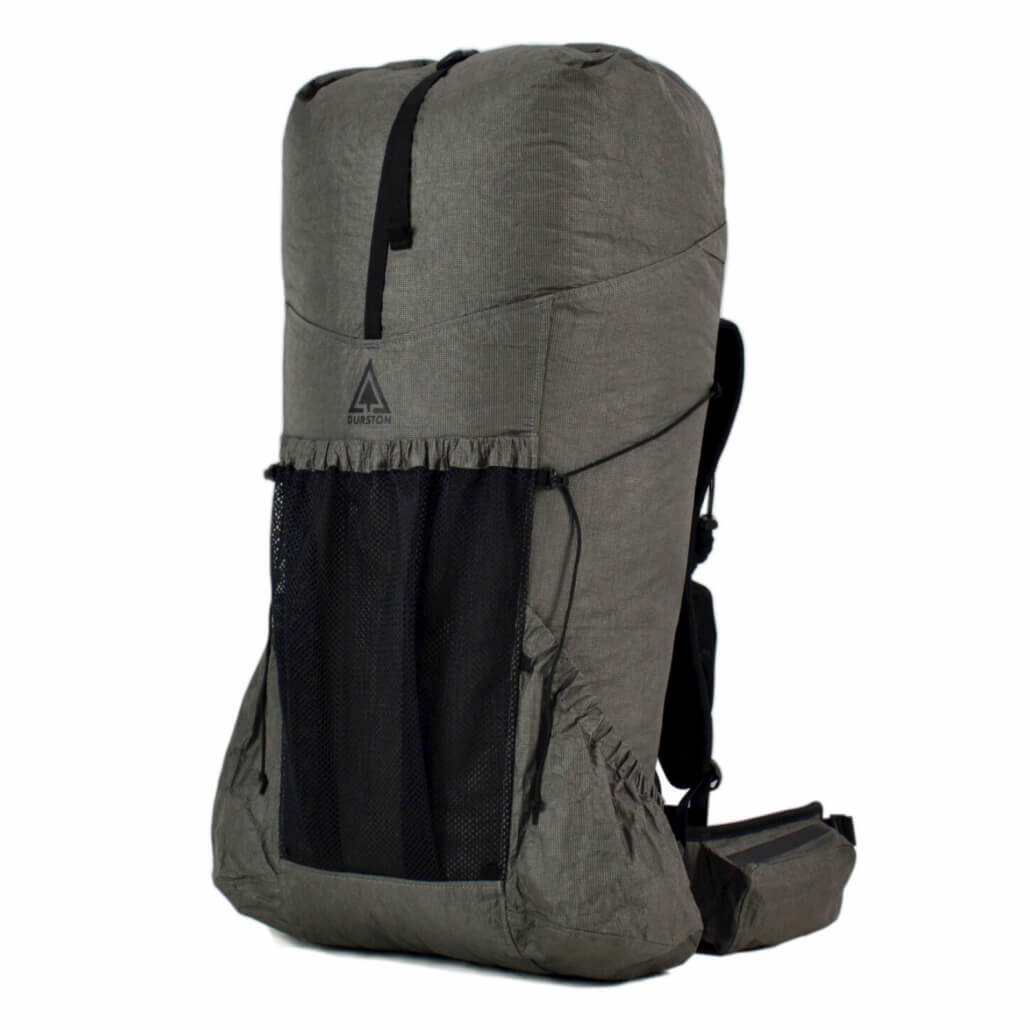
The Durston Kakwa 55 is an incredibly well-designed, comfortable, ultralight backpack decked out with user-friendly features and constructed with best-in-class, waterproof, hyper-durable Challenge Ultra 200 fabric. At time of publication, the size medium is backordered.
- Weight: 29.0
- Price: $260
- Materials: Challenge Ultra 200
- Frame: Inverted U frame of hollow aluminum
- Load Capacity: 45 lbs
- Internal Volume: 55L
- External Volume : 15L
- Pros: Ultralight. Best-in-class materials. Comfy. Durable. Waterproof fabric. Great value. Excellent weight transfer. Good value.
- Cons: Not seam taped. Usually sold out. Built-in front shoulder strap pockets could be larger.
Construction & Features
This pack is constructed with Challenge Ultra 200 fabric. A waterproof material, 15x stronger than steel, and statistically superior to Dyneema and ripstop nylon in virtually every way. Note that while the fabric is waterproof, the pack is not seam-taped and dry bags or liners are still recommended.
Kakwa 55 has a famously excellent load carry for an ultralight pack thanks to its inverted hollow aluminum tubing frame and load lifters. It is comfortable with loads up to 45 pounds. The S shaped shoulder straps are ergonomic and comfy. The reverse pull hip belt straps are choice and easy to use. The whole setup is just so dang comfortable and user-friendly. Though it does tend to take on a barrel shape when full.
We also love the suite of pockets. It has a large static mesh front pocket which creates room via pleated slack, rather than more commonly used stretch mesh, which can be prone to ripping. Two large top entry side pockets carry water bottles, but one has a bonus zippered pocket for storing a hat or gloves that can be accessed while worn. The suite is polished off with two large hip belt pockets, and a pair of complimentary, built-in shoulder strap pockets. These can fit bear spray, a phone, or small bottle, but we wish they were slightly larger.
Verdict
Kakwa is in contention for one of the best ultralight backpacks on the market thanks to top of the line Challenge Ultra fabric, a sub-two pound weight, an intelligently designed external storage suite, and excellent weight transfer all for an incredible value. There’s a reason it’s almost always sold out.
Mountain Laurel Designs Exodus 55L Backpack
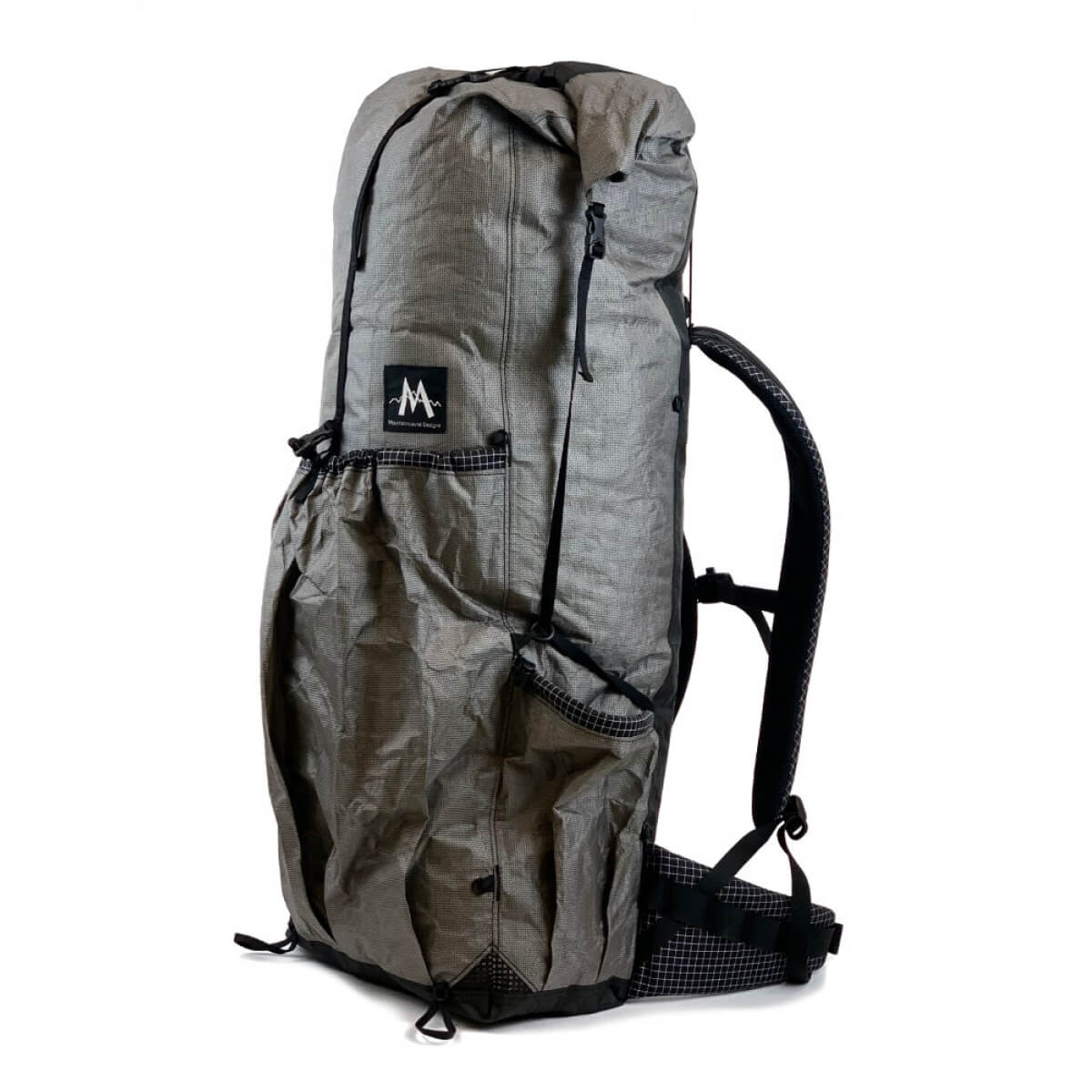
Tough, hyper-durable, voluminous, nearly waterproof, and weighing only 18 ounces, the MLD Exodus 55L is a frameless ultralight backpack to behold (shop now). It’s a staple in Alan’s quiver, and he prefers it for guiding in Alaska and Colorado.
- Weight: 18 oz
- Price: $325
- Materials: Challenge Ultra 100/200
- Frame: Frameless, with optional foam sit pad back panel
- Load Capacity: 25 lbs
- Internal Volume: 48L
- External Volume : 10L
- Pros: Ultralight. Waterproof fabric. Extremely durable. Great pockets. Elegant design. Alan’s pet pack.
- Cons: Frameless – no weight transfer. Low load capacity. 7-10 week lead time. Only compatible with full ultralight kit. Hip belt pockets are not complimentary.
Construction & Features
What makes this pack so ultralight is the frameless design, meaning no back panel, no aluminum stays, no weight transfer, and a 20-25 lb comfortable load range. As such, this is a professional-grade, expert-level ultralight backpack that can only be used with a fully dialed-in ultralight kit. But if you are confident in a 10 lb base weight, this might be the single best backpack available.
Exodus is constructed with best-in-class waterproof Challenge Ultra fabric, 10x stronger than steel, and more abrasion resistant than Dyneema. What sets it apart is how all of the external pockets are also designed with Ultra fabric (as opposed to mesh or stretch fabric). It’s pleated for expansion volume, and protects gear from light rain or getting scraped up when dragged over rough surfaces.
S-shaped 3″ wide by .8″ shoulder straps sit comfortably and disperse pressure. A minimalist hip belt secure the pack to your torso. A Y-strap allows for additional storage on the upper deck.
Verdict
The MLD Exodus 55 is a beauty to use and behold and we recommend to anyone who seeking the most favorable blend of durability, low weight, and high volume. If you’re a serious ultralight hiker with a 10lb base weight who can stomach a 7-10 week lead time on your order, we highly recommend the MLD Exodus 55.
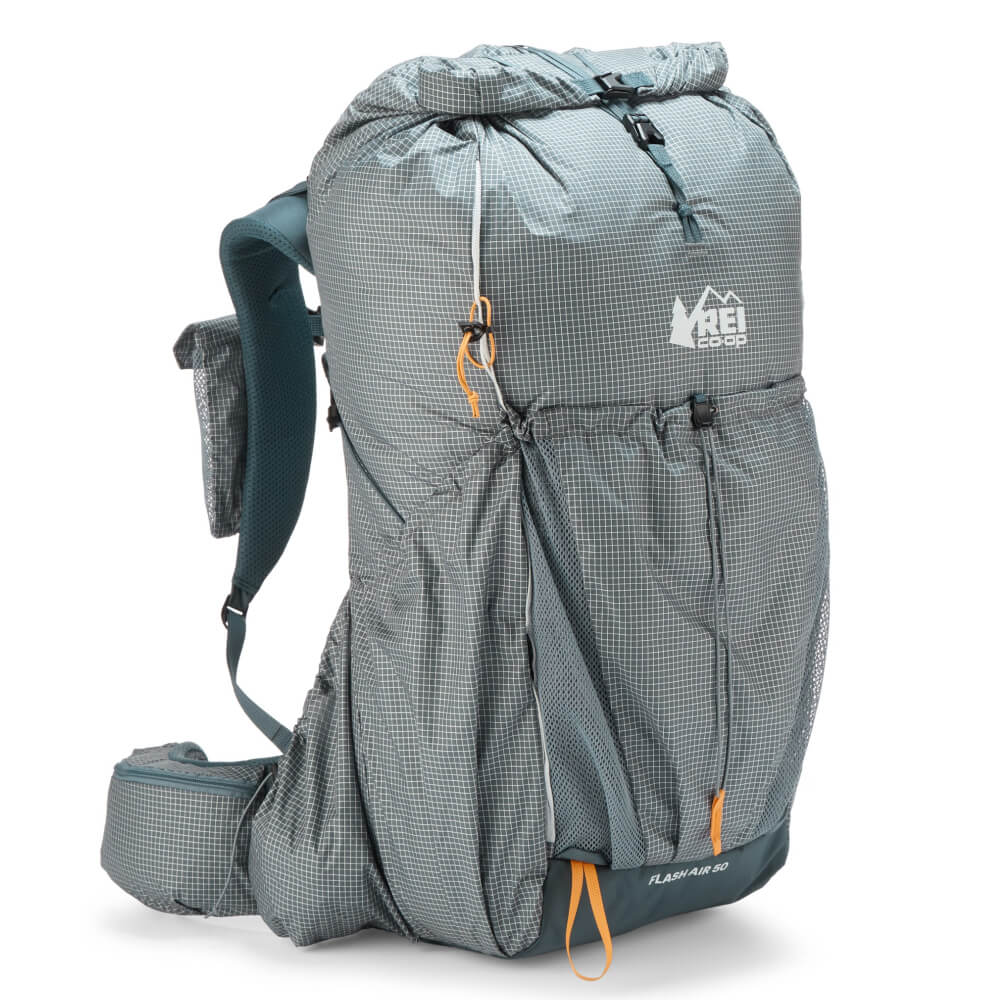
REI Co-op Flash Air 50
We’re thrilled to see REI continue pumping out Co-op brand ultralight gear, and the sub-two-pound Flash Air 50 might just be their crown jewel.
- Weight: 30 oz
- Price: $299
- Materials: UHMWPE ripstop nylon
- Frame: Shaped spring steel piping
- Load Capacity: 25 lbs (likely a conservative estimate)
- Internal Volume: 40L
- External Volume : 10L
- Pros: Ultralight. Very comfy pre-curved foam hip belt & padded back panel. Fair value. Load lifters. Minimalist design.
- Cons: Slim exterior pocket profiles decreases usable volume. Pad mod detachable pockets are lackluster. No daisy chain on shoulder straps. Top Y-strap too narrow. Bladder tube ports lets rain in.
Construction & Features
For starters, you can think of this design like a streamlined version of REI’s esteemed Flash 55 backpacking pack, including a very similar aerated foam back panel, pre-curved hip belt, and pocket configuration. Where it differs is the use of lighter weight fabrics, lack of torso-adjustability, and removal of the top compartment (AKA brain). Let’s dive in.
Flash Air 50 is built with a UHMWPE ripstop nylon fabric, which in terms of performance, is probably similar to the Robic Nylons found across the cottage industry. UHMWPE refers to its ultra high molecular weight polyethylene rip stop grid, making it extra hard to tear, even if a small puncture should occur.
The back panel and pre curved hip belt (with lovely reverse pull adjusters) are constructed with a very comfortable perforated foam with large air flow valleys to help reduce heat build up. The foam paneling is connected to a spring steel pipe frame with load lifters up top to reduce shoulder pressure and transfer weight to the hips.
Traversing the entire lower half of the pack are a wide array of front and side pockets, made with more of the same ripstop nylon (and a bit of mesh). While generally voluminous, if the main body compartment is fully loaded, it eats into exterior pocket volume from the inside, reducing the amount of gear you have easy access to. Its hip belt pockets do not have structured undersides, meaning they feel a bit thin and act smaller than they look. An easy improvement to this pack would be adding a bit more slack to most, if not all of the external pockets.
A few other minor odds and ends caught our attention, including the top drinking bladder tube ports, which are a rain entry point. We also found the PackMod pockets to be lackluster. The shoulder strap mesh one is slightly too small for a full size phone and doesn’t seem very durable. Another hangs loosely and bounces around as you walk.
Verdict
We’re ecstatic to have found a legit ultralight backpack from a mainstream brand. Flash Air 50 is large, light, and comfy. From price to performance, this one is really good across the board, albeit not exceptional in any particular way.
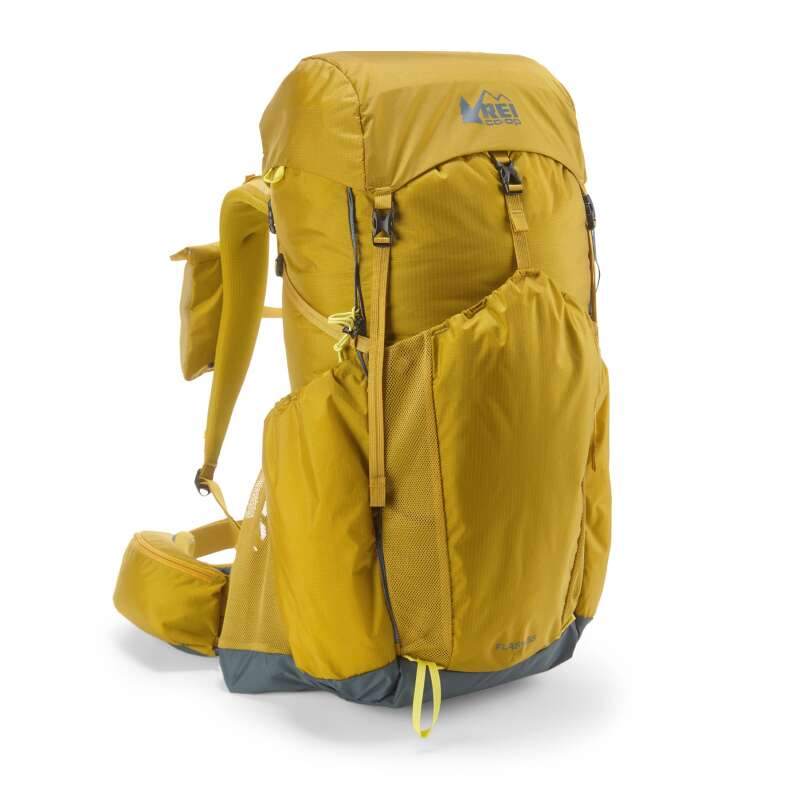
REI Flash 55 Backpack
The REI Co-op Flash 55 (shop now) is a well-rounded pack that hits it out of the park in terms of performance-to-price ratio. From our perspective, it is the single best backpack at the $200 price point, despite being light-not-ultralight.
- Weight: 45 oz
- Price: $199
- Materials: 100D & 210D recycled Robic ripstop nylon
- Frame: 3.5mm spring steel spanning perimeter with cross brace, contoured aerated foam panel
- Load Capacity: 30 lbs
- Internal Volume: 55L
- External Volume: Not provided, 10L estimated
- Pros: Lightweight. Incredible value. Customizable. Good load transfer. Bonus exterior pockets. Lid storage.
- Cons: Not quite ultralight.
Construction & Features
The Flash 55 design features a roll-top closure topped by a removable lid with lots of pockets on the sides, hip belt, and even the shoulder strap. We’re very glad to see packs coming with shoulder pockets, as we usually wind up paying extra to attach aftermarket models. All in all, the Flash is very user-friendly in regard to external storage.
The frame is a 3.5mm steel rod that runs the perimeter of the contoured and aerated foam back panel. It is comfy, spares the shoulders, are carries light-to-medium weight loads comfortably.
We like how customizable this pack it. Not only can the lid be removed, but so too can the hip belt and shoulder pockets. They call the customizability “Packmod” and if everything is taken off, the user can shave seven ounces. But to be honest, those features are probably all worth their weight and we wouldn’t expect to remove them very often.
Compared to previous versions of the Flash 55 backpacking backpack, they’ve added adjustability to the torso, modularity to the feature-set, increased pocket durability, and sewn the whole thing with recycled fabrics! Great job REI!
Verdict
All said and done, the Flash 55 is simply an incredible performer relative to its price. It’s both better, and less expensive than average. Great for backpackers of all experience levels, we love the incredible value proposition of Flash 55 and recommend it highly.
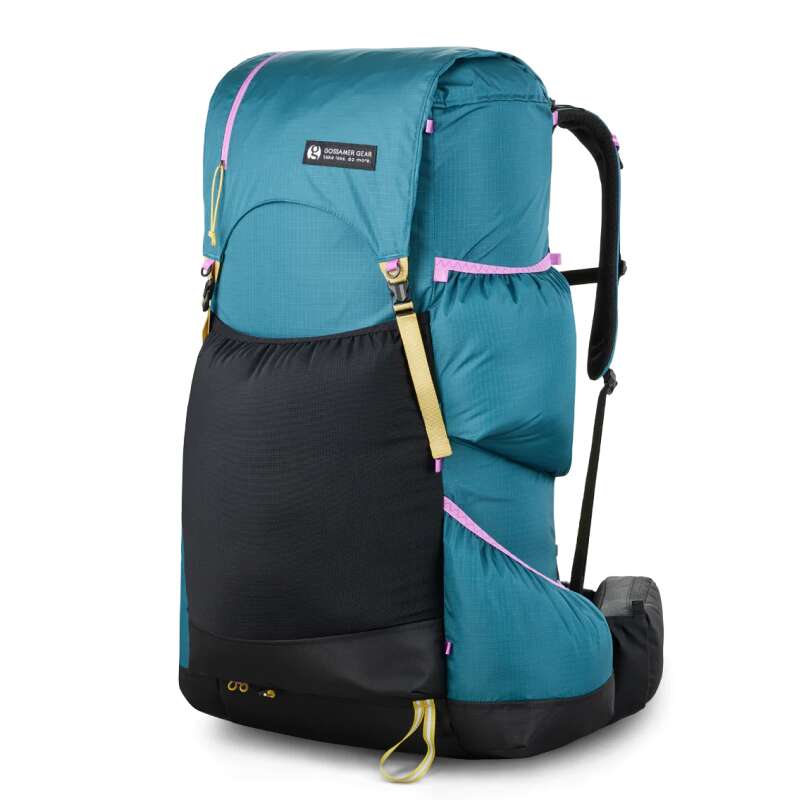
Gossamer Gear Mariposa 2024 Edition
The Gossamer Gear Mariposa 60, an exceptional and iconic ultralight backpack, beloved by thru-hikers, and updated for 2024. You still get the same great external storage suite, but now with an improved frame-hip-belt-combo that moves with you. And the entire pack is made with recycled Robic Nylon and C0 DWR for a nice sustainability boost.
- Weight: 34.7 oz
- Price: $315
- Materials: Recycled Robic Nylon, 100d & 210D
- Frame: Closed shape aluminum, sit pad back panel
- Load Capacity: 35 lbs (estimate)
- Internal Volume: 36L
- External Volume : 24L
- Pros: Massive external storage suite. Eco-friendly design. Good value. Ultralight. Frame-hip belt mobility. Sit pad included. Lid pocket. S-curve shoulder straps.
- Cons: Not made with best-in-class composite fabrics. Heavy-end of ultralight spectrum. Delicate stretch mesh.
Construction & Features
Like its predecessor, the 2024 edition of Gossamer Gear Mariposa 60 is a full size, fully-featured internal frame backpacking pack. It’s designed for medium to long-length trips, thru-hiking, and/or carrying extra gear and supplies. Mariposa is constructed with a combo of 100d and 210d Recycled Robic Ripstop nylon, famous for its high durability-to-weight ratio, and now sustainable too.
One unique aspect is how much of the volume is external storage; the 60L capacity is split between a 36L main compartment, and 24L spread across a multitude of external pockets. This makes it incredibly easy to access all of the gear you will need throughout the day, and is a major differentiator and draw for this pack vs others like it. It has all of the normal pockets you’d expect on a premium ultralight backpack, only modified with a lid pocket, extra pocket on the upper half of the wearer’s right side, and a super XL enlarged side pocket on the wearer’s left. With the Gossamer Gear Mariposa 60, you will never want for external storage.
The frame is a closed shape aluminum stay which connects to shoulder load lifters for increased comfort. The frame is taller than before, steepening the angle of the load lifters, thus increasing their efficacy. The frame situates into the PVT Frame hip belt housing. This connection is unique in that it allows the hip belt to move with you slightly, adjusting to your stride while keeping the pack in perfect alignment on your back. The back panel is a removable, functional sit pad that eliminates the need to carry an standalone sit pad.
Verdict
The updated Gossamer Gear Mariposa 60 backpack is an exceptional full-size ultralight pack, with best-in-class external storage, and now made with recycled Robic Ripstop and a frame-hip-belt combo that comfortably moves with you. This design competes favorably with other packs in the ~$300 price range where you won’t find many better options. Nice one, Gossamer Gear!
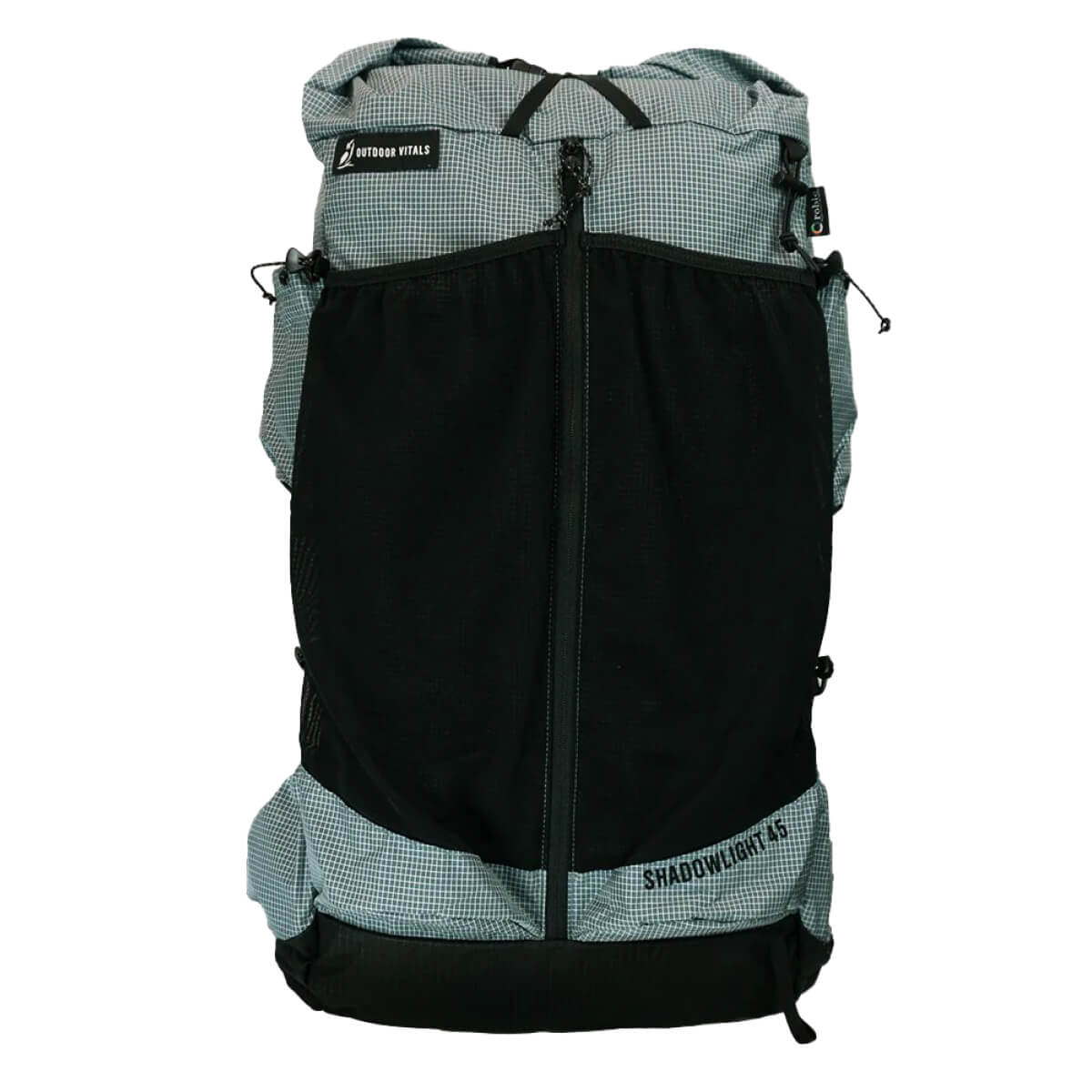
Outdoor Vitals Shadowlight Backpack
Outdoor Vitals Shadowlight 60L (shop now) offers the rare combination of sub-two-pound weight with a load transferring frame. It’s extremely uncommon to find that pairing for just $250. What’s more, this pack is smothered in featured, most of which we like, some of which we don’t, and none of which over-“shadow” the big picture fact that this is a legitimately great ultralight pack. Read more in our full-length Outdoor Vitals Shadowlight Review.
- Weight: 31.5 oz
- Price: $250
- Materials: Robic Nylon
- Frame: Inverted 24″ Aluminum U
- Load Capacity: ~35 lbs
- Internal Volume: 50L
- External Volume : 16L (our estimate)
- Pros: Ultralight. Large volume. Great value. Lots of external storage. Frame transfers load to hips. Removable sit pad back panel.
- Cons: Unnecessary front zipper interferes with mesh pocket. Side pockets are a bit shallow.
Features & Construction
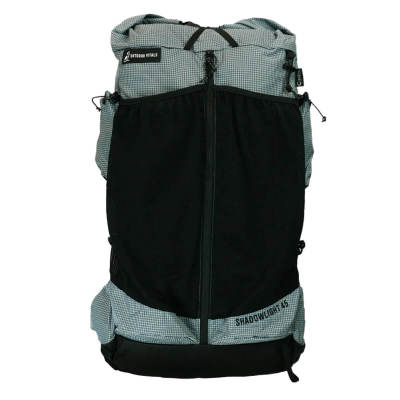
Zoom way out and the Shadowlight is a classic roll top design built with durable Robic ripstop nylon. It has a removable hip belt and inverted U-shape aluminum frame, which in conjunction with load lifters, does an excellent job of transferring weight from shoulders to hips. A modular, comfortable, closed-cell foam sheet does double duty as a sit pad and back panel. A top strap gives additional storage for lightweight bulky items such as sandals, foam sleeping pads, or a fleece.
Unlike most packs, this one has two levels of side pockets, an upper deck and a lower deck. These are roughly the same size. We recommend storing water bottles in the lower half and knickknacks like gloves, beanies, or snacks in the upper. Our tester adored the upper pockets. And honestly, we wish they were more common.
Shadowlight also has massive hip belt pockets. These are definitely larger than you find on most packs, even able to fit a large size phone, and definitely able to fit tons of snacks.
Really, the only feature configuration we dislike on the Shadowlight are its dual external stretch mesh pockets bisected by a zipper. The zipper allows for easy access to the main compartment. But all that you should be storing in there are items like tents and sleeping bags that you won’t need until you get to camp anyway, by which point the roll top is already open. What’s more, splitting the stretch mesh pocket into two long/tall channels reduces its volume and ability to store bulky items.
Verdict
What shines the brightest about Shadowlight is the combination of it’s ultralight weight and affordable price tag. We like most of it’s features, dislike some of its features, but the overall result is just really good for $250. At that price point, it might be one of, if not the best ultralight backpack!
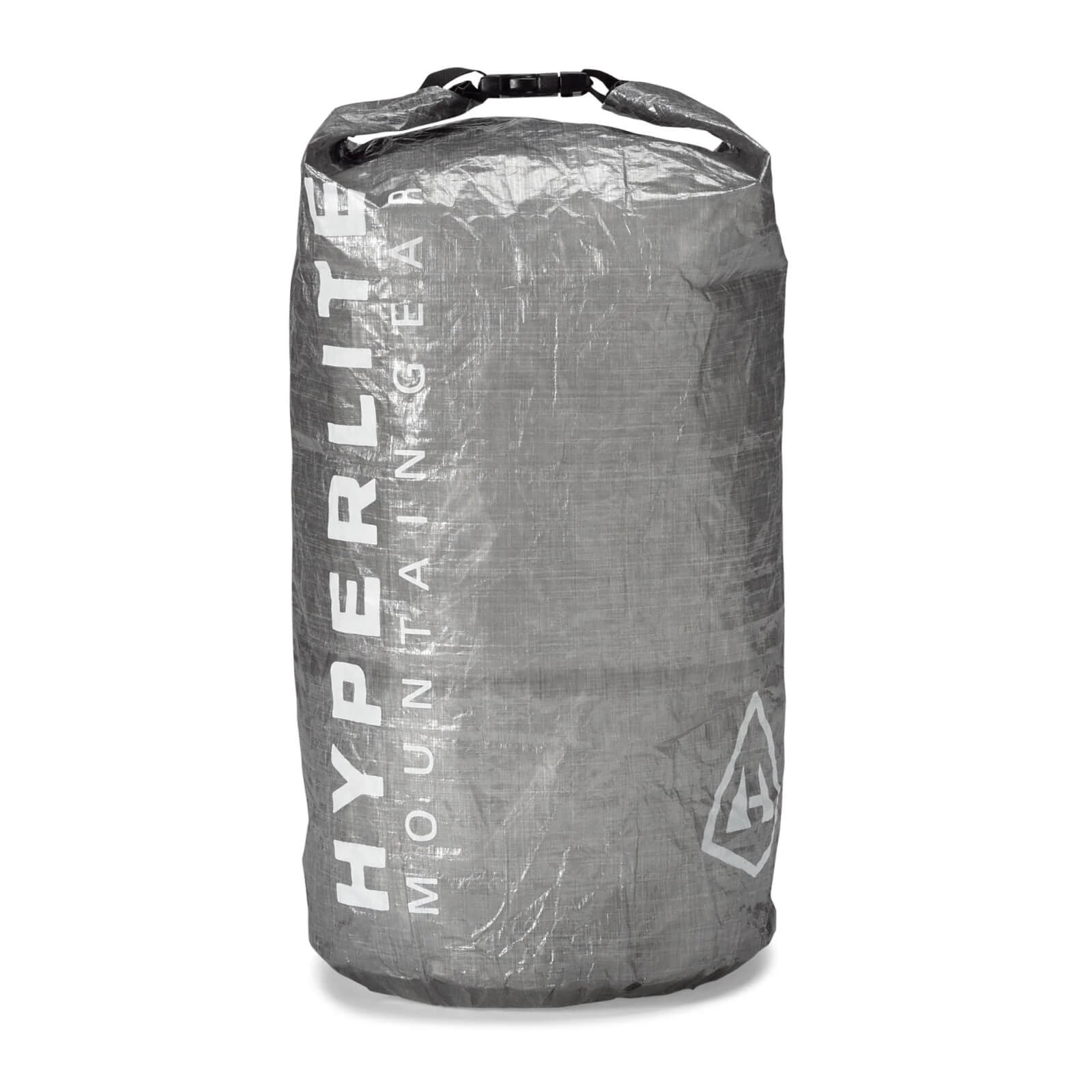
Hyperlite Mountain Gear Roll Top Stuff Sack
Hyperlite Mountain Gear Roll Top Stuff Sack is a classic dry bag made out of Dyneema. The DCF11 fabric is extremely durable, lightweight, long lasting, completely waterproof, and just feels indestructible and high quality.
- Weight: 2.0 oz
- Price: $79
- Materials: DCF11
- Volume: 43 L
- Pros: Ultralight. Ultra durable. Best-in-class. Voluminous.
- Cons: Expensive.
Sizes
The 25L size L is probably the most universal, but we love the 43L XL, which is . 4oz heavier and big enough to store a 4-season sleeping bag, puffy, and all extra clothes without over compressing.
If you’re going to spend that much on one dry bag, you might as well get the one size that fit’s all. And it’s compatible with winter camping bulk.
Verdict
This is an excellent ultralight dry bag fit for an ultralight backpack. For less expensive (but less durable) ultralight dry bags, turn to the Sea to Summit Ultra-Sil Dry Bags.
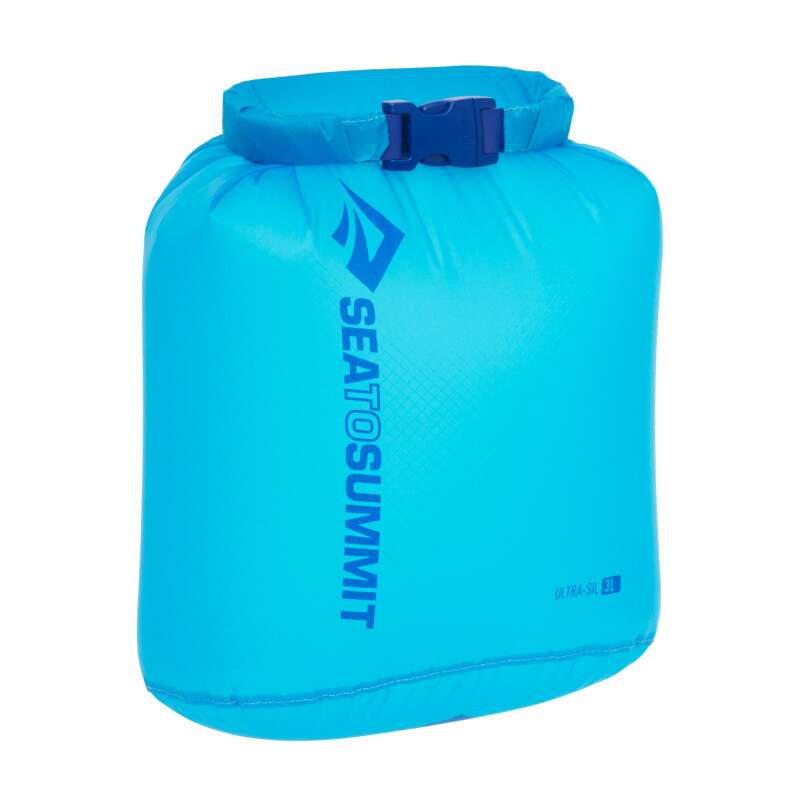
Sea to Summit Ultra-Sil Dry Bag
For waterproof gear storage at a great price, we recommend the Sea to Summit Ultra-Sil Dry Bag. The largest model weighs only 2.6 oz and holds 35L, enough for a sleeping bag, puffy jacket, and camp clothes with room to spare.
- Weight: 2.6 oz
- Price: $40
- Materials: 30D Cordura sil-nylon, bluesign® approved, PFC free
- Volume: 35L
- Pros: Ultralight. Waterproof. Good value.
- Cons: Slightly delicate.
Features and Verdict
There’s nothing fancy here, this is the same ultralight dry bag that’s been on the market for years, only now it’s manufactured slightly more sustainably with bluesign® approval. Ultralight sil-ny is great, albeit, not the most durable.
If you want something even more bomber and long lasting that won’t lose waterproofness due to minor abrasions, check out our pick for bets performance dry bags, the Hyperlite Mountain Gear Roll Top Stuff Sack.
PRO TIP | How Big of an Ultralight Backpack Do You Need?
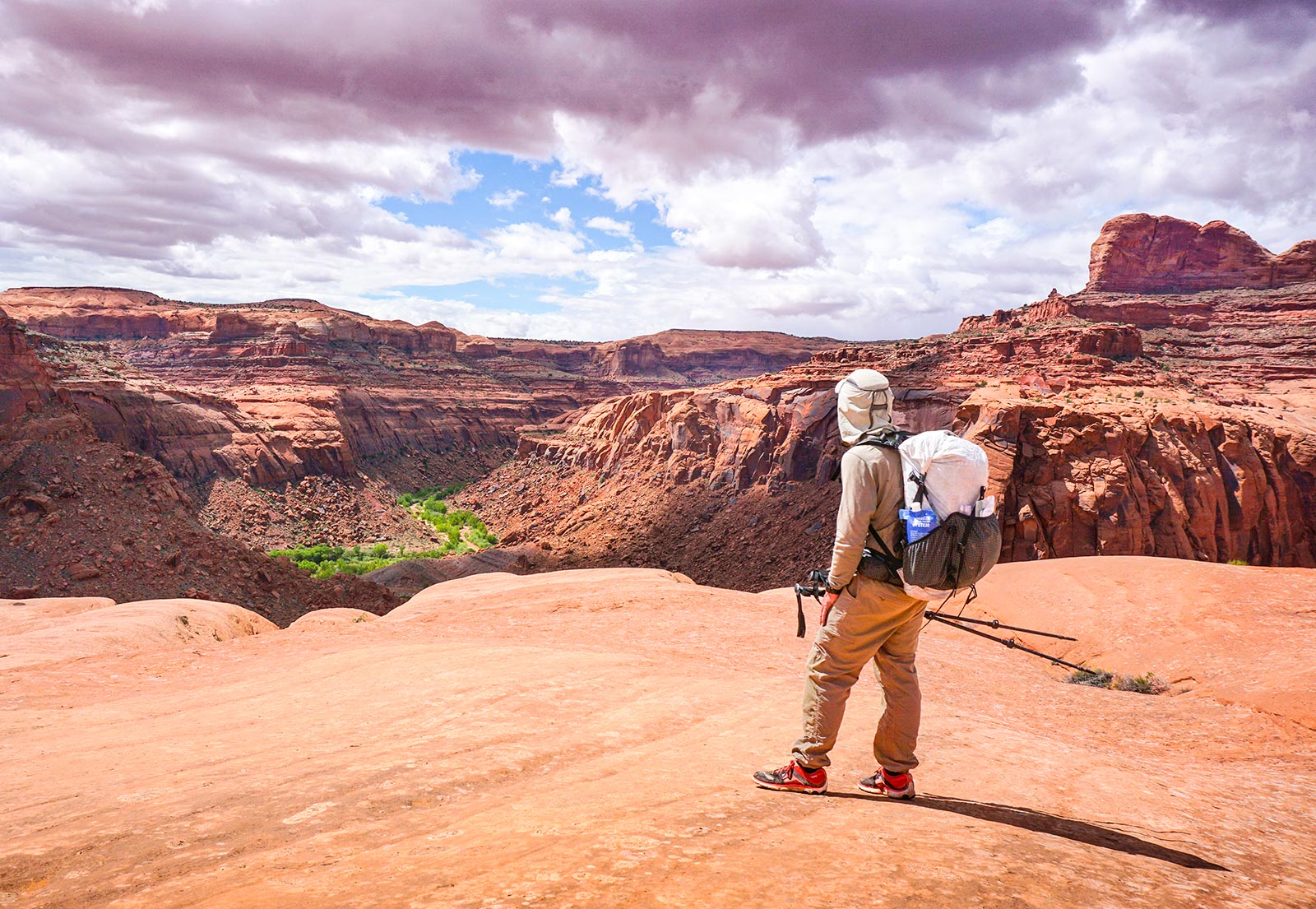
It may surprise you, but often times we believe a bigger ultralight backpack is better than a smaller slimmer one. We like packs in the 55L range (assuming you don’t take the extra volume as a license to fill it with unnecessary items!) First, more volume makes it easier to pack and unpack.
That is, it’s time consuming to try and shove your gear into too small of a space. And it’s just as difficult to unpack or find items in a solid brick-like mass. Second, it’s not good to crush your down bag and jacket, and it takes them a lot longer to loft up if they’ve been crushed to the size of a grapefruit.
We use large backpacks and stuff sacks to avoid this. Last and certainly not least, many times the larger volume model of an ultralight backpack is only a ounce more, e.g. the HMG Southwest 3400 vs. 2400 or the MLD Exodus 55L vs the Prophet 48L. In addition, that extra volume makes your ultralight backpack a more versatile and flexible purchase, changing a backpack used for a quick weekend overnight into a week long trip with a bear canister.
So yeah, while a smaller ultralight backpack may look all pro and sleek, most times the larger pack is far more practical and user friendly, so long as it is also lightweight and you don’t overpack because of the extra space.
PRO TIP | Why Ultralight Backpack Pockets Really Matter
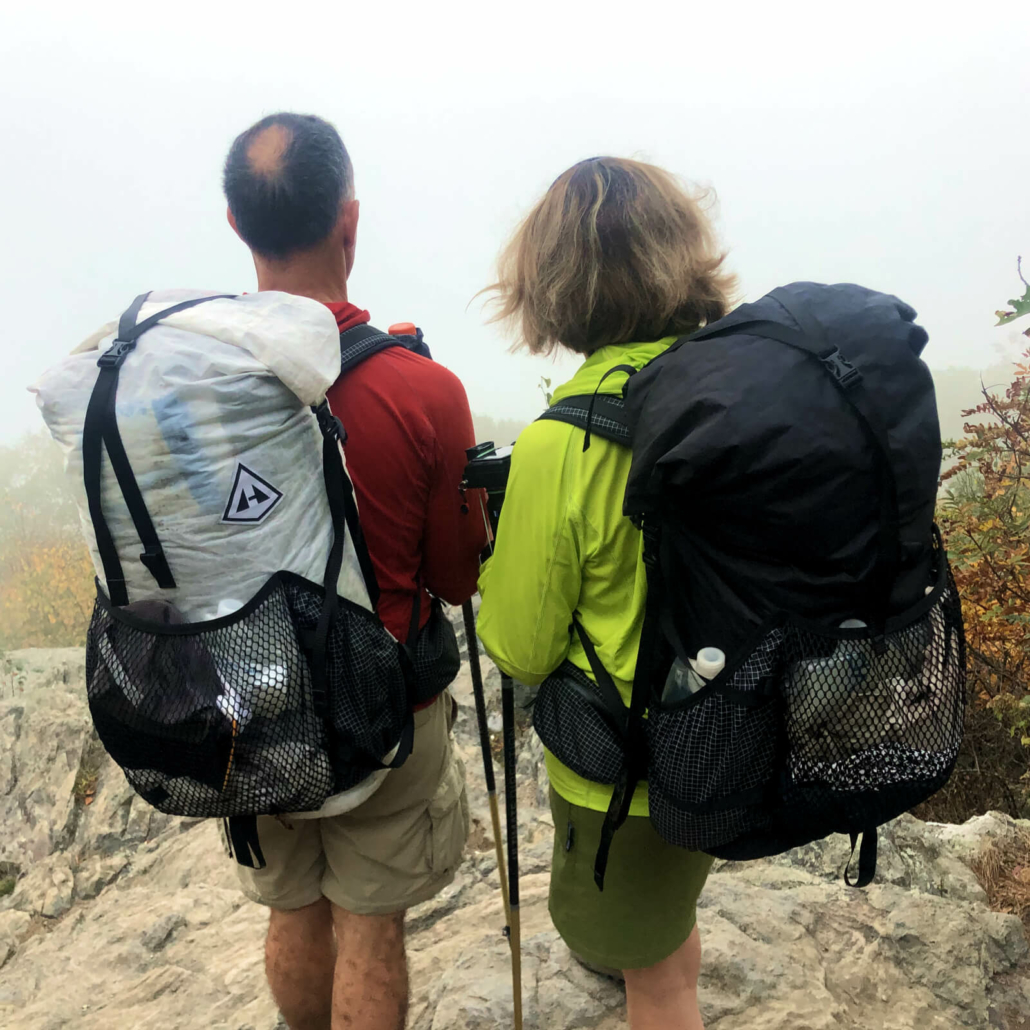
While in general we’re a bit skeptical of unnecessary pack features, we love pockets! Nothing is more time consuming and frustrating than trying to find the need-it-right-now item buried deep in the main bag of your pack. As such, we use all available pockets to store cameras, gear, food and clothing where we can quickly access them during our hike.
Hopefully we only go into the main pack at lunch and when we get into camp for the night. We especially like pockets we can access without stopping or taking our pack off. In particular, large hip-belt pockets, and side pockets that are designed so we can reach back and get things out of (e.g. a water bottle or jacket) while hiking. Finally, remember to put the same things in the same pocket all the time!
Mesh Pockets vs Solid Fabric Pockets?
We prefer solid fabric pockets on our packs. That being said, mesh pockets are quite popular on many major brand packs. They have the advantage of being able to see what is in them, and that they allow for wet things like socks to dry during the day. They also are usually stretchy and do a good job of keeping gear snugged up against the pack body.
But mesh pockets have the disadvantage of being far more delicate than solid fabric pockets as they catch, snag and tear easily. Most times they are the first things to fail on a pack — especially if you hike on anything but wide open easy trails. Second, they do a much poorer job of keeping dust, spay and other debris off of your gear. Finally while mesh pockets may look lighter, it rarely is much lighter than a solid fabric pocket. As such we get all our packs with solid fabric pockets if possible.
Summary
So yeah, while a streamlined backpack with few external pockets may look slick, leave them to climbers. A backpack with lots of pockets is far more practical and will save you a bunch of time and frustration trying to find things.
For more reading on tips to best use pockets: Efficient Backpacking Tips | Easily Increase Mileage and Fun
PRO TIP | Ultralight Backpack Comfort
No matter what pack you use, unless you are a NFL linebacker, carrying 40 pounds is not comfortable. Or put another way, the total weight of your pack is the most important factor for your bodies comfort — not the packs brilliant design features! As such, the number one thing you can do for “pack comfort” is to shave a bit of weight. Every bit helps!
Yes, a pack with a stiffer frame and a wide, padded hip-belt will help soften the pain of a heavy pack from your shoulders and hips. But that does not equal comfort as your weight goes above 30 pounds. And your hip joints, legs, knees, feet, lungs and heart will feel the full pack-weight every step!
That being said, some packs do a better job of transferring pack weight to the hips and have more comfortable shoulder straps. Osprey packs like the Exos and Eja packs do well in these areas, altho the Hyperlite Mountain Gear, and Z-Packs also do well and weigh less. In our opinion a wide hip-belt with sufficient padding like on the HMG packs works better than more heavily padded and “ergonomically” sculpted hip-belts used on heavier packs.
How to Lower Your Pack Weight To Make An Ultralight Backpack Comfier
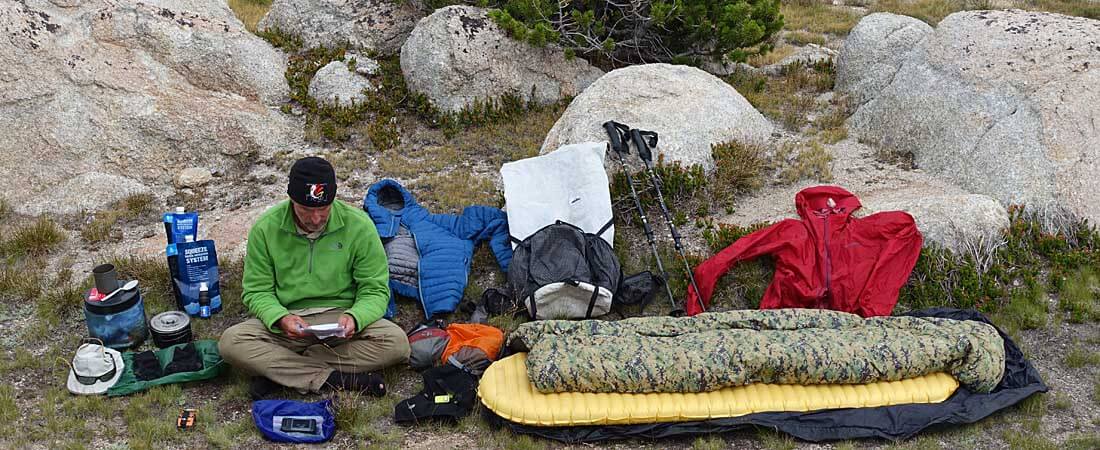
Look at our 9 Pound Full Comfort Lightweight Backpacking Gear Checklist. This will give you lots of ideas on how to shave weight out of your pack. A 9 pound pack is all you need to be happy, safe and warm. So, if you want to lower your pack weight but retain all the convenience and comfort of “traditional” backpacking, look no further than this Lightweight Backpacking Gear List.
This Backpacking Gear is suitable for most backpackers on most 3-season trips in the lower 48 and even trips world-wide.
PRO TIP | Pros and Cons of a Waterproof Ultralight Backpack
Packs made with composite textiles like Dyneema and Challenge ULTRA with taped seams have the advantage of being nearly waterproof. When combined with DCF stuff sacks or other nearly-waterproof sacks you won’t need a rain cover. As such, you pack your pack the same way every day whether it’s raining or not, and you save the weight and hassle of a pack cover. Drier pack and contents with less aggravation equals peace of mind.
One downside of DCF packs is that they are about $100 more expensive than the same pack in standard nylon. This is because the fabric is expensive and hard to procure. And because it requires specialized equipment and processes to make gear from it. The second downside is that for now only cottage and smaller manufactures offer packs in DCF which means limited sources and sometimes a 2-4 week wait for your pack to made and delivered.
PRO TIP | Skip the Rain Cover
So most pack covers don’t really keep your pack dry, they weigh about 1/2 pound, and they add cost. And they are a hassle to take on and off and flap in the wind. One way to skip the rain cover is to use a Dyneema pack and Dyneema or other highly water resistant stuff sacks. This was discussed above and is our preferred method but it is costly.
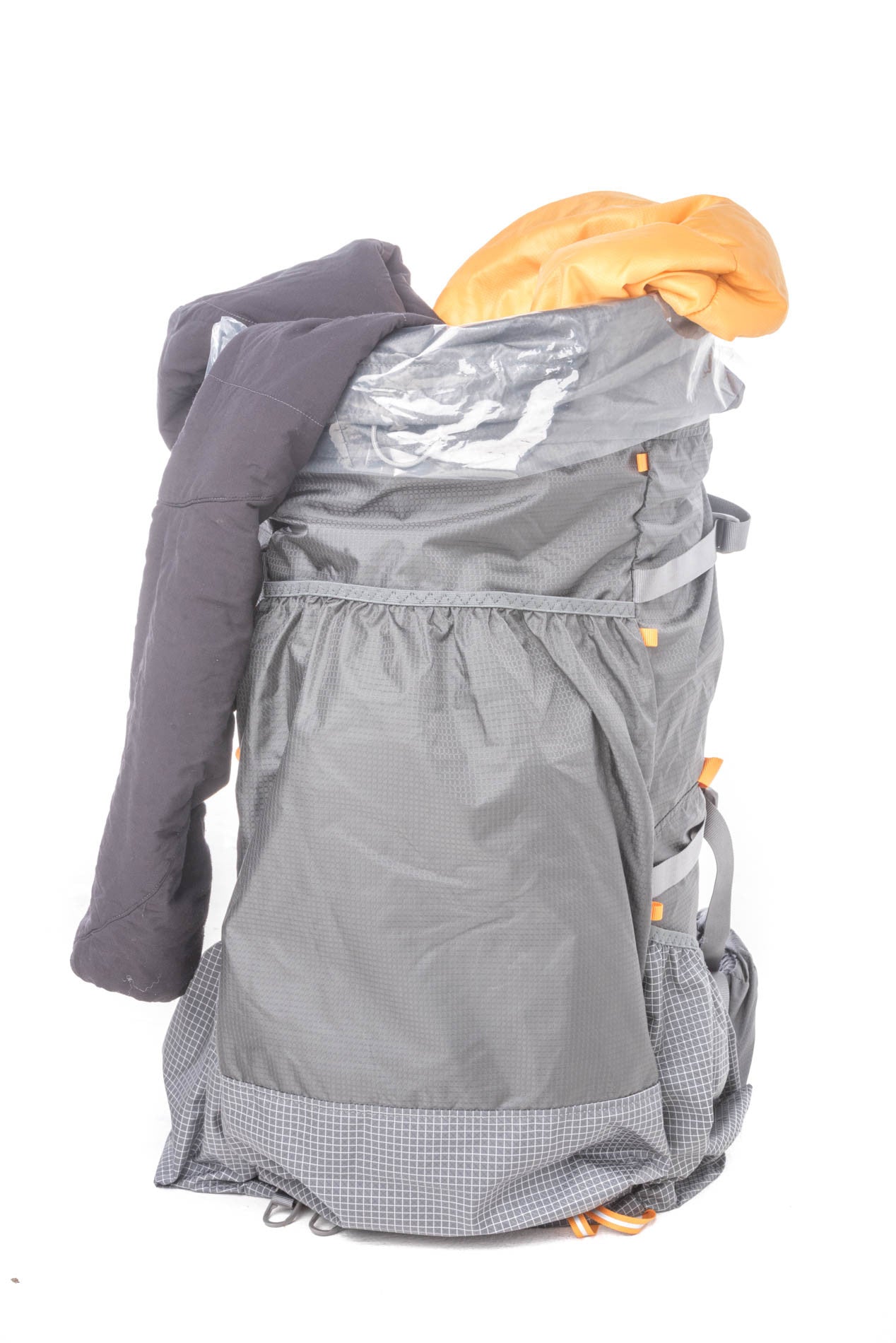
A far less costly and still light way to skip a rain cover is use a light waterproof pack liner. There are a number of options:
- The lightest (but inexpensive) option is to use 2x Gossamer Gear Pack Liners. Use (1) liner for sleeping bag and insulating clothes and (1) liner for everything else.
- The lowest cost other option (still light) is to line your pack with a single sturdy trash compactor bag .
- Finally some pack manufactures sell light a waterproof pack liner, these last a longer but usually cost more.
PRO TIP | Bear Canister 101
Bear canisters are becoming part of trail life as more parks require them each year. These are some of the lightest options to meet this requirement
If you want to hike the John Muir Trail, Yosemite, Rocky Mountain Park or many of the Parks in Alaska, you’ll need a bear canister and a backpacking backpack that can hold it. So, it makes sense to purchase a pack that works well with a bear canister. Almost all of our packs will fit a bear canister, although the larger packs with a well-padded back panel will do better.
A note about frameless ultralight backpacks and bear canisters: With some intelligent packing you can carry a bear canister in a frameless pack with an unpadded back. Guiding in Rocky Mountain Park last summer, Alan carried a rigid Wild Ideas Scout bear canister with 5 days of food and guide gear in his Exodus DCF Frameless Backpack, saving himself around 3 to 4 pounds versus a standard UL pack and a Bear Vault BV500 canister.
Which Bear Canister Is Right for You?
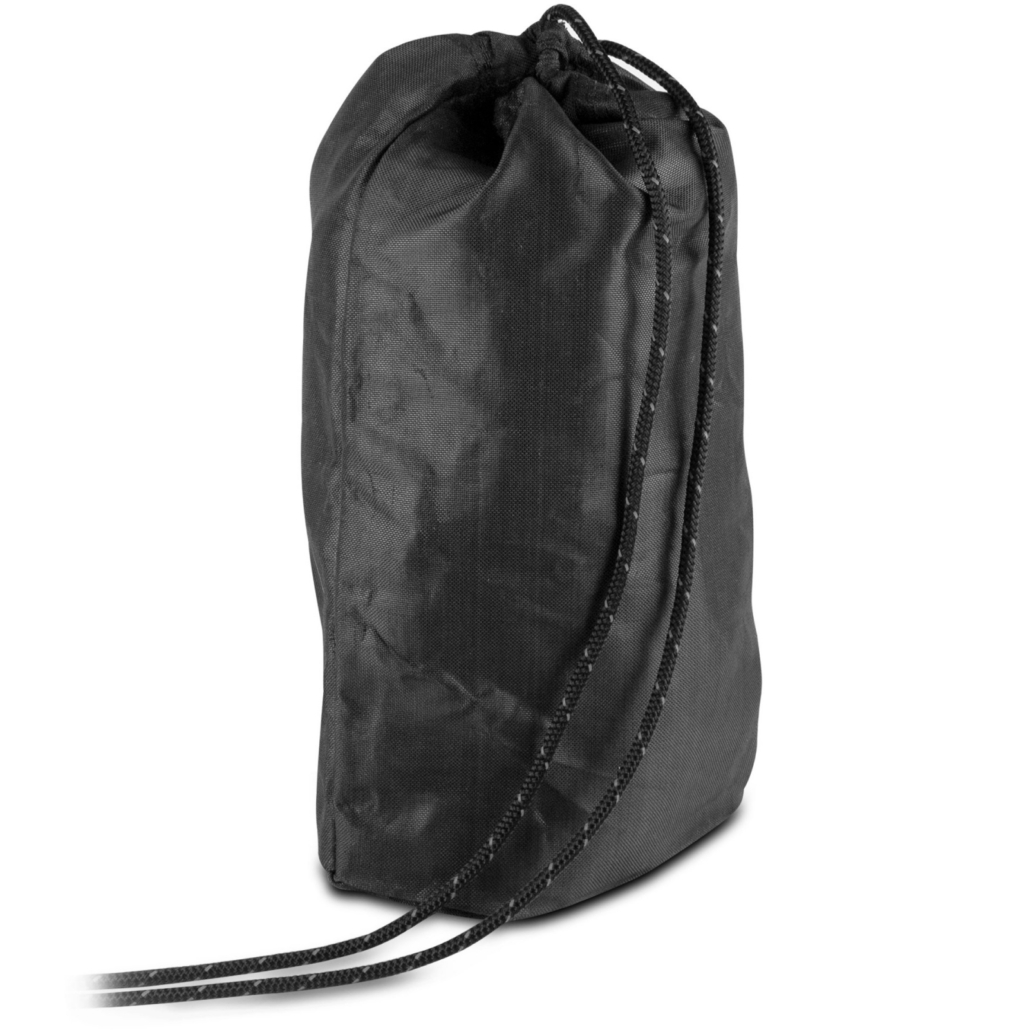
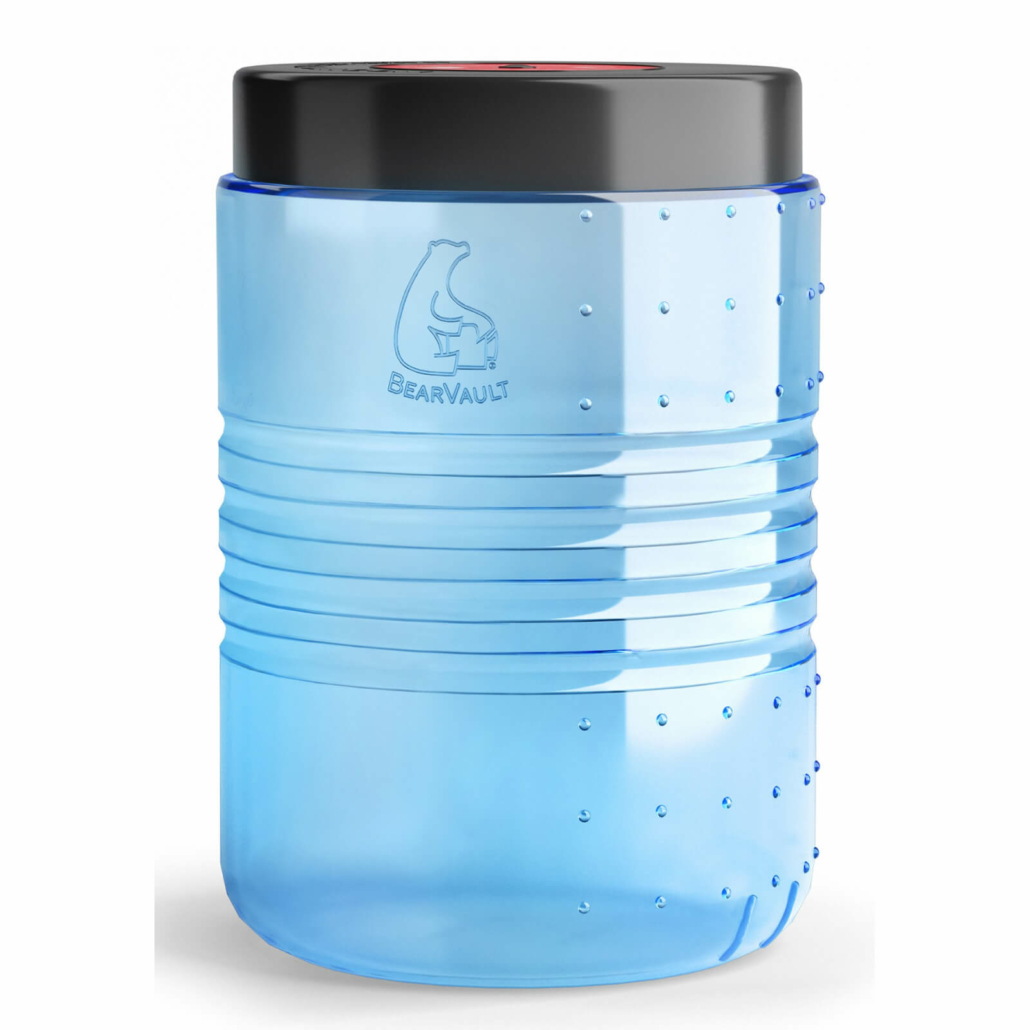
Above from left to right: Ursack, Bear Vault, and Wild Ideas
First, check your Park and see which bear storage they require (approved canisters). And a fair warning that there is no consistency between parks about what they require so you will need to check the specific reg’s of each park you plan on visiting. The largest certifying organizations are IGBC or Interagency Grizzly Bear Committee, SEKI (Sequoia and Kings Canyon Parks), and Yosemite. Many other parks like Rocky Mountain National Park have their own requirements. Yeah, don’t get us started on a unified US certification! Once you know the requirements pick one of the three storage options below:
- LIGHTEST if allowed: Ursack Bear Bag (7.6 oz) | The very lightest and the first choice for bear storage. But only if the Ursack is approved in your park! So check the reg’s. These highly preferable when wearing an ultralight backpack.
- VALUE: Bear Vault BV450 (33 oz) Bear Vault BV500 (41 oz) | The Bearvault BV-450 and BV500 hit the sweet spot for weight, cost, and availability. The only downside is that they are somewhat heavier than Wild-Ideas canisters. We can get ~5 days in a BV450 and ~7-8 days in a BV500 canister. Great with any backpacking backpack
- LIGHTEST RIGID CAN: Wild Ideas Scout (28 oz) or larger Wild-Ideas Weekender (31 oz) Best performance, best for an ultralight backpack
Tip bring compact, calorie-dense food: Pack the right food and you can get a few more days out of a smaller bear canister like the Bearvault BV-450 above. Not only will you have less food weight (for the same amount of calories), but the smaller canister will leave more room in your backpacking backpack for gear. What’s not to like?
Ultralight Backpack Conclusion
Thank you for reading our guide to the best ultralight backpack, where we hope you found your new favorite gear hauler. We’ve optimized this selection for on-trail performance, rather than sheer weight minimization. If you’re previous pack is fully built out 5 pounder, we’re sure any one of these models will constitute a massive upgrade to your overall backcountry experience. Happy hiking!


 Best EDC Backpack For Hiking, Commuting, & Travel 2024
Share this entry