

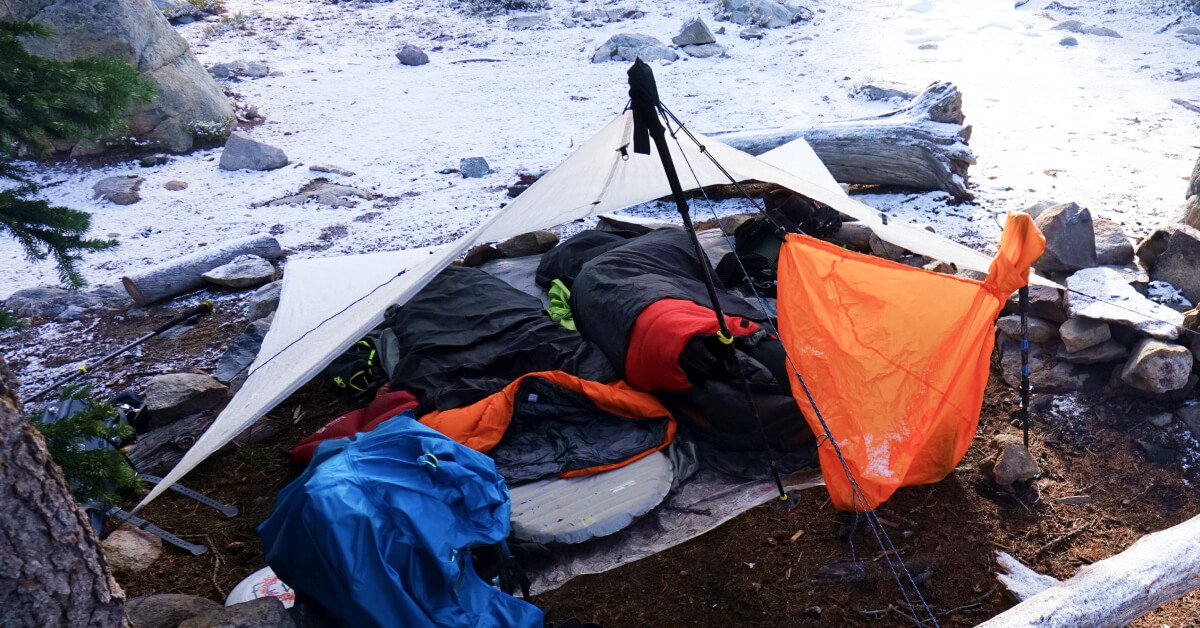
The Highest R-Value-to-Weight Ratio Insulated Winter Sleeping Pads
When temps drop below freezing, we recommend a winter sleeping pad for backpacking. This is critical when camping on cold surfaces, and especially so for quilt users. Without a winter sleeping pad, even a warm sleeping bag or quilt will feel cold and you will sleep poorly.
Winter backpacking gear is heavy enough to begin with, so you shouldn’t settle for a bulky mat. The average winter sleeping pad in this guide weighs just 21 ounces, yet delivers a whopping R-Value of 7.4 (the baseline for winter pads is R-6). When evaluating pads, and especially cold weather sleeping pads, we prioritize R-value-to-weight-ratio above all else. That’s because sleeping warm is the most important factor, followed by weight minimization. While some of these pads are better than others at dispersing weight off pressure points, they’re all plenty thick and comfy enough for a good night’s rest.
Winter enthusiasts might also be interested in our guides to 4 season tents, 0 Degree Sleeping Bags, 0 Degree Quilts, lightweight parkas, down pants, or backpacking booties.
You make Adventure Alan & Co possible. When purchasing through links on our site, we may earn an affiliate commission at no additional cost to you. Here’s why you can trust us.
Winter Sleeping Pad For Backpacking Quick Picks
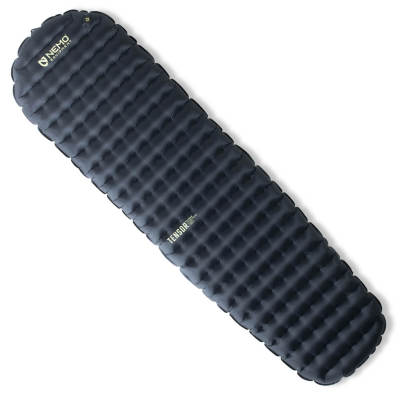
- Best Stats: NEMO Tensor Extreme Conditions Ultralight Insulated
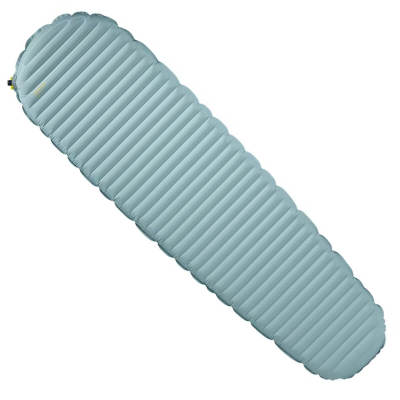
- Most Proven: Therm-a-Rest NeoAir XTherm NXT
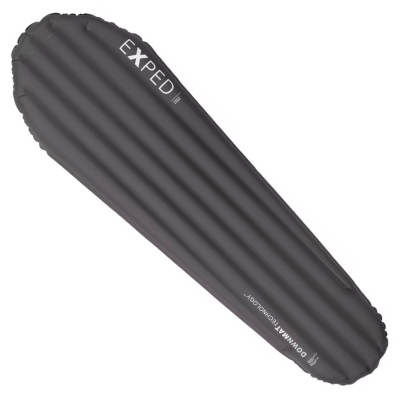
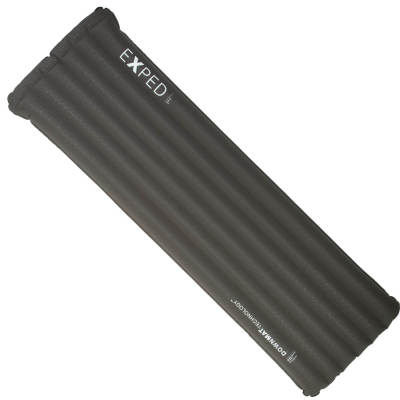
- Third Best: Exped Ultra 7R
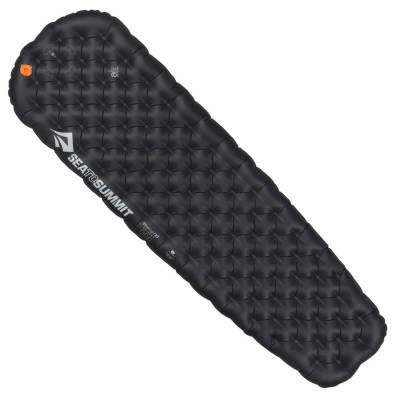
- Most Comfortable: Sea To Summit Ether Light XT Extreme
- Most Durable: Exped Dura 8R
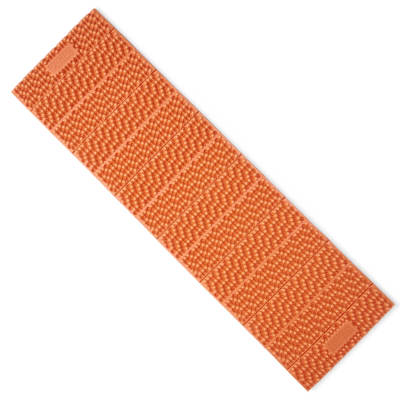
- Supplemental Closed Cell Foam: NEMO Switchback
Comparison Table
Mobile users turn device sideways for full table view
| Price ($) | Weight (oz) | R-Value | R/Ounce | Thickness (in) | |
| NEMO Tensor Extreme Insulated | 249 | 17.0 | 8.5 | 0.50 | 3.5 |
| Therm-a-Rest Neo Air XTherm NXT | 240 | 16.0 | 7.3 | 0.46 | 3.0 |
| Exped Ultra 7R | 240 | 17.5 | 7.1 | 0.41 | 3.5 |
| Sea to Summit Ether Light XT Extreme | 219 | 25.4 | 6.2 | 0.24 | 4.0 |
| Exped Dura 8R | 250 | 32.0 | 7.8 | 0.24 | 3.5 |
| NEMO Switchback | 55 | 14.5 | 2.0 | 0.14 | 0.9 |
*Stats refer to size regular mummy shape, or regular rectangle when no mummy is offered.
Best Winter Sleeping Pad For Backpacking
NEMO Tensor Extreme Conditions Ultralight Insulated
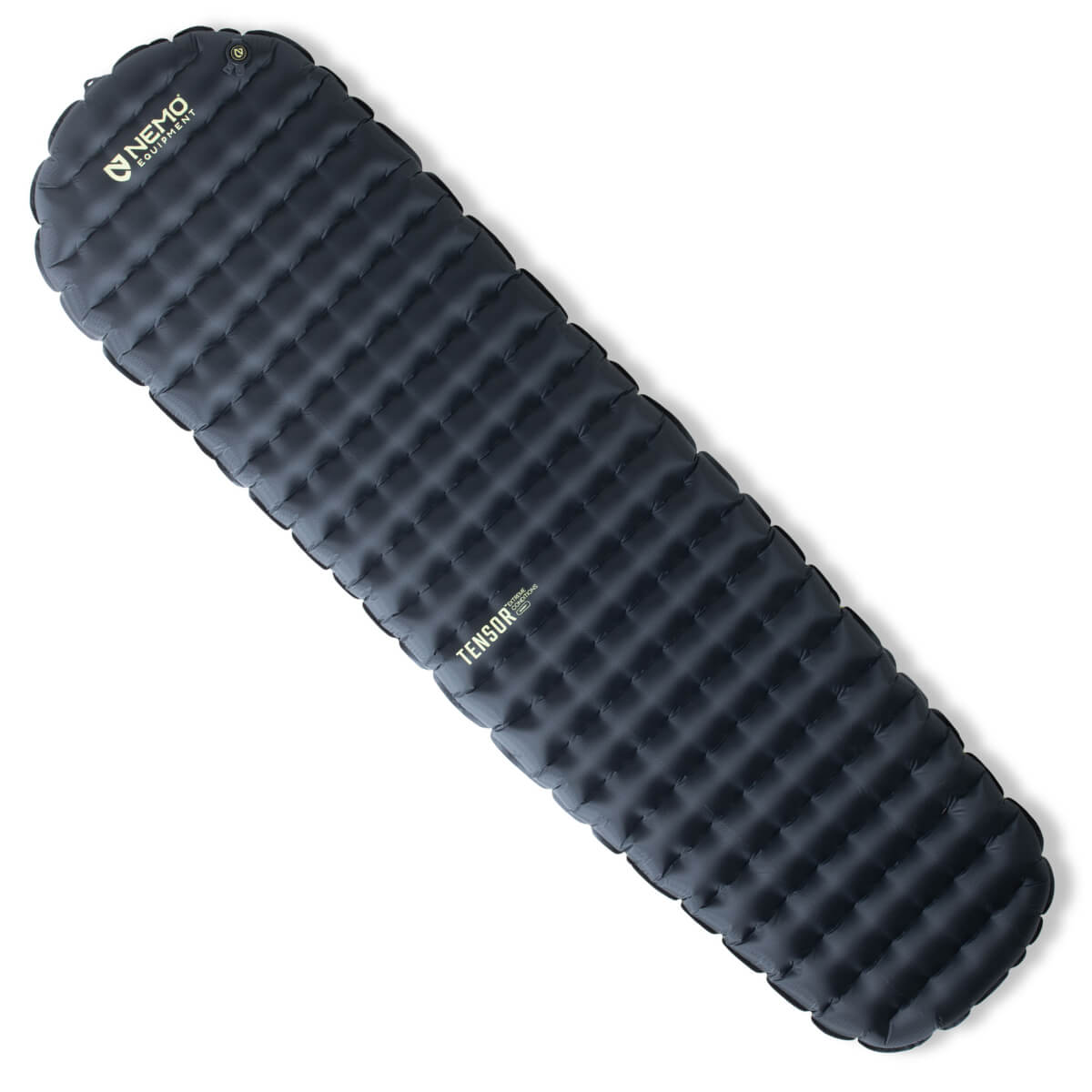
New for fall 2023, the NEMO Tensor Extreme Conditions Ultralight Insulated winter sleeping pad has the highest R-Value (and the longest name) we’ve ever seen. It’s the current pinnacle of warmth-to-weight ratio, and the warmest inflatable backpacking mat on the market.
- Price: $249
- Weight: 17 oz (min weight)
- R-Value: 8.5
- R-Value/Ounce: .57R
- Thickness: 3.5 in
- Fabric: 20d/40d recycled nylon
- Sizes: Regular Mummy, Regular Rectangle, Wide Rectangle, Long Wide Rectangle.
- Pros: Highest R-Value. Highest warmth-to-weight ratio. Lightweight. Comfy. Sustainable. Quiet. Thick.
- Cons: Expensive. New and untested.
Construction & Features
How is this incredible R-value achieved? Four free floating layers of insulating Thermal Mirror Film run the length of the pad. Same idea as the XTherm, just more of it.
Setting warmth aside, Tensor Extreme doesn’t skimp on comfort either. It maintains the same quiet and cushy “Spaceframe” baffled surface as its Tensor siblings, which excels at dispersing pressure, especially for side sleepers.
A network of internal trapezoidal trusses provide structure on the interior of the pad. It’s also more durable than previous Tensors (eliminating a major customer pain point), utilizing 20d recycled nylon (instead of polyester), reinforced on the bottom side. It comes with its own stuff sack which doubles as an inflation pump.
Verdict
As this sleeping pad is brand new, we’re withholding some judgement until further testing is conducted this fall/winter. But on paper, and based on our experience with other NEMO Tensor pads, it’s primed to become the best winter sleeping pad to ever exist. Even better than the Therm-a-Rest NeoAir Xtherm! Check back in a few months once we’ve taken it out into the backcountry to see how its holds up.
Next Best Winter Sleeping Pad For Backpacking
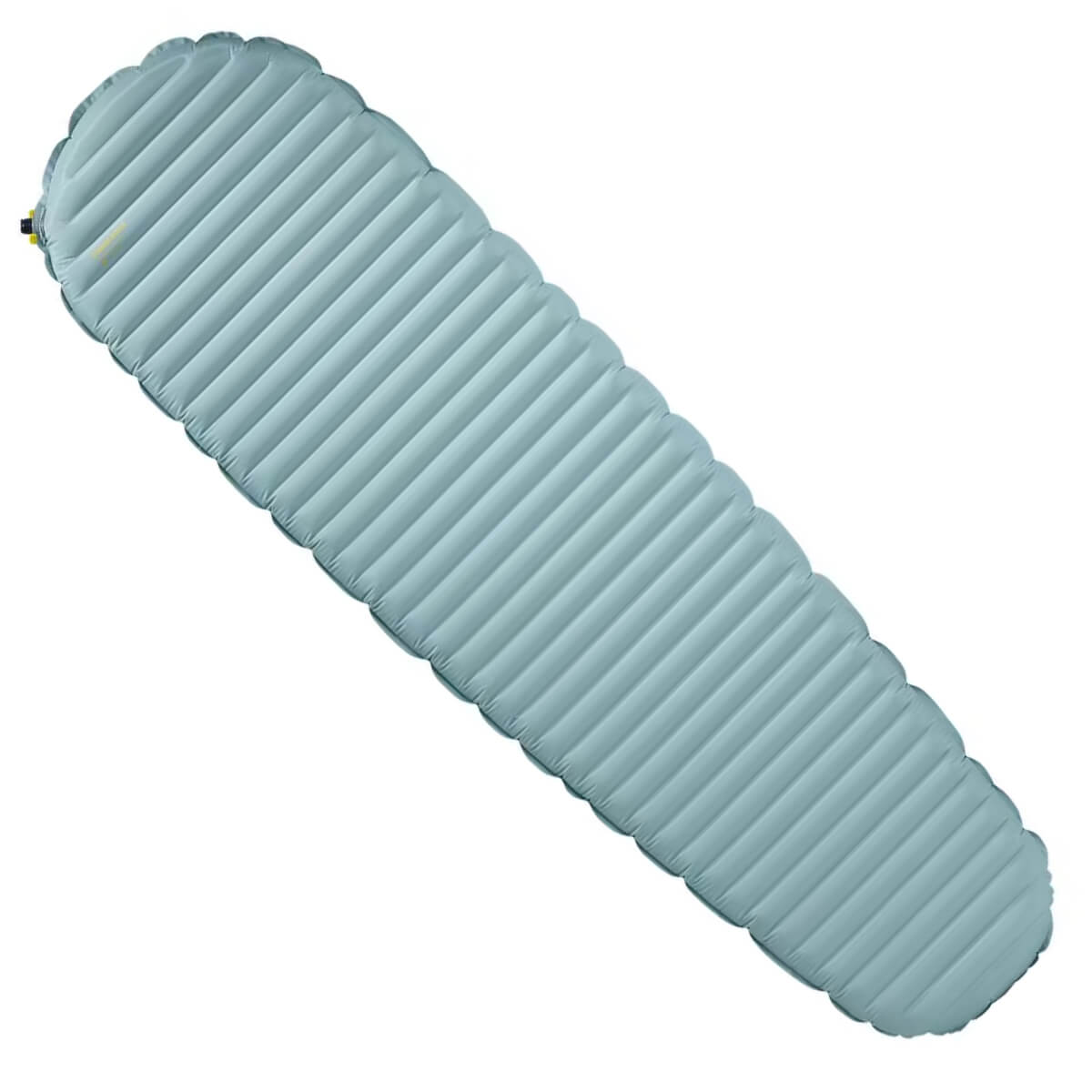
Therm-a-Rest NeoAir XTherm NXT
2023 was a big year for winter sleeping pads, because we saw Therm-a-Rest release the market-dominating NeoAir XTherm NXT in Q1. For roughly a decade, the Gen-1 XTherm was best-in-class, and its NXT update improves on an already great design. Now lighter weight and with even more R-Value, XTherm NXT is truly an exceptional piece of winter gear.
- Price: $240
- Weight: 16 oz
- R-Value: 7.3
- R-Value/Ounce: .46R
- Thickness: 3 in
- Fabric: 30d/70d high tenacity rip stop nylon
- Sizes: Regular, Regular Wide, Large, Rectangle Wide, Rectangle Large (rectangle shaped referred to as “MAX”)
- Pros: Top tier warmth, and warmth-to-weight ratio. Lightweight. Durable.
- Cons: Not the most comfortable. Less thick than its peers. Expensive.
Construction & Features
Weighing only one pound for a size regular mummy, and with an R-value of 7.3, XTherm held the coveted award for highest warmth-to-weight ratio for all of nine months, before being displaced by a similar thermal film design in the brand new Nemo Tensor Extreme Conditions (see above). Even still, Xtherm NXT is an absolutely stellar winter sleeping pad, warm enough for true winter camping, and light enough for backpacking. What’s more, it has a year’s worth of mass-testing and consumer approval under its belt. So if you’re choosing between the two, XTherm is currently the safer better, even if its stats are marginally inferior to Tensor Extreme.
The downside to the NeoAir series, which holds true for both Xlite and XTherm, is that they’re not winning many comfort awards. While the pad is a respectable three inches thick, the perpendicular baffles don’t excel at dispersing pressure, which means side sleepers might wake up in the night with their arm having fallen asleep.
One other element we do like about the XTherm is its durable build. 30d high tenacity nylon covers the top, while the bottom is reinforced with 70d. The wing valve system is easy to use, and likely the best design on the market.
Verdict
XTherm NXT briefly held the title for best winter sleeping pad of all time throughout most of 2023. It has an exceptional warmth-to-weight ratio, but is now bested on stats by another new release, the NEMO Tensor Extreme. That said, it’s the more proven of the two, and time will tell which deserves the gold medal.
Third Best Winter Sleeping Pad For Backpacking
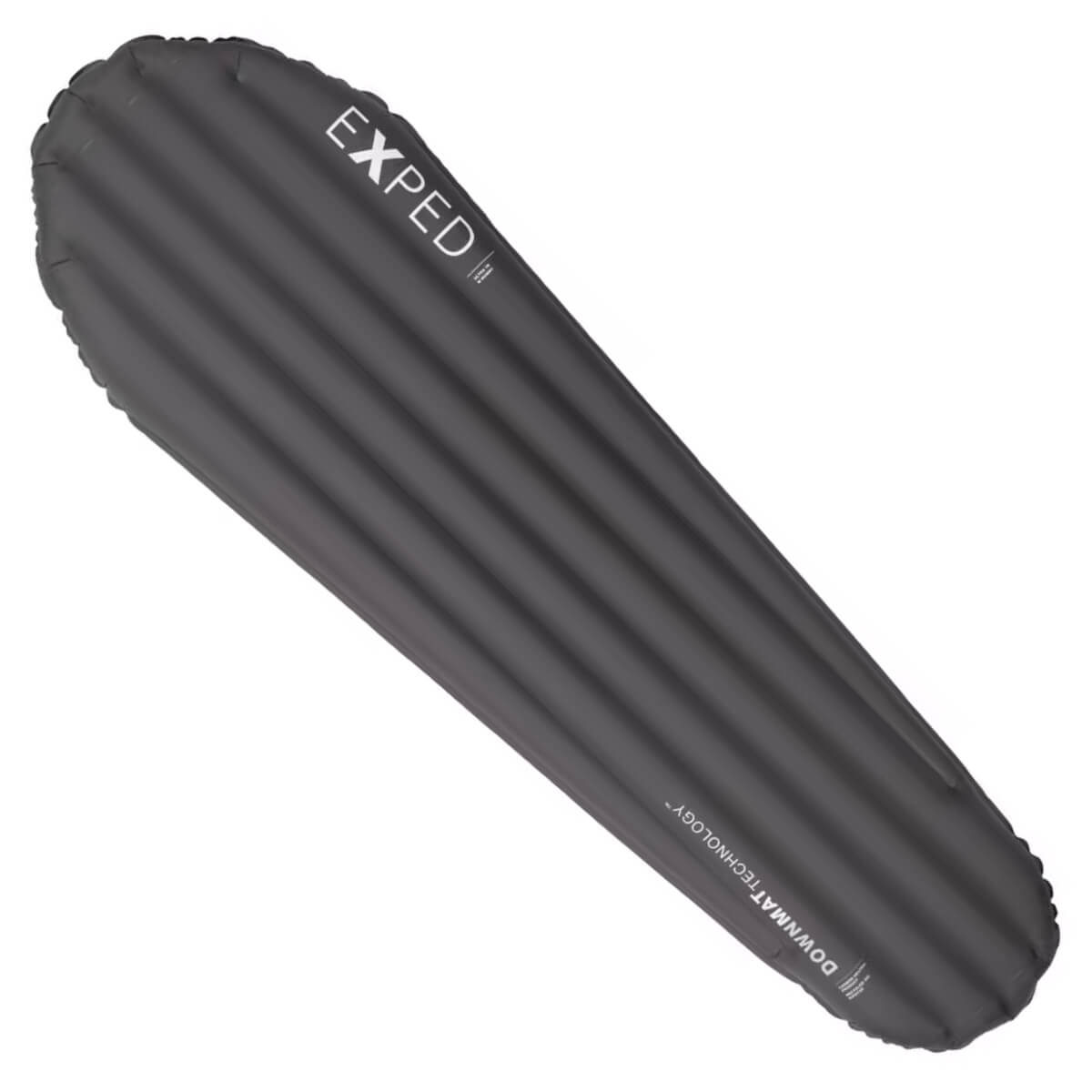
Exped Ultra 7R
The Exped Ultra 7R is another top tier winter sleeping pad, only this one sits on the outside of the pantheon looking in. Despite its high R-value (7.1) and low weight (17.5 oz), it’s bested slightly on both metrics by the Tensor Extreme and NeoAir XTherm.
- Price: $240
- Weight: 17.5 oz
- R-Value: 7.1
- R-Value/Ounce: .41R
- Thickness: 3.5 in
- Fabric: 20d/20d Ripstop Polyester
- Sizes: Medium Mummy, Medium Wide Mummy, Long Wide Mummy, Medium Rectangle, Wide Rectangle, Long Wide Rectangle.
- Pros: Lightweight. Top tier warmth. High warmth to weight ratio. Cradle effect. Widens when weighted.
- Cons: Modest durability. Statistically superior options exist at same price point. Use of pump mandatory to protect down from moisture. Expensive.
Construction & Features
Compared to those pads, Ultra 7R uses a lower tech, but still highly effective insulation – 700 fill power goose down. Compared to the thermal film, it’s marginally heavier and more susceptible to moisture, so be sure to use the pump instead of breath-inflation.
Unlike XTherm, whose baffles run perpendicular, and Tensor Extreme, whose baffles form a grid surface, Ultra 7R’s baffles run parallel to the length of the pad. This allows them to expand sideways when weighted, slightly enlarging the width of the pad as you use it. They are plenty stable, and the outer baffles are slightly enlarged to create a pleasant cradling effect. One downside we note is the use of 20d ripstop polyester (as opposed to thicker nylons), which is a bit precarious in terms of durability.
Verdict
It’s tough to come in third place, but don’t for a second think that Ultra 7R is anything less than a great winter sleeping pad. Its weight and R-Value are both excellent, and its stats are only marginally worse than our gold and silver medalist. If you can get this on sale, it’s definitely worth picking up.
Most Comfortable Winter Sleeping Pad For Backpacking
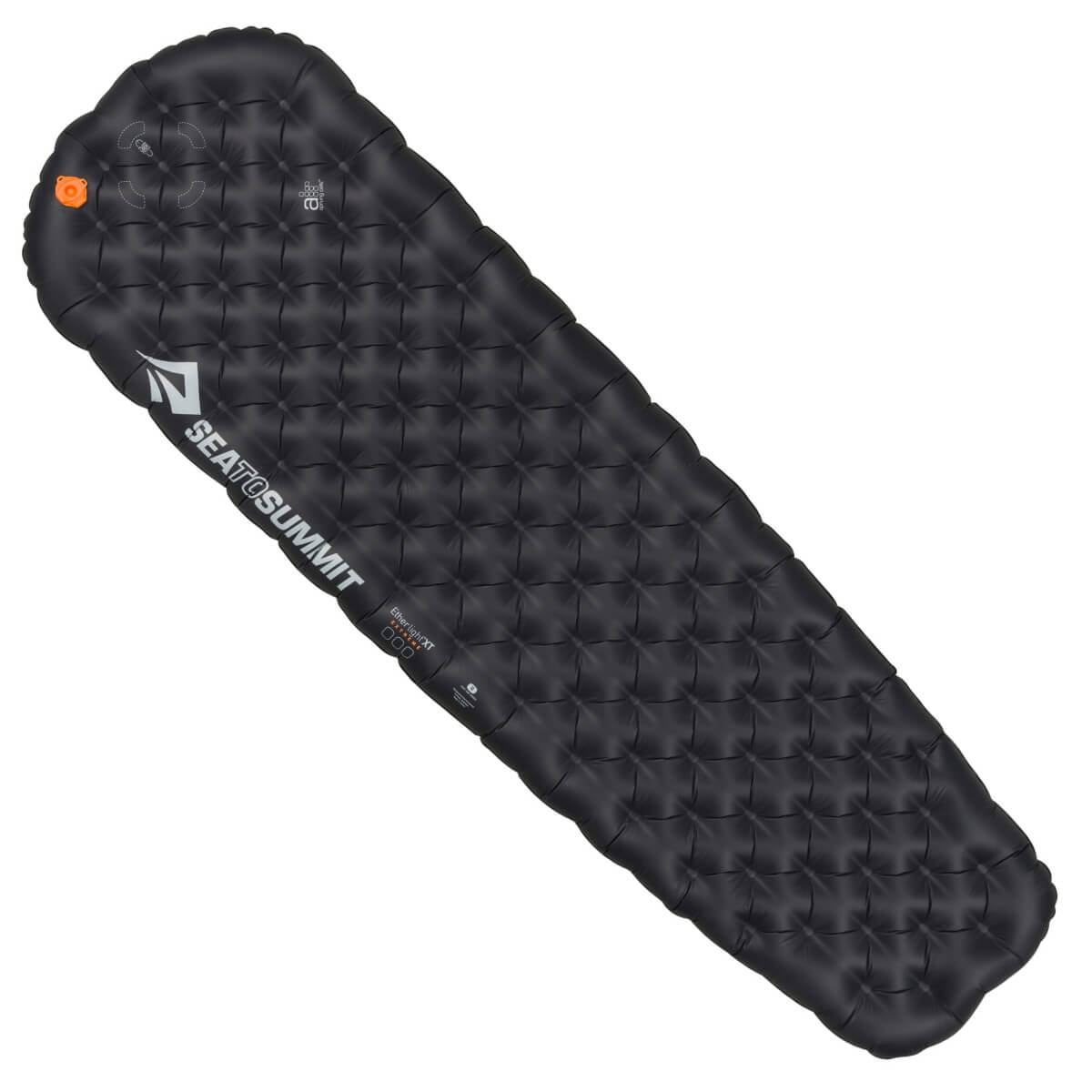
Sea to Summit Ether Light XT Extreme Insulated
It may not have the most impressive stats, but Sea to Summit Ether Light XT Extreme Insulated is subjectively the most comfortable winter sleeping pad for backpacking.
- Price: $219
- Weight: 25.4 oz
- R-Value: 6.2
- R-Value/Ounce: .24R
- Thickness: 4 in
- Fabric: 30d/40d nylon
- Sizes: Regular, Large, Regular Wide, Large Rectangular.
- Pros: Thickest and comfiest in its class. Good for side sleepers. Combined stuff sack pump. Pillow lock feature. Size regular is wider than average.
- Cons: Loud. Heavy. Only just warm enough for winter. Statistically superior options exist.
Construction & Features
That comfort is thanks to the Air Sprung Cells, a grid of pressure dispersing baffles that are extra accommodating to side sleepers. Like its summer-weight sibling, we feel (along with many others) that this is the comfiest pad to lay on in its weight class.
But compared to our top three options, a large gap exists in performance stats. It is both heavier, and less warm, delivering a R-Value-to-weight ratio that would be mid-tier, even among summer-weight sleeping pads. What’s more, the physical comfort is offset somewhat by the noisier than average material, which is prone to crinkling as you roll around in the night.
We do appreciate the durability boost of 30d nylon up top, and 40d nylon beneath. We’re also keen on the lifespan increasing “Anti-microbial liquid-extruded TPU lamination to reduce delamination.” And it comes with a best in class stuff sack pump, and nifty pillow lock, attachable hook-and-loop feature.
Verdict
Comfort seekers should choose the Ether Light XT Extreme Insulated winter sleeping pad. If you want to camp in temps below freezing, but have had issues with your arm or shoulder going numb on other mats, this is the next one to try. We wish it was both lighter and warmer, but you can’t have it all.
Most Durable Winter Sleeping Pad For Backpacking
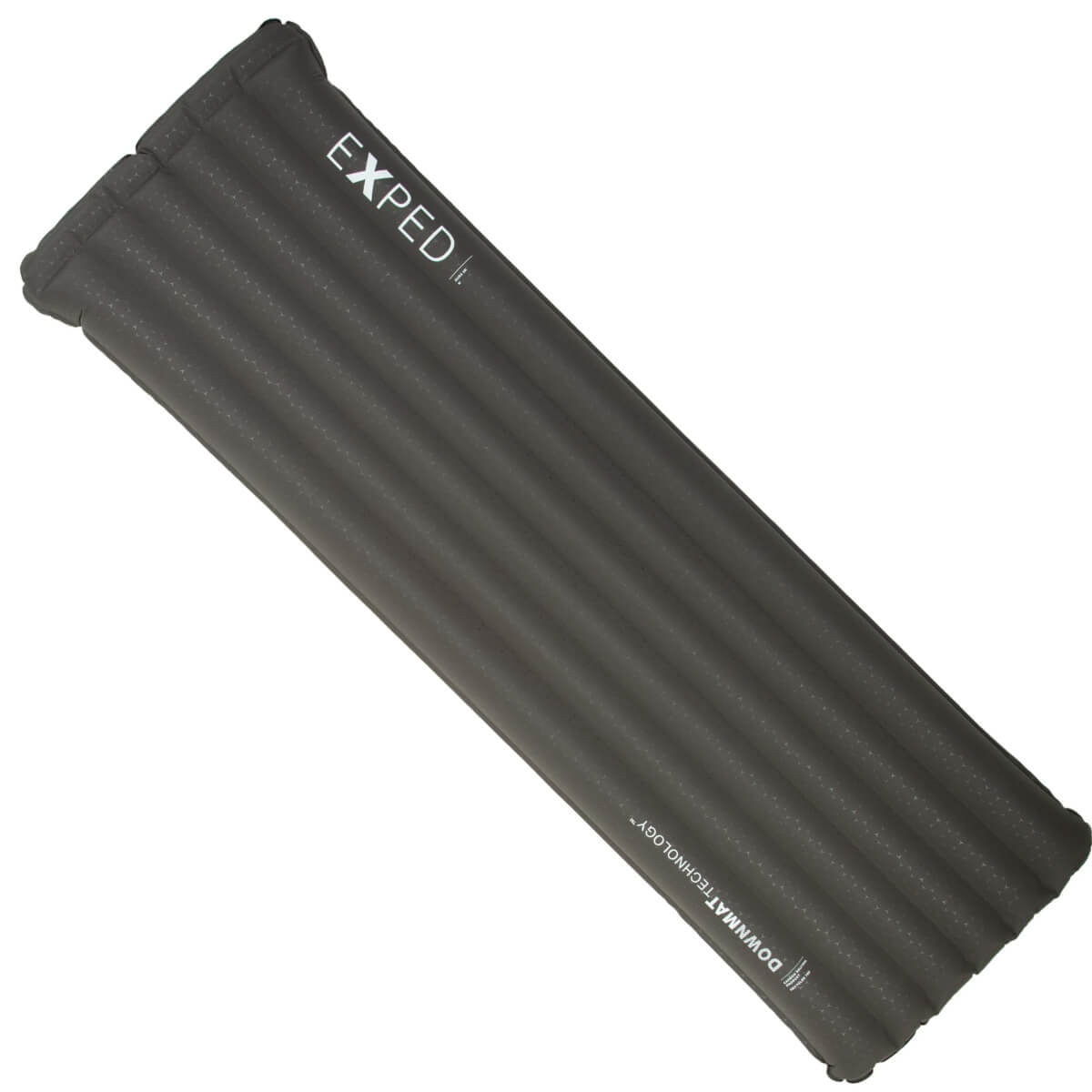
Exped Dura 8R
If you have a history of popping sleeping pads, and/or intend to take yours out for use on rocky, sharp, or abrasive surfaces, we recommend the tough-as-nails Exped Dura 8R.
- Price: $250
- Weight: 32 oz
- R-Value: 7.8
- R-Value/Weight: .24R
- Thickness: 3.5 in
- Fabric: 75d/175d cross woven polyester
- Sizes: Medium, Medium Wide, Long Wide
- Pros: Top tier warmth. Top tier durability. Widens when weighted. Cradle effect.
- Cons: Heavy. Requires use of pump. Most expensive option. No mummy shape.
Construction & Features
This is the most durable winter sleeping pad on the market thanks to the uber tough 75d/175d cross woven fabric and interior hydrolysis-resistant laminate. But on the other side of the coin, it’s also one of the heaviest options, so ultralight enthusiasts look elsewhere.
The whopping 7.8 R-Value is thanks to 700 fill power goose down insulation. That’s really warm; the second highest R-Value on our list! But it does require the use of their Schnozzle pump, so moisture from your breath doesn’t dampen the plumage.
Like its sibling, the Exped Ultra 7R, Dura 8R’s baffles run parallel to the length of the pad, which allows it to expand slightly when weighted. What’s more, they’ve even enlarged the outer baffles to create a slight cradling effect on the sleeper.
Verdict
It might be a niche player in the winter sleeping pad for backpacking market, but we’re glad to know that Dura 8R exists and is available. If you need it, you know who you are and why. If you aren’t sure you need this much durability, choose a lighter pad.
Best Supplemental Closed Cell Foam Pad
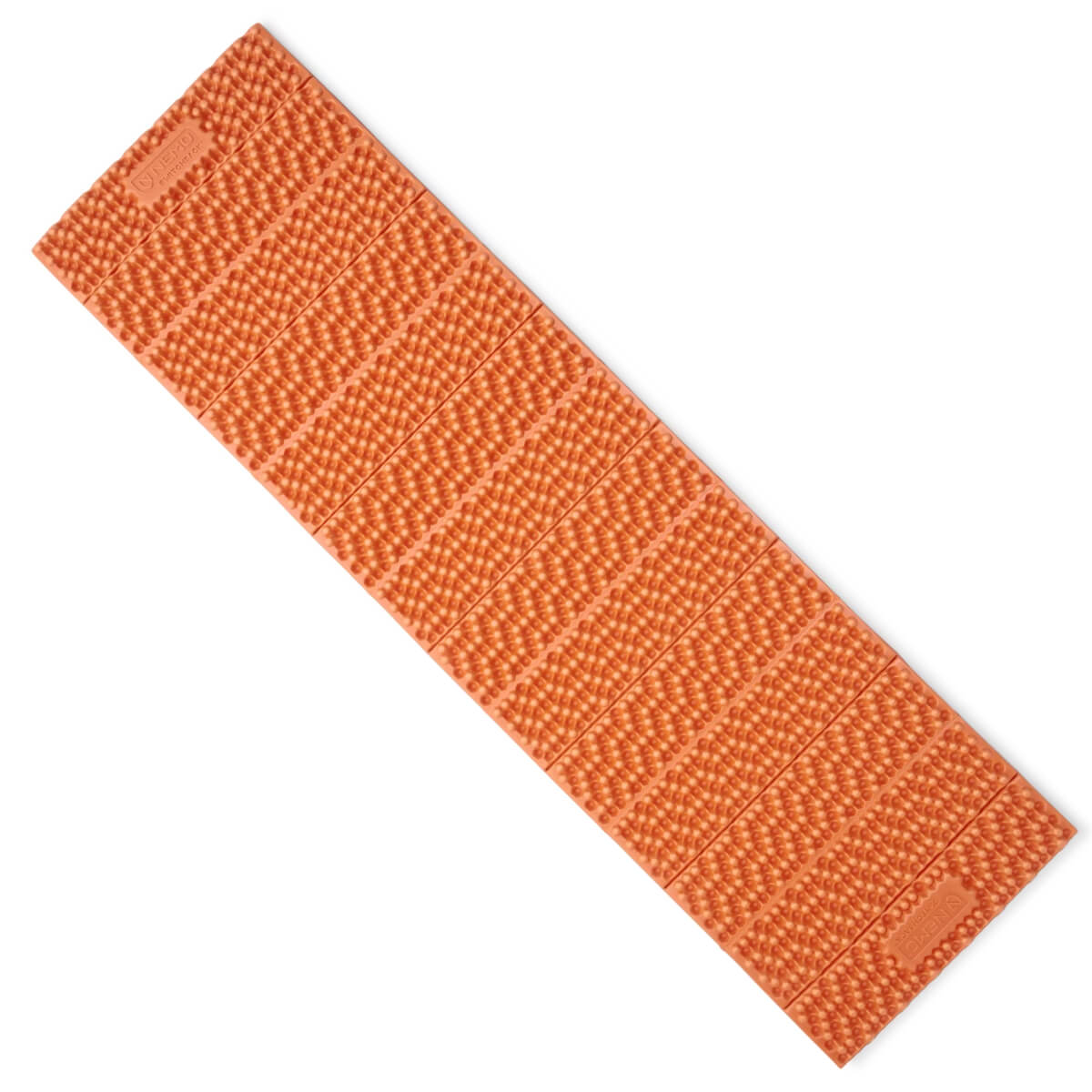
NEMO Switchback
The NEMO Switchback is our preferred closed cell foam pad to use for supplementing an inflatable and hanging out at camp in the snow.
- Price: $55
- Weight: 14.5 oz
- R-Value: 2.0
- R-Value/Weight: .14R
- Thickness: 0.9 in
- Material: Closed cell foam
- Sizes: Regular, Short
- Pros: Fail-proof. Durable. Versatile. Simple. Layer under inflatable pad to increase R-Value.
- Cons: Bulky. Low R-value. Thin. Uncomfortable by itself.
Construction & Features
NEMO Switchback is equal in virtually every way to its top competitor the Therm-a-Rest ZLite Sol, only 0.2 inches thicker for a marginal comfort increase. But in this case, we’re only recommending it as a supplemental pad, because R-Value stacks, so the thickness isn’t a huge deal, since we presume you’re using it underneath an inflatable.
While a true inflatable winter sleeping pad is preferable to a modular system of a summer weight inflatable plus a closed cell foam pad, combining the two can approximate a similar R-value/warmth. The downside to this system is that it’s heavier and bulkier than a single mat. But for literal arctic conditions, you might want to use this in addition to a winter sleeping pad, so as to achieve an R-value in the 9-10 range.
Closed cell foam is also great to use when lounging outside the tent, without risk of puncturing your primary pad. Or as failure-proof emergency system for alpine summit attempts.
Verdict
Pick up a NEMO Switchback and we’re sure you’ll find good uses for it as a supplement for winter camping, or otherwise. It’s just so versatile!


Share this entry