

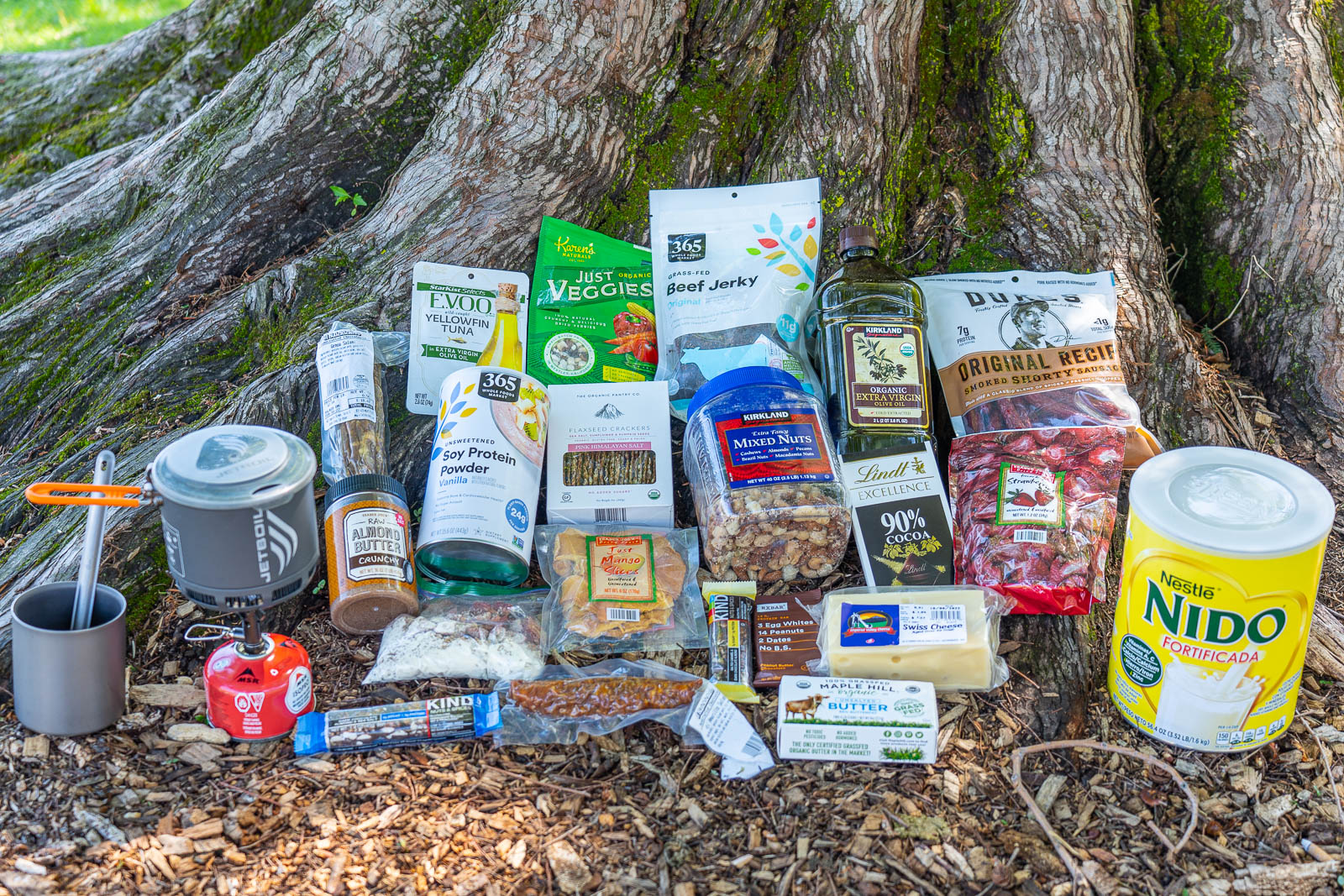
Simple, healthy, lightweight, compact, and nutritous backpacking food
We’re here to help with the best knowledge & thinking available on healthy, nutritious backpacking food. This article will touch on the amount of food you should bring, where you should get it, and basic trail nutrition ideas. We’ll discuss different diets; Low Carb, Omnivore, Gluten Free, Veggie, Vegan and Keto. Where to get natural fat, protein, and micronutrients. And finally we can save you a ton of food weight in the process. Let’s dig in!
Why Our Backpacking Food Strategy is Better
- Healthy Food | We have a focus on healthy backpacking food. And that makes sense. When you’re working hard on the trail you want to avoid low-nutrition, junk food and instead give your body the highest quality fuel and nutrition possible. Checkout our 7 Core backpacking foods.
- Low Carbs & Natural Fats! Every year more and more data is coming out that replacing carbs with natural fats makes a healthier diet. And it’s better food on the trail as well. Go ahead and checkout our Low Carb Backpacking Food List and our Keto Backpacking Food List | 3 Day.
- Our Food is Substantially Lighter | Saving you a bunch of pack weight while not sacrificing calories or nutrition.
- Advice For Every Diet | Omnivore, Gluten Free, Veggie, Vegan and even Keto… we a separate section for each with food suggestions and advice to make these work on the trail for you.
You make Adventure Alan & Co possible. When purchasing through links on our site, we may earn an affiliate commission at no additional cost to you. Here’s why you can trust us.
We Cover Everything You Need to Know About Backpacking Food
This is a comprehensive introduction to backpacking food. We address every important topic on backpacking food & hiking meals so that you’ll have all the information you’ll need to plan your backpacking food like a pro. Below is a list of the major topics covered. Feel free to jump to what topic interests you or just read the article straight-thru for the complete primmer on backpacking food.
And while you’re here, don’t miss our buyer’s guides to stoves, pots, mugs, long spoons, backpacking knives, and water filters.
Basic Information on Backpacking Food
The 4 Ways to Get Backpacking Food
- Buy backpacking food at the supermarket
- Buy freeze-dried hiking meals
- Make your own hiking meals
- Use a meal planning service like RightOnTrek’s meal planner (by far the easiest way to get all your trail food planned & delivered)
The 5 Backpacking Food Diets
- Omnivore backpacking food
(includes low carb backpacking food list) - Gluten Free backpacking food
- Vegetarian backpacking food
- Vegan backpacking food
- Keto backpacking food
(includes keto backpacking food list)
Pack Less & You’ll Pack Better
No one wants to go hungry on the trail, so backpackers have a tendency to overpack food. here are a few tips to reduce food weight and not go hungry:
3000 calories / 1.5 lb per day | All our years guiding diverse clients has brought us to the conclusion that about 3,000 calories/day is the sweet spot for most hikers. And if you pack the right foods this should be around 1.5 lb/day for a conventional diet (1.2 lb/day for a “low carbohydrate” diet). Of course, this will vary by individual & on-trail factors, but this is a great starting point.
For more see: How much food should I take? The detailed answer
Tips to Pack Less Backpacking Food
Pack calorie dense foods | Many sources out there will tell you to bring 2 lbs of food per day, but why so much? Food that’s not high enough in calories per ounce is often the culprit. Spoiler alert but most high carb foods are low in calories per ounce. If you pack items that are at are on average at least 125 calories per ounce (e.g. higher calories food like nuts), you’ll be able to drop your daily food weight to just 1.5 lbs or less and still hit the 3,000 calorie / day mark. On a 7-day trip your pack just got 5 lbs lighter.
Pack Compact (low volume) Foods | Compact foods are also a low volume hack – when you ditch the bag of Fritos for a bag of cashew nuts, you’re able to fit way more food in less space. This means more time on the trail with less resupplies, and this also comes in especially handy when you’re stuffing everything into a bear canister — and the number of parks requiring bear canisters goes up every year!
Lay It Out & Weigh It | We lay out our gear before putting it in our backpack, and food should be no different. A standard kitchen scale (we like rechargeable) is an invaluable tool to easily split bulk food purchases and measure the weight of individual portions. For the final check, use a hanging luggage scale to weigh your food bag or canister before you leave. If you’re going out for a weekend, you should be under the 5 lb mark. If you’re going out for a week, you should have just over 10 lbs. Any more than that and you’ve probably overpacked.
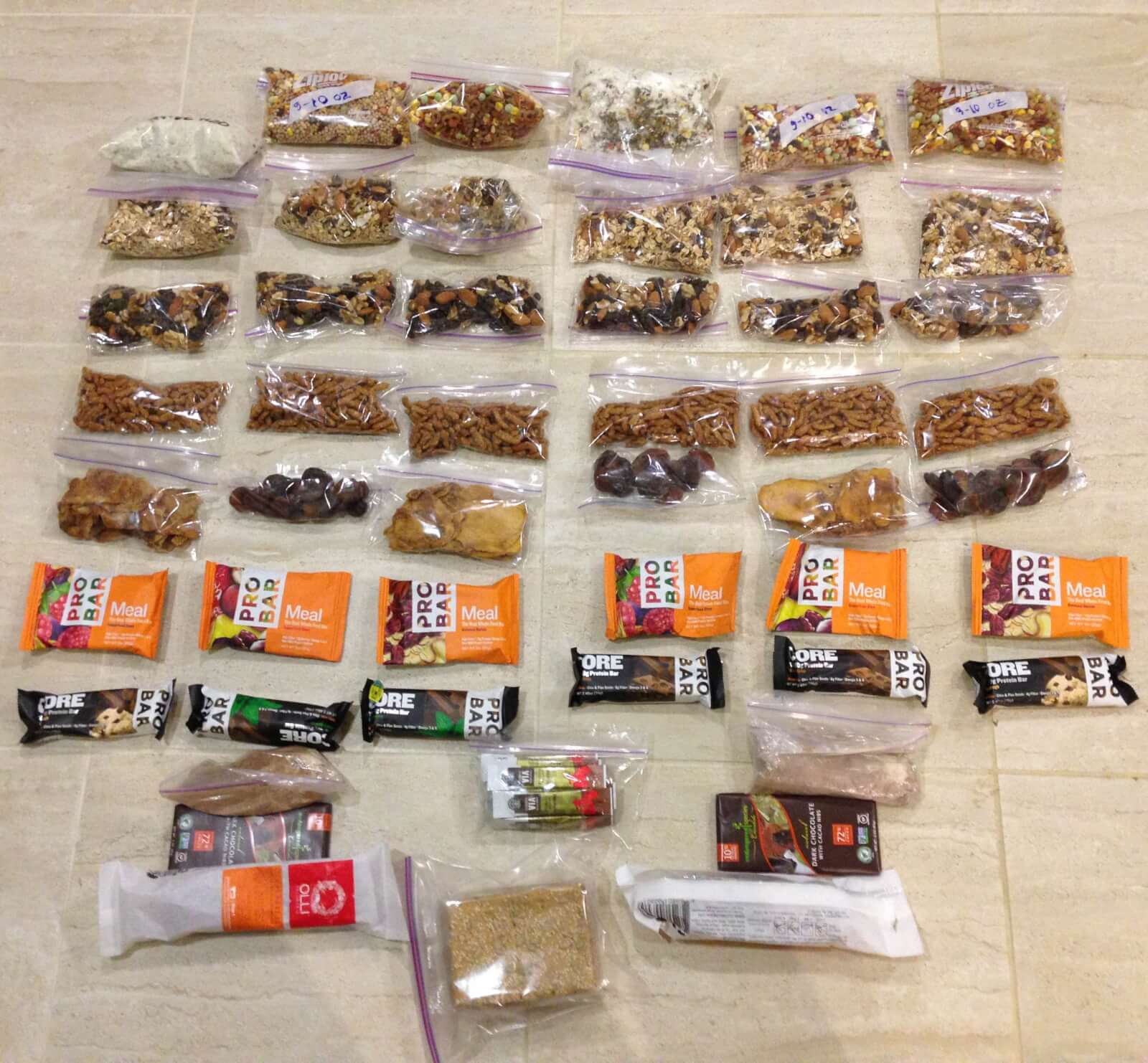
Food Packing Hack
When spreading out your food it helps lay each day of food in its own row— that is, for a 7 day trip you’d have 7 rows each with breakfast, lunch and dinner food. This makes it super easy to visually inspect that you have the right amount of food, not only for the whole trip, but each day as well.
Why Low Carb is a Great Choice for Backpacking Food
Low carb is the way to go on the trail (and likely for your general health). Every year more and more data is coming out that replacing carbs with natural fats makes a healthier diet. Especially on trail and when engaged in endurance activities. Cutting carbs reduces sugar crashes and gives your mind and body the nutrients they need to sustain peak performance levels — and it has wealth of other health benefits. Finally, it is significantly lighter than traditional backpacking food for the same calories.
1/2 the Weight of Traditional Backpacking Food | Same Calories
1.2 lb of Low Carb backpacking food = 3,000 calories — Amazing, right?! That’s almost 1/2 the weight of the 2 lb per day most hikers carry. It’s nutritious and provides the same calories. Go ahead and checkout our Low Carb backpacking food List | 3 Day.
* What is Low Carb? While there is no definitive definition of a “low-carb diet,” many definitions of a low carb diet are under 150g net carbs/day for the 3,000 cal/day that we suggest for hiking (~20% of calories). But it is up to each hiker to make their own dietary strategy — some may choose to go moderate carb or even full carb.
7 Core Backpacking Foods
The three major challenges for trail food are: a) getting enough protein, b) loading up on natural fats, c) while keeping carbohydrates reasonable
Here we give you some of the best foods to do this while still being tasty and satisfying. And we have offerings for every diet from omnivore, to vegan, to keto. And they are easy to procure. The vast majority of these can be purchased at your local supermarket, Whole Foods, Trader Joe’s, or a natural foods store.
Load your pack with following calorie dense backpacking foods and you are almost guaranteed to dramatically lower your food weight.
1. Natural Nuts & Oils
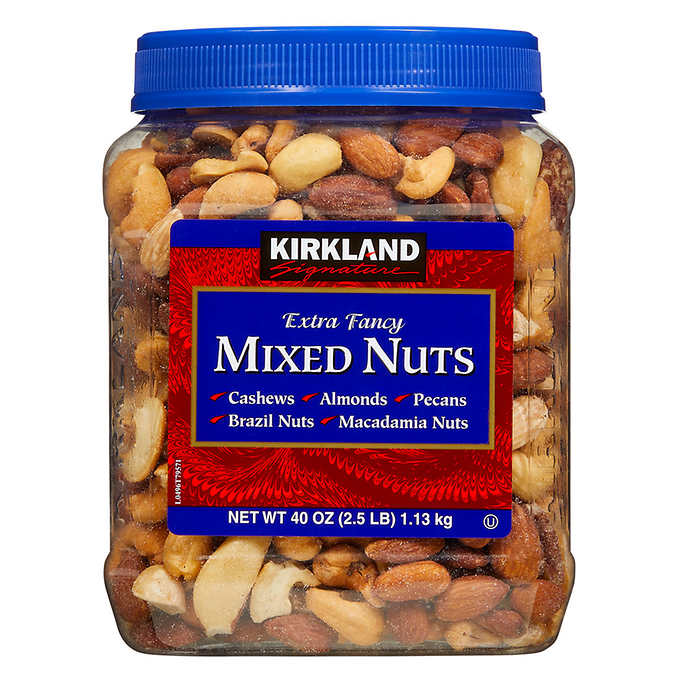
Natural Nuts | Are the poster child for a low carb and natural fat food. Nuts are high in natural fats, mega high in calories, low in carbs, add protein and take up little pack space. In addition they are (allergies aside) perfect for all backpacking diets from omnivore, to gluten free, vegetarian, vegan, and keto. Our favorite is Costco’s lightly salted mix of macadamias, pecans, cashews, and almonds. But take whatever nuts you like, mixed or individual, salted or unsalted.
Unsweetened Nut Butters Whole Natural Nuts are best but nut butters (Kirkland Trader Joe’s & Whole Foods 365) are still great. You can slather them on crackers, eat the plain out of the jar with spoon, or put them in dinners to add a bunch of calories and flavor. Bring a few jars on every trip!
Olive Oil to add to meals. Natural fat, compact, and 200 calories per ounce.
2. Treats
Yes, there needs to be some joy on the trail and for many hikers dark chocolate may be the gastronomic highlight of the day.
When it’s over 90%, chocolate is a food! VERY Dark Chocolate is compatible with all diets it’s high in calories and satisfaction. One of our favorites is GHIRARDELLI Intense Dark Chocolate 92% with just a touch of sweetness. And Taza Chocolate Organic Amaze Bar 95% Stone Ground, Wicked Dark. And if you need it slightly sweeter Lindt Excellence Bar, 90% Cocoa Supreme Dark Chocolate.
Unsweetened Dried Mango or other dried fruit adds sweetness and flavor complexity to very-dark or even 100% dark chocolate. Or use Freeze Dried Strawberries to sweeten your breakfast without using sugar. Dried fruit is great for dessert or midday snack. Note that dried fruits should be used with discretion as they are not calorie dense and high in sugar.
Rawmio Vegan Hazelnut Spread – coming in at over 160 cal/oz this sweet spread has ⅓ the carbs of regular Nutella. Doubles both as a spread or dessert.
3. Meat Protein Options
Duke’s Original Sausages High in fat (150 cal/oz!), protein, and less than 1 g sugar, these tasty sausages are a trail carnivores dream food. Or try supermarket dry salami. Try and get it at 110 cal/oz or better and no added sugar.
Snake River Farms American Wagyu Beef Jerky is the clear winner for Beef Jerky. Its high caloric density (130 cal/oz) it blows away the competition that is in the 70-90 cal/oz range. It’s delicious and only has 2g of sugar. It can be purchased at COSTCO for $15 per bag!
But in general, Meat Jerkies great source of protein. We prefer minimally processed, natural meats with little or no sugar added. Two other favorites are People’s Choice Beef Jerky – Old Fashioned – Original | sugar free, zero carb, gluten free, and keto Friendly. And if you want healthy grass-fed fats we like 365 Grass-Fed Beef Jerky | Super healthy, grass-fed fat profile, 11g protein and delicious at a reasonable price. Downside is it a bit heavy (80 cal/oz) and has 5g of sugar — but used with restraint this should not be an issue, even on a keto diet. And for a no sugar jerky try Made by True Smokehouse Biltong Slab – Grass Fed Beef Whole Jerky Slab altho it’s admittedly expensive!
Tuna in Olive Oil nice protein hit for lunch, a snack or to add to dinners. Not the highest in calories but nice for variety.
4. Vegetarian Protein Options
Moon Cheese & similar ParmCrips are about as high calorie as it gets at 170 cal/oz and providing 11-12 g of protein. This is 100% cheese that’s crispy with all the water removed. Only downside is that it’s a bit bulky.
Hard Cheeses are a fresh, and tasty treat on the trail. Compatible with all but the Vegan Diet, some of the drier and harder cheeses, cheddar cheese & parmesan cheese & , are 110 to 120 cal/oz, packed with flavor, low on carbs and a good source of protein. In addition, the harder cheeses keep well on the trail. Powdered parmesan cheese is exceptionally high in calories, and can be added to meals for extra flavor and calories.
Powdered Eggs can be made as a stand alone egg dish, or added to meals.
5. Vegan Protein Options
Both Soy and Quinoa are complete proteins, and while they have virtually no fat and come with a bit of carbs they are still good vegan options for protein. Obviously nuts have some, but not a ton of protein.
Soy Protein Powder. Fantastic source of veggie protein (complete protein) and low on carbs. Can be added to drinks and meals. (Just make sure you get the kind without added sugars!).
Soy Jerky | Good source of veggie protein (complete protein), low on carbs and some soy jerkies are as high as 120 cal/oz (just make sure you pick ones little or no added sugar).
Texturized soy protein, TVP can be added to breakfasts and dinners.
6. High Fat Dairy Options
Heavy Cream Powder and Whole Fat Powdered Milk at 200 cal/oz and 140 cal/oz respectively these are great to add to coffee, tea and breakfasts to boost calories. And the milk has 8 g protein per oz.
Butter, if you can keep it from melting, is a great choice to add delicious calories to breakfasts and dinners.
3 Backpacking Foods to Use with Discretion
The following foods are not calorie dense enough to make the A list of the 7 Core backpacking foods.
Trail Bars / Energy Bars
Choose wisely as most trail bars are loaded with carbs — sugars, or sugar alternatives like brown rice syrup. So read the label. E.g. one very well known energy bar has 40 g of carbs of which 18 g is added sugar.
Kind Bars | are the bright spot here and are about as healthy as trail bars get. Minimally processed, and lower in sugar than most trail bars (17g carb / 6g fiber), they are also high in calories and natural fats — 140 cal/oz. And of course they are delicious!
RxBars are good too — high in protein and 23g carb / 5g fiber.
Freeze Dried Meals / Prepared Meals
The serious downside of standard freeze dried or prepackaged meals is that they aren’t calorie dense and can be filled to the brim with cheap carbs. Fortunately, there are also great low-carb and keto options coming to market. Read the ingredient list and nutrition labels before purchasing.
Hacks to Improve Freeze Dried Meals
- Hack 1 | Buy calorie dense, low carb hiking meals from companies like Next Mile Meals or RightOnTrek’s Broccoli Beef Stroganoff
- Hack 2 | To make standard freeze dried meals more calorie dense and lower in carbs, try adding more fatty ingredients to them. That is, you might buy a single serving but make it work for two people by bulking it up with fat calories, like olive oil, nuts, peanut butter, regular butter; heavy powdered cream, or add high fat protein like salami. That way you’ll have a much higher fat, lower carb meal for two.
- Hack 3 | Just use less of standard freeze dried or prepackaged meals — that is, use them sparingly to make up a smaller percentage your daily calories. And then bulk up on the 7 Core Low Carb backpacking foods, maybe using some of these foods as sides at breakfast and dinner. For example, look for a larger one person meal and share it with two and then use lower carb food as a side, or simply eat more low carb food (snacks or at lunch) during the day to add the extra calories.
Grain Products
Yup, grains are not calorie dense ~100 cal/oz and high in carbs. Even a “healthy” grain like whole wheat has per ounce 20.5 g of carbs. Breads and tortillas contain a fair amount of water further reducing calorie density to around 70 cal/oz. That’s why dried grain products like crackers, especially with fat added and in the 120 to 130 cal/oz range are preferred.
Plain Oatmeal is one of the best grain choices at 110 cal/oz and with 5g of protein. If you add a bunch of butter or powdered whole fat cream you can seriously up the caloric density of your breakfast. And use sweeteners with restraint, maybe adding just a bit of dried fruit.
Granola / Muesli Alternatives | Try our homemade, unsweetened granola alternative (recipe coming). Or get store bought “Keto” Granolas essentially nut-based “granola” nuggets with a non-nutritive sweetener like erythritol, stevia, or monk fruit.
ORGANIC PANTRY Flaxseed Crackers a better alternative to traditional crackers, these are 140 cal/oz, lower in carbs (5g net & no sugar) and have no nutritional gimmickry. They are mostly seeds and some quinoa which is a complete protein.
High Calorie “Traditional” Crackers like Wheat Thins Original Whole Grain that is, look for crackers that are in the 120 to 130 cal/oz range. And then to raise calorie density eat them with nut butter, or layer some cheese or salami on top to make a fast and delicious lunch. For gluten free try some tasty rice crackers.
Keto Crackers low carb crackers. Super high calorie at 160 cal/oz & no sugar added. These are a gluten free & veggie option as well. Downside is they are fairly processed with a long list of ingredients, so not exactly a cracker your grandmother ate.
Trail Coffee & Tea
Starbucks VIA Ready Brew Coffee took the hiking world over by storm and pretty much cornered the market — ending most discussions on cowboy coffee and other camp coffee brewing methods. So unless you are a gourmet coffee aficionado, it’s probably best to not overthink this one. Note: Starbucks VIA can be bought in bulk at Costco to save a few bucks.
Hack: if you use treated water you only need bring it to 160 deg F or so to brew the coffee, this saves you fuel, time and waiting for your scalding coffee to cool to drinking temperature.
If You Are A Gourmet Coffee Aficionado
If you want a cup of pour-over coffee to rival your best local coffee shop then check out our Best Camp Coffee | Backcountry Barista Pour Over Coffee using a Hario V60 01 Plastic Dripper – Red. This 2.2 oz marvel is the coffee dripper that Tetsu Kaysuya used to win the 2016 World Brewers Cup Championship!
How To Make Backcountry Tea (Loose-Leaf, Connoisseur Style)
Backcountry Tea using the Trail Designs Caldera Cone Stove cooking system
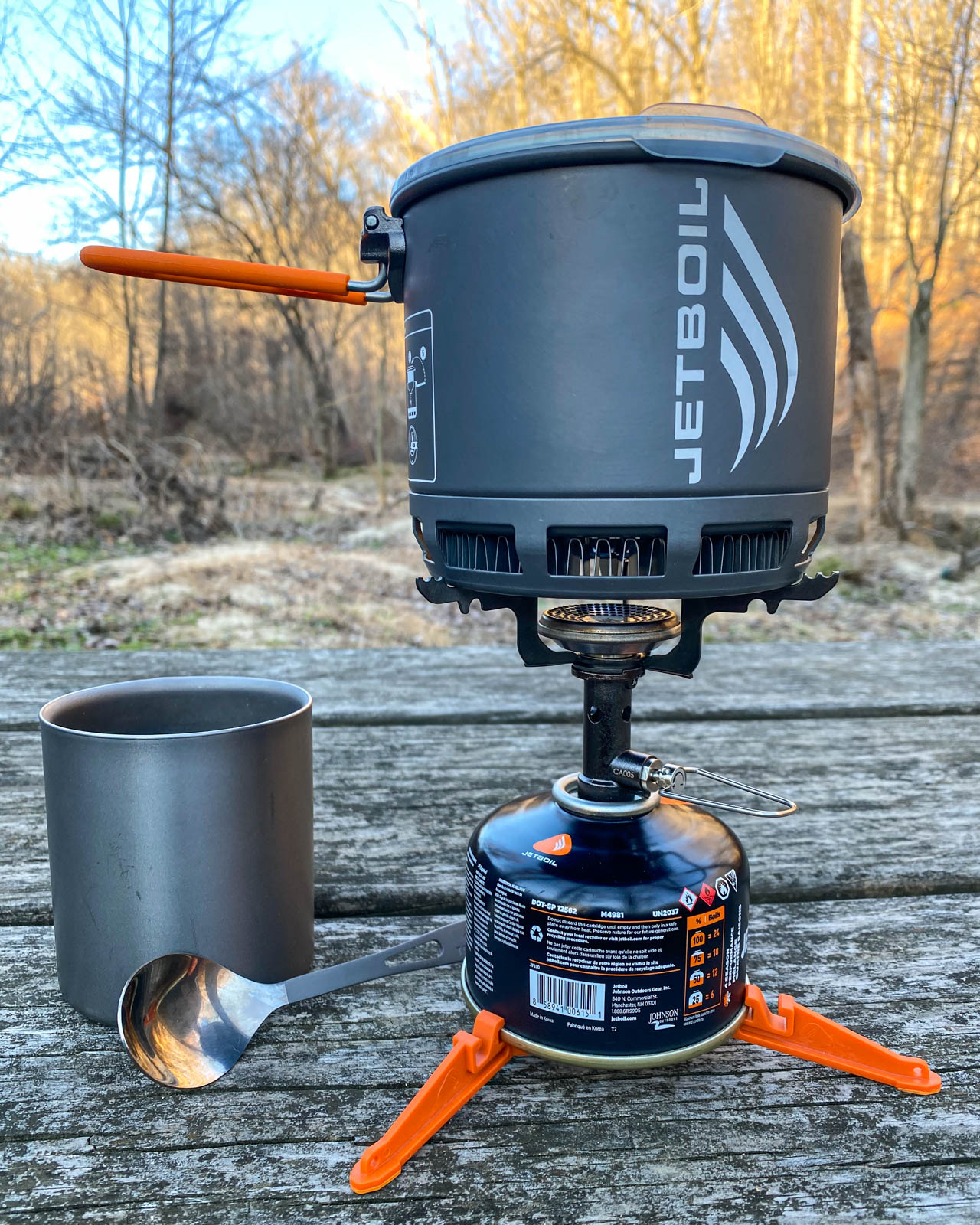
Stove & Cooking Equipment We Bring
- Jetboil Stash Cooking System New for 2021 and weighing and only 7 oz, the Stash is the lightest Jetboil-style stove on the market. Amazingly, it retains the famed Jetboil heat efficiency and fuel economy. We love how well it holds a pot, how quickly it boils water, and how astoundingly light it is.
- TOAKS Titanium Single Wall 450ml Cup Strong, elegant, and weighing only 2.7 oz, this titanium mug is a killer deal for only $20.
- TOAKS Titanium Long Handled Spoon Strong, lightweight, and long enough to dip into the deepest of freeze-dried meal bags. See more in our guide to long handle spoons for backpacking.
- Coffee Hario V60 01 Plastic Dripper This 2.2 oz marvel is the coffee dripper that Tetsu Kaysuya used to win the 2016 World Brewers Cup Championship. Pour over is a huge upgrade over Starbucks Via.
Camp Cooking Hacks
- Pro Hack 1: We’re all about cooking directly in the pot. Compared to soaking, cooking is much faster, gives us more control over our meals, and our food almost always has better flavor and texture.
- Pro Hack 2: If you’re concerned about scorching & food sticking, put a bit of beeswax on the bottom of your pot prior to cooking.
- Pro Hack 3: Bring a small, GSI silicone spoon or GSI Outdoors Compact Scraper. They weigh just an ounce or less and help scrape your pot clean so cleanup is a breeze and you can get every last calorie out of your food.
Also see our: Best Backpacking Stove Post
The 4 Ways to Get Backpacking Food
Supermarket, Homemade, Freeze Dried/Ready Made, or Meal Planning Service
Where To Get Your Backpacking Food?
We Utilize Four Main Sources To Prepare Food For Our Trips.
- Buy ready-to-eat supermarket items
- Buy freeze-dried meals or pre-prepared meals
(includes hacks to reduce carbs, and increase fat in these meals) - Purchase ingredients in bulk and make your own meals
- Use a meal planning service
1. Buy Ready-To-Eat Supermarket Items
Stocking up at the supermarket is the most convenient and least expensive way to assemble your food for your next trip. It is possible to by all the food that you need at the supermarket. Thru-hikers do this all the time. And backpacking food costs can be kept low at the supermarket, especially if you buy items in bulk and repackage them into individual portions.
Make a Shopping List
Pre-shopping planning helps a lot as randomly walking the aisles often leads to overbuying and filling your cart with knee-jerk high-carb foods. So before your trip take a second to write each day of your meal plan and the food you’ll bring. Once you’ve got a shopping list it’s quick and easy to get what you need. Best yet, your list can be refined and used again and again.
Ideas for Supermarket backpacking foods
Our 7 Core backpacking foods are the best place to start. These are the some of the very best, most nutritious foods that are also low in carbohydrates. Get enough of them and you won’t go wrong with your healthy trail diet. From there, start filling out your daily plan. These items will create a great low-carb base that can be rounded out with your own favorite items.
Meal bases
See our Backpacking Meal Recipes our favorite low cost, nutritious, and easy to make meals, many of which are based mostly on supermarket foods. But get creative! Products like instant quinoa, minute rice, or couscous can be used sparingly as a base for meals, add in a tablespoon or two of natural oils for fat, freeze dried vegetables and spices to mix up your flavors, and grab some freeze-dried meat or tofu, or cured meats (even bacon bits!) to up your fats and protein.
Nuts, Seeds, Gorp Fixins
Pumpkin, chia, sunflower, hemp, seeds etc. Look for seeds that are calorie dense and not overly salty. You can eat them by themselves, mix them with your GORP fixins, or sprinkle them on your breakfast or dinner for added calories. When making Gorp try and stick to mostly nuts, and add dried fruit, M&Ms, etc. sparingly as these will quickly increase carbs and reduce caloric density of the Gorp.
Energy Bars
energy and protein bars like Kind Bars go a long way on the trail, and there’s so many options out there that you’ll never get bored eating the same brand and flavor. You do have to be careful with energy bars tho as most are super high in carbohydrates (both grains and added sugar). Try and stick with bars that are high in fat, calorie dense, and lower in carbs. Again around 125 calories per ounce or more is better! E.g. a 128 cal/oz Kind Bars which have lots of nuts (natural fats), low added sugar. RxBars are a second best — more processed, lower in calories and higher in sugars. We also like PROBAR Meal Bars which received Health Magazine’s ”Best In Food” award.
2. Purchase Freeze Dried or Other Prepared Meals
Prepared, often freeze-dried, meals are easy additions to any backpacking meal plan — yes they cost a bit more but their undeniable convenience is appreciated for those of us with busy lives! New brands are popping up regularly and these products are becoming more widely available in outdoor gear stores and even some grocery stores.
The serious downside of standard freeze dried or prepackaged meals is that hey aren’t calorie dense and can be filled to the brim with cheap carbs. Fortunately there are also great low-carb and keto options coming to market. Read the ingredient list and nutrition labels before purchasing! And the following hacks will help reduce the amount of carbs from standard, pre-packaged meals:
Hack 1
Buy calorie dense, low carb hiking meals from companies like Next Mile Meals or RightOnTrek’s Broccoli Beef Stroganoff
Hack 2
To make standard freeze dried meals more calorie dense and lower in carbs, try adding more fatty ingredients to them. That is, you might buy a single serving but make it work for two people by bulking it up with fat calories, like olive oil, nuts, peanut butter, regular butter; heavy powdered cream, or add high fat protein like salami. That way you’ll have a much higher fat, lower carb meal for two.
Hack 3
Just use less of standard freeze dried or prepackaged meals — that is, use them sparingly to make up a smaller percentage your daily calories. And then bulk up on the 7 Core Low Carb backpacking foods, maybe using some of these foods as sides at breakfast and dinner. For example, look for a larger one person meal and share it with two and then use lower carb food as a side, or simply eat more low carb food (snacks or at lunch) during the day to add the extra calories.
Cook in Bag or Cook in Pot?
Backpacking meals come one of two ways. Either they’re meant to be rehydrated in their packaging with boiling water or a cold soak, or they’re to be cooked in a pot on your stove. We prefer the cook on your stove meals as we find they tend to be more tasty and ready faster, and the packaging is lighter and often more eco-friendly.
The downfalls to these prepared meals is that they can be expensive and can create heavy trash to carry out. This is especially true of the soak-in-the-bag style products, as you’re bound to have some food bits and liquid left. Although a TOAKS Titanium Long Handled Spoon helps to get the last bits out.
A few of our favorite breakfasts & dinners
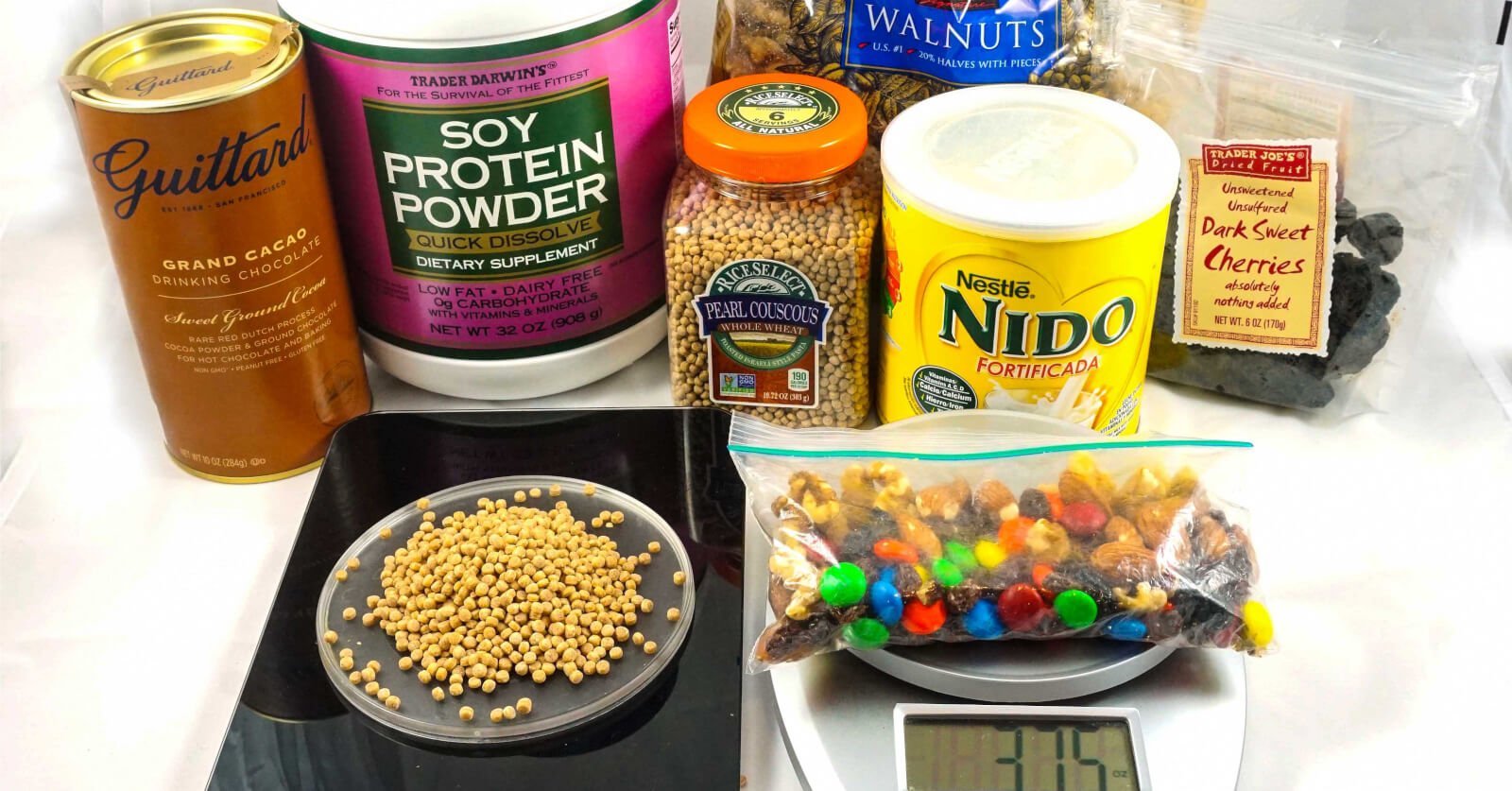
3. Purchase ingredients in bulk and make your own meals
One of the best ways to keep your meals low carb, healthy, nutritious, and inexpensive is to make your own meals. These don’t need to be complicated. Simply buying 1/2 dozen ingredients at your local supermarket is enough to make a great meal. One that isn’t super processed, and loaded with carbohydrates, sugar and sodium. As an example our homemead backpacking granola has 1/2 the carbs and is much higher in total calories and calories per ounce vs. a popular commercial, pre-made camping granola.
Backpacking Meal Ideas – Our Favorite Recipes
Some of our favorite recipes to make are:
- Browse a collection of all of our Backpacking Breakfast Recipes
- Browse a collection of all of our Backpacking Dinner Recipes
For more, visit our post Backpacking Meal Recipes our favorite low cost, nutritious and easy to make meals.
4. Backpacking Meal Planning Services
All inclusive meal planning services are fairly new to the backpacking market. The nuts and bolts of each service is different, but in essence, you select products from their catalog and they ship your entire meal plan to you at once. This option is great for those looking to save time and leg work, and also for thru-hiker resupplies.
We recently had the opportunity to try out RightOnTrek, a company based outside of Glacier National Park, who provides this service along with their own line of trail-ready meals – a couple of which we mentioned above.
With RightOnTrek’s meal planner, you select the number of days you’re going out and your dietary and taste preferences. They assemble a plan for each day using their meals and a product catalog stocked with all-natural staples. Plenty of low-carb and keto options! Everything in the plan can be easily swapped and customized. Then all your food is shipped to your door (or trail resupply location) and arrives organized by day – just toss it in your food bag and go.
AlpenFuel is another company that offers a meal planning service. Their planner isn’t as intuitive as RightOnTrek’s, but they do stock prepared meals from a few different companies (including their own line of breakfasts). So if you like Peak Refuel or Bushka’s Kitchen then they’re worth checking out.
While these premium meal planning services are the most expensive option for food preparation, they’ll save you a ton of time and energy going out and assembling everything yourself.
The 5 backpacking food Diets
Omnivore, Gluten Free, Vegetarian, Vegan & Keto
Omnivore Backpacking Food
Protein and High Fat Food Options
Omnivore backpacking food is super easy as you have lots of low carb options for protein, and lots of high fat low carb options. Pretty much anything on the 7 Core backpacking foods is fair game. Animal proteins are easiest and best. Cheeses, Sausages, Meat Jerky, Tuna in OO. And of course Whole Fat Powdered Milk, and Heavy Cream Powder. Don’t forget whole nuts, and the very dark chocolate.
Gluten Free Backpacking Food
Protein and High Fat Food Options
Gluten Free backpacking food is almost as easy as Omnivore and you have lots of low carb options for protein, and lots of high fat low carb options. Pretty much anything on the 7 Core backpacking foods is fair game. Animal proteins are easiest and best. Cheeses, Sausages, Meat Jerky, Tuna in OO. And of course Whole Fat Powdered Milk, and Heavy Cream Powder. Don’t forget whole nuts, and the very dark chocolate.
What is off piste are wheat based products, but we do have non-wheat cracker options, like the rice crackers and Keto Crackers. And you’ll need to be careful about what’s in energy bars (Kind Bars are gluten free), and other processed foods. In case you haven’t guessed we are not fans of processed foods so that should help, since we don’t list many highly processed foods here.
Vegetarian Backpacking Food
Protein and High Fat Food Options
Vegetarian backpacking food is where things get interesting — but it’s still doable. In particular, protein is a bit harder to source. First, animal meat proteins are out. And second, keeping the diet calorie dense puts another kink in. That is, the standard rice/other grains & beans protein source is not calorie dense and high in carbs. Still, with cheese, soy jerky, soy protein power, and the protein in nuts you should be able to get adequate trail protein with decent calorie density. And don’t forget and the very dark chocolate! So in the end, much of the 7 Core backpacking foods is fair game.
Vegan backpacking food
Protein and High Fat Food Options
Vegan backpacking food (high calorie density version), is a challenge but don’t despair, it can be done. In particular, getting enough trail protein (complete proteins) takes a bit of effort. Soy and Quinoa are going to be your best bets for complete proteins that are plant based. So with soy jerky, soy protein power, (and other soy products like texturized soy protein, TVP) and the protein in nuts you should be able to get a significant amount trail protein keep calorie density reasonable. And in the end, to get enough protein you may need to supplement with some lower calorie density protein sources like rice and beans. As to fat, use Olive Oil liberally at meals to add fat and calories. And don’t forget and the very dark chocolate! So in the end, much of the 7 Core backpacking foods is fair game.
Keto Backpacking Food
Keto backpacking food has been my go-to trail food option over the last three years, and I have happily and successfully used it on trail for up to 3 weeks both on personal trips and guiding. I usually take less than 1 lb/day of keto backpacking food to get 3000 calories per day! I don’t foresee going back to another trail food diet. It is also the diet I follow at home.
Benefits of Keto Backpacking Food
For me, the on-trail benefits of keto backpacking food are the very low food weight (approx 1 lb/day) and that I have stable and constant energy levels. This leaves me free to enjoy my hike and be fully present without constantly thinking about food, feeling hungry and chasing blood sugar levels — wondering when to eat and what to eat. Since I am burning my own fat to make ketones for energy (a constant energy source) I feel alert and vital from when I get up to when I go to bed when I go to bed, independent from what I’ve eaten during the day. Also, since I have been fully keto (very happily so) at home for three years, I do not want to change my diet when I go out on the trail.
What is Keto?
Keto (short for ketosis) is another way for your body to obtain energy vs. glucose. So rather than using glucose for fuel, in ketosis your body metabolizes body fat to make ketones which it can use as an energy source (vs. glucose). One advantage of this is that as long as you have body fat, when you are in ketosis you have a constant energy supply independent of what you eat. So no low blood sugar crashes or bonks. E.g. I can go 18 hours without eating and still have plenty of energy for a long hike or killer workout. Read more...
Keto Challenges on the Trail
There are some distinct challenges to keto backpacking food:
- You need to be bonafide keto adapted before using this on the trail. This means you likely need to follow serious keto diet at home for at least a few months. And you need to test daily that you actually are in ketosis using a:
- Blood testing meter (Keto Mojo is the best and what I use) or
- Breath meter (Amazon) although I use the KEYTO Breath Meter
- Fair Warning: If your try keto on the trail for a 3 to 7 day trip without being adapted you are going to be a very, very unhappy camper. Trust me, I’ve seen this with clients.
- Limited food variety. While it’s easy to get the protein and high fat food in your diet. Keto requires that carbs be super low. So forget about eating 50% to 70% of foods that we are accustomed to & culturally feel is part of our diet (see Super Limited Carbs for Keto below). To put this in perspective the amount of carbs allowed to stay in ketosis for a 3,000 cal/day diet is about 75 g net carbs per day from all sources. So eating a bagel might put you over on carbs for the day.
Super Limited Carbs for Keto Backpacking Food
For Keto pretty much all of this is OUT:
grains (wheat products, oat products, rice products, pasta, couscous; crackers, tortillas, cookies, breakfast cereals, and grain based granolas), potato chips & potato products, most energy bars (super full of sugar and grains), and bean products (also high in carbs for the protein they contain), and dried fruit which is all carbs. But I do have a bit of dried fruit with very dark or 100% chocolate for dessert.
Protein & High Fat Food Options for Keto
High fat foods are in and great. Protein is best consumed with high fat foods like hard cheeses, fatty meats, etc. All animal proteins are in. And high fat foods like nuts are also good. And most of the foods on the 7 Core backpacking foods are fair game. Off piste are crackers (and any grain products or trail bars) and unless you are veggie or vegan, it’s best to avoid legumes (including soy) as a protein source.
Vegan Protein for Keto
Legume products including beans, soy, and soy jerky have limitations as a protein source. They are low in calories and high(er) in carbs so should be used with discretion. The exception is Soy Protein Powder which is a good source of veggie & vegan protein. It’s a complete protein & low on carbs. It can be added to drinks and meals. (Just make sure you get the kind without added sugars!).
LeaveNoTrace & Proper Food Storage
Pack it Out | Even Food Scraps
Keep wild places wild, LeaveNoTrace! Food scraps, biodegradable, and compostable products should never be thrown out along the trail. They didn’t come from there and they shouldn’t be left there.
Bear Canisters
Don’t feed the locals! After eating human food, bears and other wildlife can become problems down the line. Secure your food and scented items properly using bear canisters, bear sacks, or a “proper” food hang (altho hangs are getting less effective each year and are not recommended). Some areas also have laws in place regarding this, so it’s always a good idea to check area regulations with rangers before heading out.
Quick Links to Other Backpacking Food Resources on this Site
- Backpacking Meal Recipes our favorite low cost, nutritious, and easy to make meals
- Link to 7 day Food List in detail, all the food you need to take for a week
- Best Ultralight Backpacking Water Filters
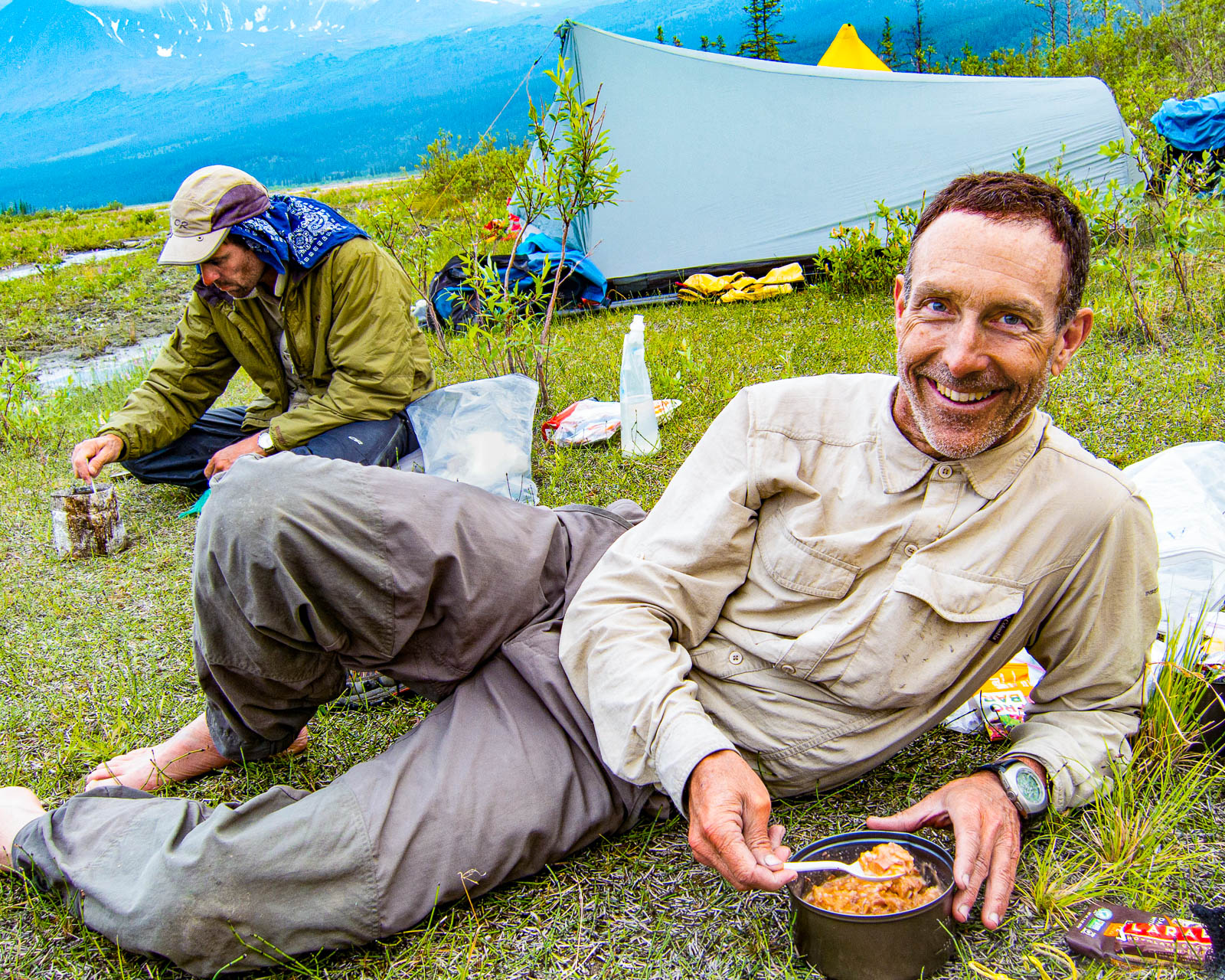
Eating dinner in the Alaskan Tundra north of the Arctic Circle
Disclaimers
- To be very clear, I am not a Medical Doctor or a Nutritionist. What I share here is from my personal experience as a backpacker for over 50 years, professional backpacking guide, outdoor writer and an elite athlete. As such, this post should in no way be considered professional medical or nutritional advice. When in doubt, consult with the correct board certified professional.


Share this entry